
Cars are the future, from old stickshifts to automatic transmissions to more recently, electric vehicles (EV). Cars are evolving. What car we drive comes down to the market, the availability, our preference and more importantly, the affordability. An affordable car is often preferred over more expensive models because they are readily available and will not put you into further debt. This outlook is significantly impacting the vehicles that are found on the roads in the Czech Republic. According to Eurostat, Czechia hosts the seventh highest number of cars per 1000 inhabitants, however, the average age of the car in 2016 was 14.3 years. Used cars are favored over newer models, and in the Czech Republic, used cars are more expensive than surrounding countries such as Poland and Hungary; yet they are still more affordable than their new counterparts.
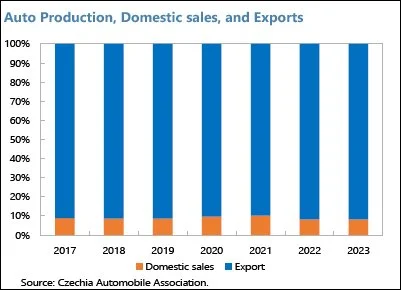
The Czech Republic is the fourth largest auto producer in Europe, and most sales are from exports. The graph shows how low domestic sales for auto production are compared to exports, which can be explained by rising prices. As car prices increase, people opt to buy a used car instead, resulting in sales for used cars exceeding sales for new cars.
Along with exporting new cars, Czechia imports many used cars with 51% of them being 10 years or older. Older cars do not comply with ecological and safety regulations, yet they are cheaper and more convenient for the public. At the same time, cars that meet the stricter emissions standards are more expensive to make, hence take longer to be available for the public.
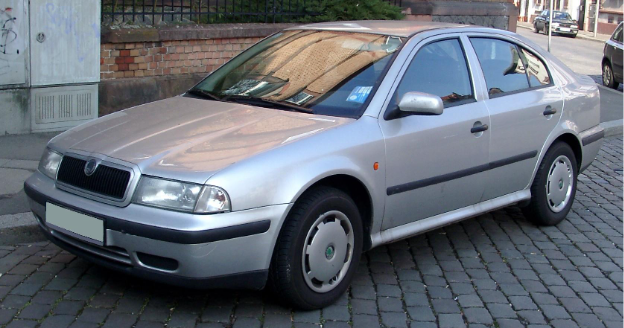
2010 Škoda Octavia
Škoda Octavia is the best selling model in the Czech Republic.
The most common vehicles in the country are from Škoda Auto, formerly a Czech automobile manufacturer, but the rest of the common vehicles come from outside the country. Besides Škoda, the top brands found in Czechia are Hyundai (South Korea), Toyota (Japan), Volkswagen (Germany), and Kia (South Korea). From these vehicles, Volkswagen and Škoda are the most popular importing brands, emphasizing the partnership between the Czech Republic and Germany.
The Czech Republic’s location in central Europe and neighboring Germany (its largest trading partner), has led the country to have a dependency on the automotive industry for a stable economy. New cars produced within the country are exported to consumers outside the country; the now used or secondhand car can then be imported to the Czech Republic. Also, because four of the five top car manufacturers in Czechia are foreigners, many of their used vehicles are imported back to Czech market and are readily available, thus increasing the amount of used cars in the country.
The government has had its fair share of attempts to minimize the number of older cars within the country. In 2009, the government imposed an ecological tax on vehicles produced before 2000, but the limit has not changed. The Environment Minister from 2014-2021, Richard Brabec, planned to introduce a fee to register used cars, but his plan was scrapped. The Ministry of Transport of Czech Republic has reported an increase in car registrations that equate to 3 cars for every 4 adults in the country. With stricter ecological regulations, prices only continue to rise for newer vehicles, making the alternative older car market more lucrative.
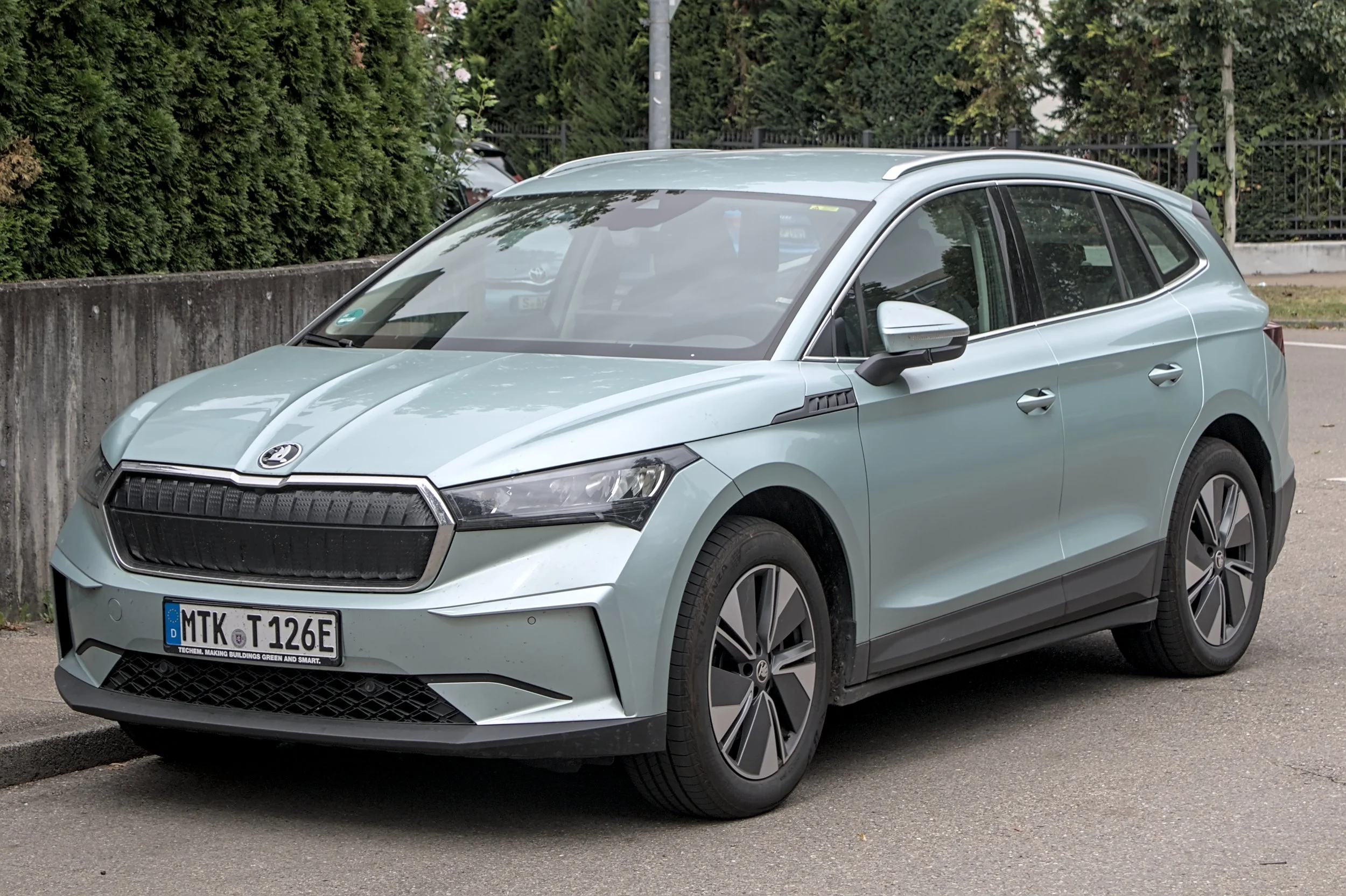
First Škoda electric vehicle to reach the market Škoda Enyaq in 2020.
The current automotive industry is challenging for a green transition towards electric vehicles (EVs) which may help eliminate or limit the sale of older cars from. EVs do not produce as many emissions as gasoline-powered vehicles, and with Europe’s CO2 emissions reduction targets, EVs will become more common. Although EVs' initial price is higher, their maintenance costs are significantly less than cars running on gasoline. This current change in the automotive industry may challenge those who find affordability in a car to opt to buy an EV and leave their older car behind. Even if they continue to choose to purchase a used car, EVs on Czechia’s top brand, Škoda, will only be five years old.
Sources:
“Czech Car Sales Surge, Škoda Dominates the Market.” Czech Daily. 5 August 2025. https://czechdaily.cz/czech-car-sales-surge-skoda-dominates-the-market/. Accessed 1 October 2025.
Fraňková, Ruth. “Imports of used cars in August exceeded sales of new vehicles.” Radio Prague International. 7 September 2021. https://english.radio.cz/imports-used-cars-august-exceeded-sales-new-vehicles-8727870. Accessed 30 September 2025.
Fraňková, Ruth. “Second car headache faces Czech ministries.” Radio Prague International. 23 August 2017. https://english.radio.cz/second-car-headache-faces-czech-ministries-8183995. Accessed 30 September 2025.
International Monetary Fund. European Dept. “The Role of the Auto Industry in the Czech Republic’s Economy.” Czech Republic: Selected Issues. Volume 2025: Issue 036. 4 February 2025. https://www.elibrary.imf.org/view/journals/002/2025/036/article-A002-en.xml?ArticleTabs=fulltext. Accessed 30 September 2025.
Miharia, Aashna. “As more Czechs rely on driving, their cars are getting older.” Radio Prague International. 30 September 2025. https://english.radio.cz/more-czechs-rely-driving-their-cars-are-getting-older-8864211. Accessed 30 September 2025.
“Passenger cars per 1000 inhabitants reached 560 in 2022.” Eurostat. 17 January 2024. https://ec.europa.eu/eurostat/web/products-eurostat-news/w/ddn-20240117-1. Accessed 30 September 2025.