

Step inside one of the Czech Republic’s most extraordinary modernist treasures — Villa Tugendhat. Designed by Mies van der Rohe, this Brno landmark reshaped the future of architecture with its radical openness, onyx walls, and sweeping glass views. A true UNESCO‑listed masterpiece.
The History of the Land Beneath Us: 1st to 3rd Century AD Roman Vessel Found in 5th Century Burial
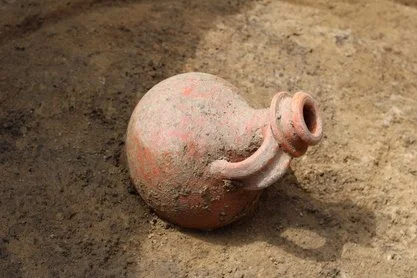
A fascinating discovery was made in May 2026 by the Prostějov office of the Institute of Archaeological Monument Preservation Brno (UAPP) in south-eastern Moravia. Continue reading to learn how a small ceramic vessel reflects the story of the region’s history, from the 1st century AD under the rule of the Roman Empire to the 5th century after the empire’s collapse and beyond.
Lowest in the EU: How Austro- Hungarian Attitudes still shape Czech Science for Women Today.
From breaking barriers in university halls to challenging modern‑day biases, Czech women in STEM have pushed forward with determination, brilliance, and courage. Their stories reveal both the progress made — and the work still ahead.
Explore the history, the challenges, and the voices leading change today.
Louis D. Brandeis: The People’s Attorney
Louis Brandeis’ journey began with his family’s escape from rising antisemitism in Prague and led to him becoming one of America’s most influential legal minds. His fight for workers’ rights and fair wages earned him the title “The People’s Attorney.” Brandeis didn’t just practice law; he transformed it. His belief in transparency, fairness, and public service continues to influence courts and communities today.
"I'll Never Make it to Karlovy Vary" A Dream Inspired by the Movies
Babies above, bodies below! The Buried Past below the Žižkov Television Tower
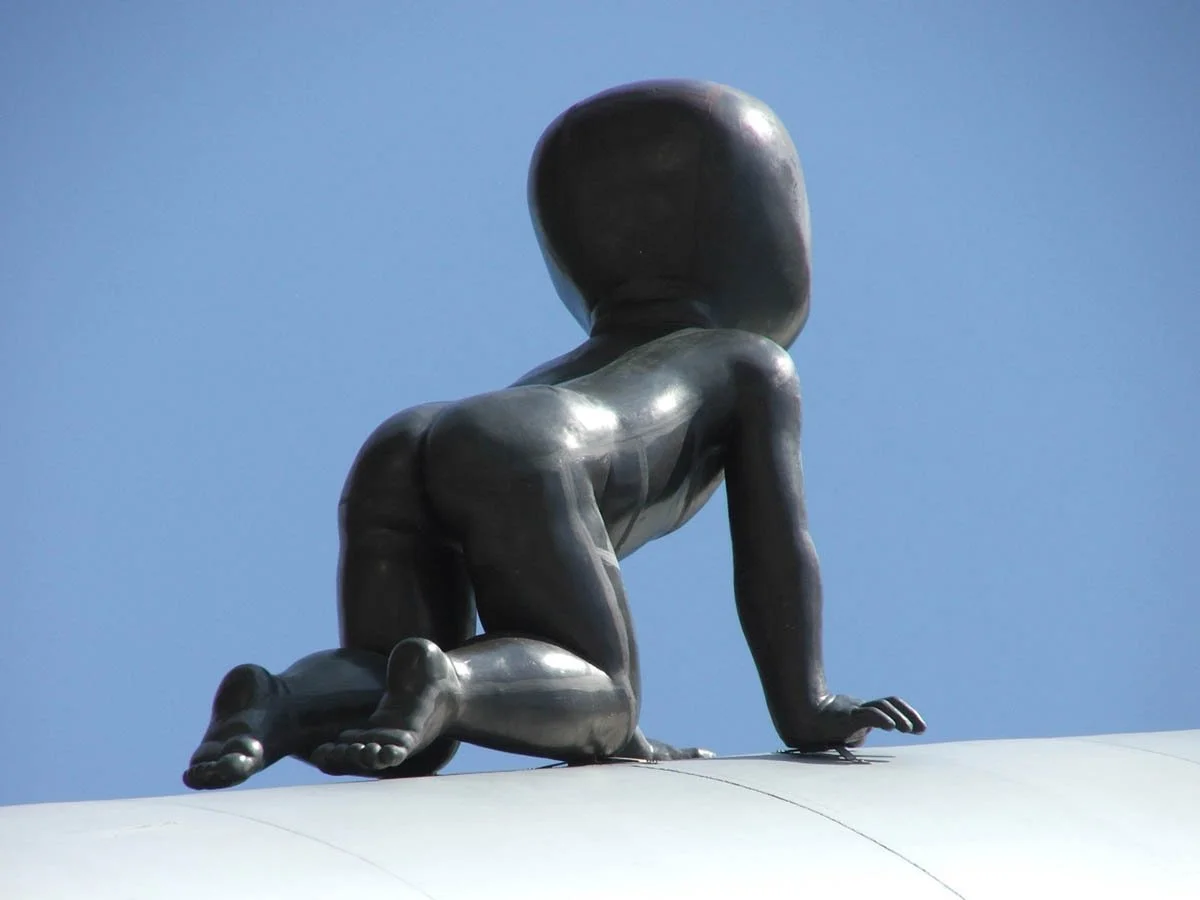
The history of the Žižkov Television Tower apparently goes farther back than one expects, starting before the tower’s establishment. It ostensibly begins with the Žižkov Old Jewish Cemetery, which the tower is eventually built over, which itself was established centuries before. The tower itself is generally regarded as being quite ugly, though with both time and the Babies getting attached to it, this perception is improving.
Exploring Celtic Roots in the Czech Republic
Before Bohemia, there was a migration. Celts traveled to central Europe, crossing France and Germany before making their way to what is now the Czech Republic. The discovery of this group of settlers was kickstarted with the construction of a new highway in the Czech Republic, with the site of this discovery in Hradec Králové. Thousands of artifacts were found and discovered by teams of archeologists lead by Matouš Holas.
Affordability in Czechia's Aging Car Fleet
Although the used car market demands more cash from consumers in the Czech Republic than in surrounding nations, it still thrives due to the comparative unaffordability of new cars. Emblematic of the issue is the popularity of the Škoda Octavia, particularly its first generation, where its availability makes it cheap and accessible. In addition, Japanese and Korean imports also populate Czech streets, making for an even more competitive used car market vs. the new car market. Even with attempts to tax used cars for being older and out-of-compliance, they remain a popular choice for the Czech population.
Jablonec Costume Jewelry and Glass Beads throughout History
The history of glass bead and jewelry production in the historic city of Jablonec spans centuries, from 1720s to now. Of course, bead making has always been possible for millennia, since 1600 BCE. By the 1900s, the city became a powerhouse of jewelry and glass bead production and artistry, though by this time they also faced several challenges, which lasted into the mid-1900s.
Prague’s Ring Road and its discoveries
The future of travel in Prague integrates environmental consciousness, quietness, efficiency, and quality, all through the Ring Road, intended to be complete in two years. As work on the road progresses, new discoveries are made, such as axes, hammers, and corkscrews from the Neolithic era and kitchen ceramics, iron and bronze tools, and glass beads from the Hallstatt era, for example. Their discoveries come from one of the greatest archeological efforts seen in the Czech Republic. Even now, and perhaps in the far future, old life is uncovered in preparation for the Ring Road’s finished construction.
Ferdinand I's Embattled ascension to Holy Roman Emperor
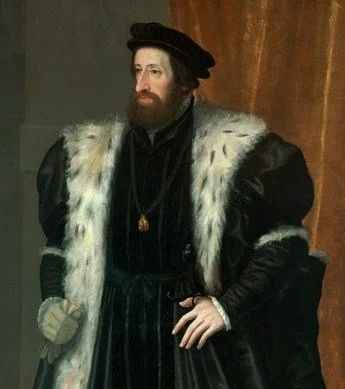
After the death of Louie II, the Kingdom of Bohemia needed a new king, of which Ferdinand I took up the mantle. As the King of Bohemia, he inherited many issues surrounding the kingdom, including the encroaching Ottoman Empire, the political tug of war between the Bohemian diet members, and the religious strife between Protestants and Catholics. During his time, Ferdinand I delicately wielded his influence and power as the King of Bohemia, eventually becoming the Holy Roman Emperor.
Rock ‘n’ Roll in Communist Czechoslovakia
Rock ‘n’ roll was a major vehicle for great change in Czechoslovakia. At first, it was restricted by the state to only be Czech covers of famous Western singers and bands, done by Czech stars such as Karel Gott and Jiří Korn, and the public could not buy, sell, or distribute any Western music album. Bands like The Plastic People of the Universe and Katapult, and song artists, opposed the Communist regime by breaking their rules and directly speaking out against them, respectively. The trouble they caused for their government soon turned into action and protests.
Remains of the Přemyslid dynasty uncovered in Olomouc
The Přemyslid dynasty was a powerful and influential royal family in Bohemia that ruled between the late 9th and early 14th century. The remains of several members, however, are of those who lived and died between the 11th and early 13th century. After the discovery of the family’s bodies in the storeroom of St. Stephen in 2018, researchers used DNA and radiocarbon dating to determine that those buried are indeed the members of the Přemyslid family.
The Diary of Věrka Kohnová
Věrka Kohnová was a young Czech girl who sadly lived the last of her life in fear. During this time, she kept a diary she wrote into, giving future readers into a glimpse into the life of Czechoslovakians under Nazism, similar to how Anne Frank kept and wrote in her diary. One of her most poignant thoughts were about whether Jews like her would ever see their stuff or return to their old lives again. It was in 2006 that her diary was published.
An AI-Powered Partner: Aircraft Innovation In the Czech Republic
The Czech Republic has a long and successful relationship with the concept of aircraft, the nation’s people honing their knowledge and understand since the late 1920s. Now, software that utilizes machine learning reads aircraft pilots faces to determine their condition for increased safety. Research for this technology is done in Brno based on the DARWIN initiative, funded by Honeywell.
Gabriela Jílková: Czech Race Car Driver

Bedřich Smetana and the Prague Spring International Music Festival

The Prague Spring International Music Festival (not related to the 1968 Prague Spring) is a festival established by the Czech Philharmonic Rafael KubelÍk to commemorate the death of Czech composer Bedřich Smetana. Every opening night for the last 80 years, Smetana’s national masterpiece Má Vlast is played by a different orchestra. Smetana’s music life began in his youth, developed further by collaboration with one of his inspirations, Liszt. This 2025, Semyon Bychkov will conduct the next opening.
A (Nationalist) Puppet on a String
Puppeteering in Bohemia preserved the Czech culture and language, preventing both from being wiped out by Hapsburgs who pushed for the Germanization of the Czech lands. Puppetry’s been practiced in Bohemia for centuries, beginning in the 16th century, used for religious and folk ceremonies. Not only has Czech puppeteering protected Czech identity in during the Hapsburg era, but also into the occupation of Czechoslovakia by the Nazis.
Liberation of Plzeň, České Budějovice, and Karlovy Vary
Between May 7 and 8 in 1945, the Nazis surrendered to the Allied forces in Plzeň, České Budějovice, and Karlovy Vary. It took weeks of fighting and many casualties to effectively force a surrender from the German High Command. It was through the collaboration of the Soviet and US forces that the liberation was able to take place. Much celebration, the day of and after, was abound.
Czech Dolls Mini-Exhibit
An important staple of Czech and Slovak culture, kroj-wearing dolls are popular toys and figures that many generations have played with and cherished. These dolls are made with a variety of quirks and features, such as closing their eyes while in a lying position or having rosier cheeks. One company, Lidova Tvorba Uhersky Brod, heavily promoted their dolls all over Slovakia, Europe, and the world, winning accolades for their efforts and remaining one of the best-known doll makers in Slovakia. These historical dolls are on display in the Czech Center Museum Houston.