
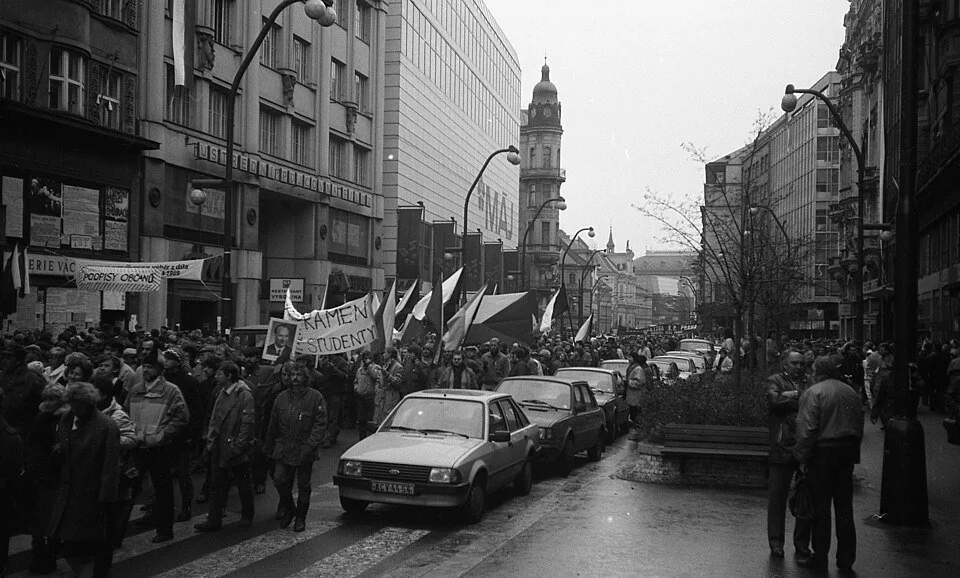
Street view of Prague, December 1, 1989. Photo courtesy of Josef Šrámek’s family archive.
What started as a small demonstration in Bratislava on November 16 ignited a movement that would become known as the Velvet Revolution. Now recognized as a national holiday, “The Day of a Struggle for Freedom and Democracy” remembers the events that took place in 1939 and 1989 on the same day.
On October 28, 1939, the twenty-first anniversary of the independence of the Czechoslovak Republic, anti-Nazi demonstrations broke out in Prague. As Nazi forces suppressed the demonstrations, Jan Opletal, a student at the University of Prague was injured and later passed away. His funeral was widely attended, and turned into another demonstration. In retaliation, the Nazis closed all Czech universities, sent over 1200 students to concentration camps, and executed nine students on November 17. This day is commemorated as International Students Day.
Fifty years later in 1989, students in Bratislava gathered on November 16 to demand democracy and academic freedom. The next day, students gathered in an officially sanctioned demonstration in Prague to remember Jan Opletal and International Students Day. Occurring nine days after the fall of the Berlin Wall, the march in Prague soon began to demand the communist government’s resignation from power. The students faced violence from riot police, sparking the public to join in their demands for a strike. By November 28, the Communist Party of Czechoslovakia announced that they would step down, and an anti-communist government was in place on December 10.
Václav Havel, one of the nation’s most famous dissidents, was a founding member and spokesman of Charter 77, a civic initiative started in 1976 that produced a petition urging the government to adhere to the human rights provisions it agreed to in the 1975 Helsinki Accords. During the Velvet Revolution, the group aided in the peaceful transition to democracy and Havel was elected as interim president of Czechoslovakia on December 29, 1989 by the unanimous vote of the Federal Assembly. He was democratically re-elected in June 1990 as President, in the first free election since 1946.
These momentous events in history are remembered and celebrated throughout the Czech Republic, Slovakia, and across the world.
In Prague, official celebrations are held at Hlávka koleje, on Národní třída at the Korzo Národní festival, and in Wenceslas Square. In 2025, a “Concert for the Future!” was held in the square and featured live performances by Slovak and Czech bands. In Zlín, the Tomáš Bata Memorial is illuminated with the colors of the Czech flag in commemoration. In Bratislava, people lay flowers and light candles at the Velvet Revolution memorial in honor of the students’ sacrifices.
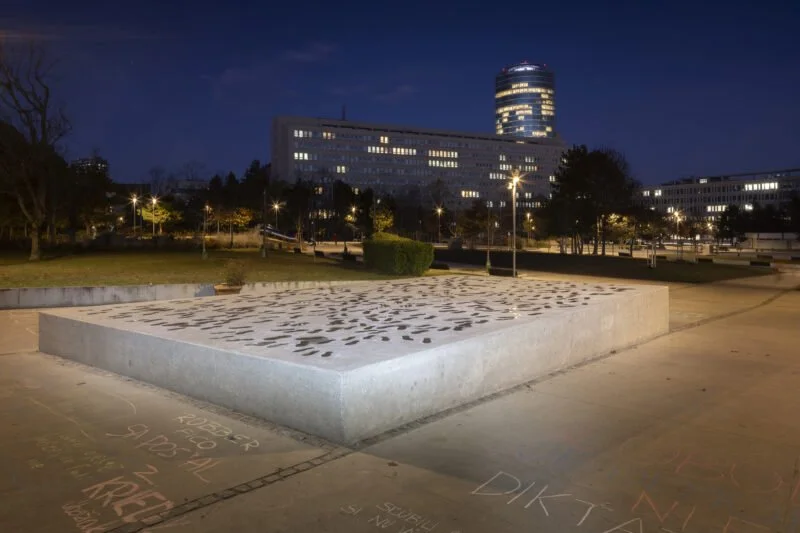
The November 1989 Memorial, designed by architects Branislav Lackovič, Emanuel Zatlukaj, and Jakub Trajter. The design features “407 bronze footprints symbolizing specific individuals who were not afraid to ‘take a step’ toward freedom.”
““The monument should remind us not only of the non-violent civil resistance that managed to break the force of the arrogance of power but should also underline the power of truth, civic courage and democratic values, which we must protect still today. Freedom is not a given….””
Czechs and Slovaks continue to remember those who stood up for liberty through traditions like wearing blue jeans and jingling keys. The sound produced mimics a ringing bell and recalls those who jingled their car or apartment keys during the 1989 protests to symbolically represent that time was up for the Communist Party. Blue jeans, on the other hand, continue to represent Western ideals of freedom. Jeans were often bartered and sold on the black market under the regime, and an attempt at banning them in the 1970s had faced such strong backlash that the laws were dissolved. Many of the students, intellectuals, and artists protesting wore denim—including Václav Havel—and scholars have theorized that the manufacture and distribution of denim in the 1980s contributed significantly to the fall of Communism. International denim companies flooded into Prague and Bratislava to meet the heightened demand for imported denim in the 1990s, ultimately helping stabilize the Czechoslovak economy.
Continue reading to discover the oral histories of those who witnessed November 17 and the Velvet Revolution.
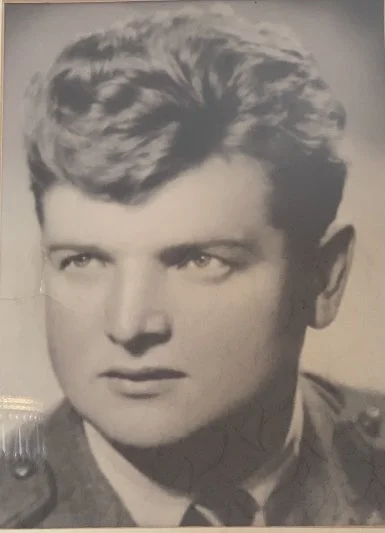
Ivan Adame as a soldier in basic military service. Image via Memory of Nations.
Ivan Adame (1943-2021)
In 1989, Adame worked on the construction of the Rázsochy Hospital in Bratislava, where he witnessed the Gentle Revolution. “We also went to the square and rang the bells. We were there like those dormitories in Slávičy údolí for university students. We went down to see what was going on, what was being done. We were doing one job there. And then it got so boring. That week. And imagine on that square, I got so scared all at once. It was stomping! And I thought they were coming for us with tanks. Where could we turn? We couldn't even breathe, we couldn't breathe,” - Ivan Adame, via Memory of Nations.
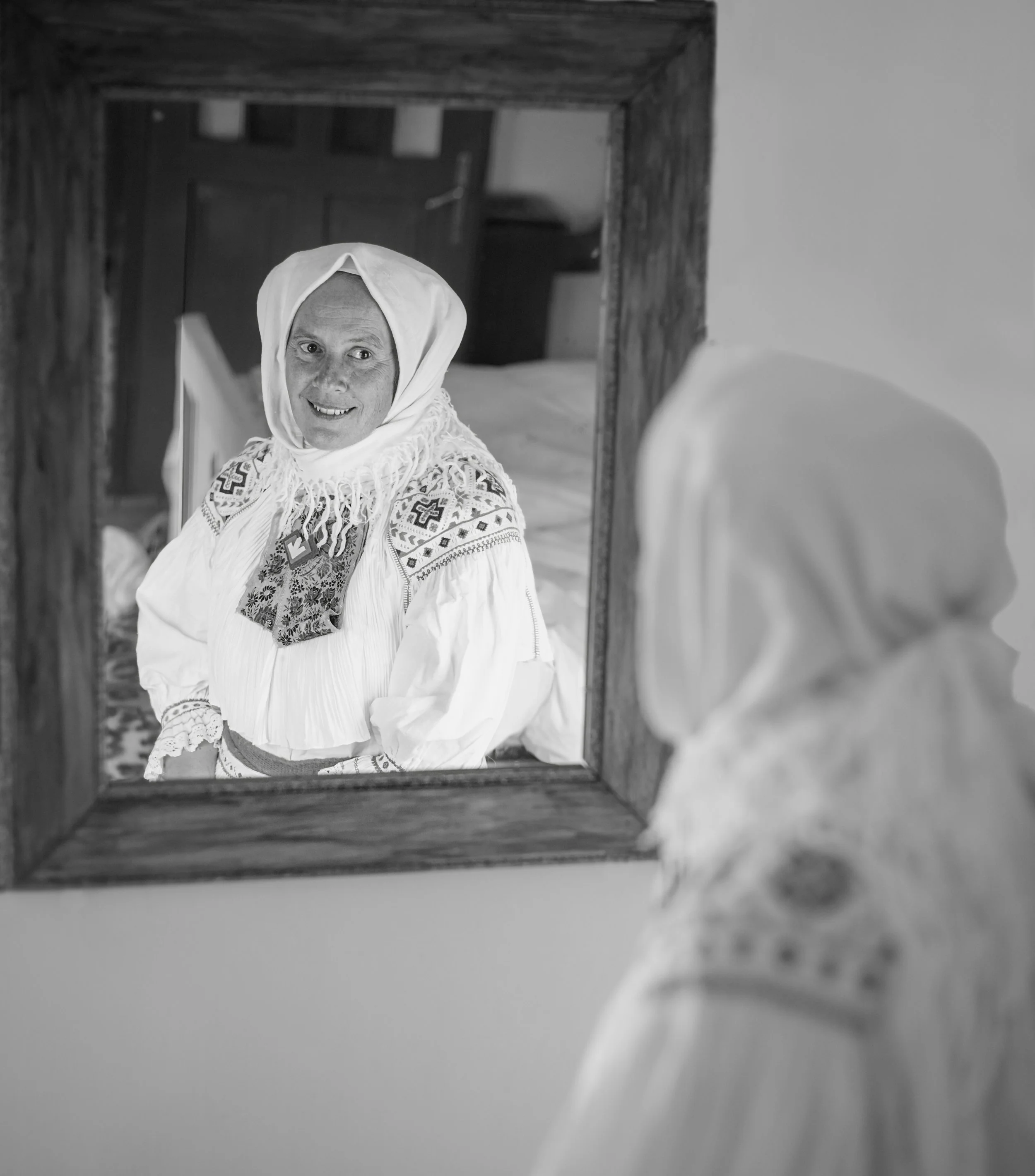
Zuzana Tajek Piešová in costume. Image via Memory of Nations.
Zuzana Tajek Piešová (1964-)
Recalling the revolutionary period: “I really liked it, the spontaneity. The fact that people finally stood up to resist something that was dishonorable. Why can't I travel?! At that time, I had to provide a statement from my trip to Yugoslavia, which I did there when I went with my parents. I didn't understand what it was. I dressed up in folk costumes for the first march. On December 10, 1989, when the borders opened, the whole group went in folk costumes. I know it was an amazing feeling, how it went. I participated in this, I was already very angry with the regime.” - Zuzana Tajek Piešová, via Memory of Nations.
Lubomír Bažant (1954-)
Arrested in 1981 for illegal departure from the republic, Bažant signed Charter 77 behind bars in Bory. “At that time, a friend of mine went into civilian clothes, so I asked him to carry the document. We made a so-called "shulka", rolled up the paper and put it in a plastic bag, he put it in his rectum and took the paper with our signature on Charter 77 out. He took it to the family of fellow prisoner Honza Litomiský, who handed it over to Free Europe […] And so one night I heard Radio Free Europe reporting that a certain Luboš Bažant and Renda Matoušek had signed the Charter in the prison” - Lubomír Bažant, via Memory of Nations.
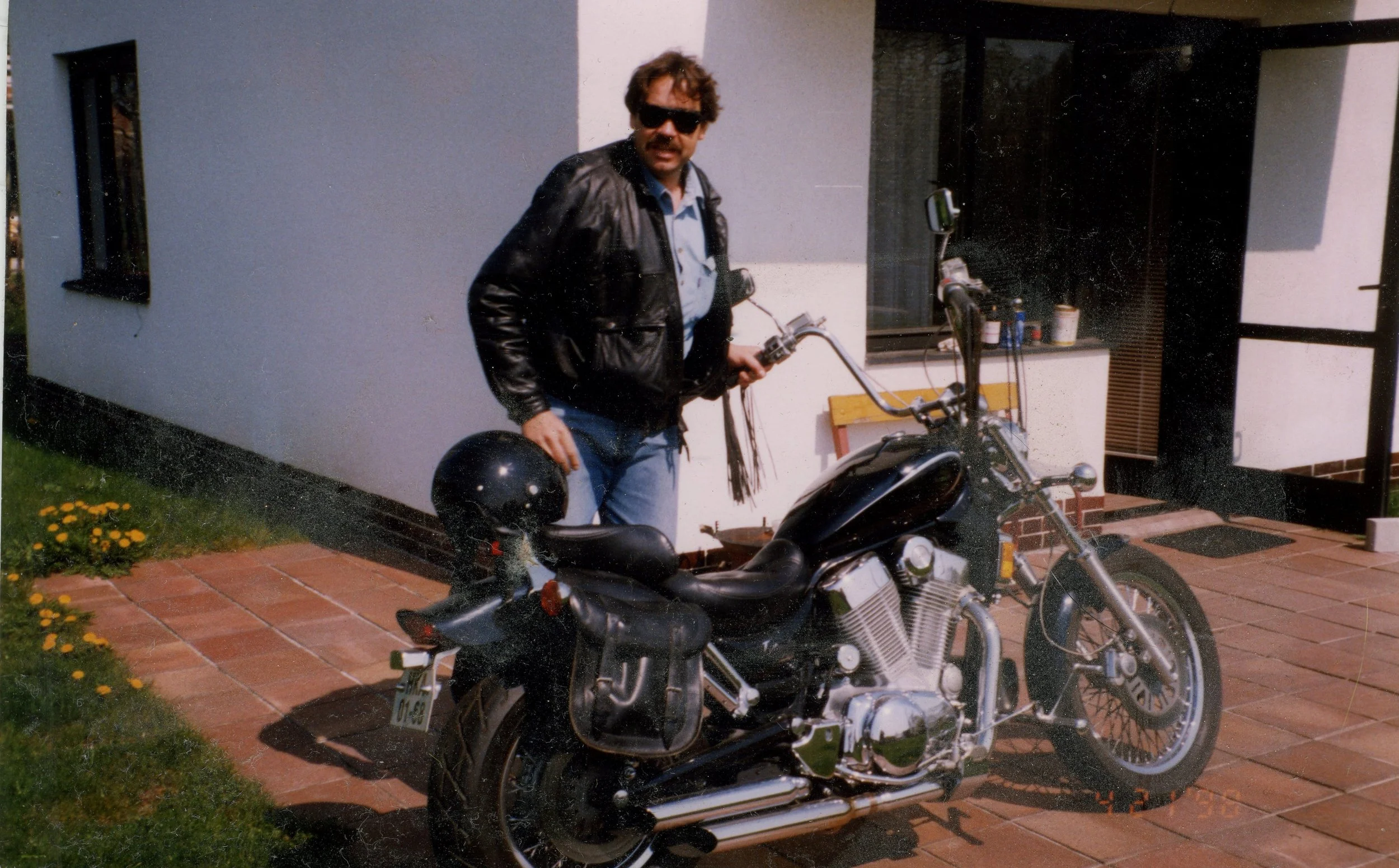
Lubomír Bažant in front of his house in Libišany. Image via Memory of Nations
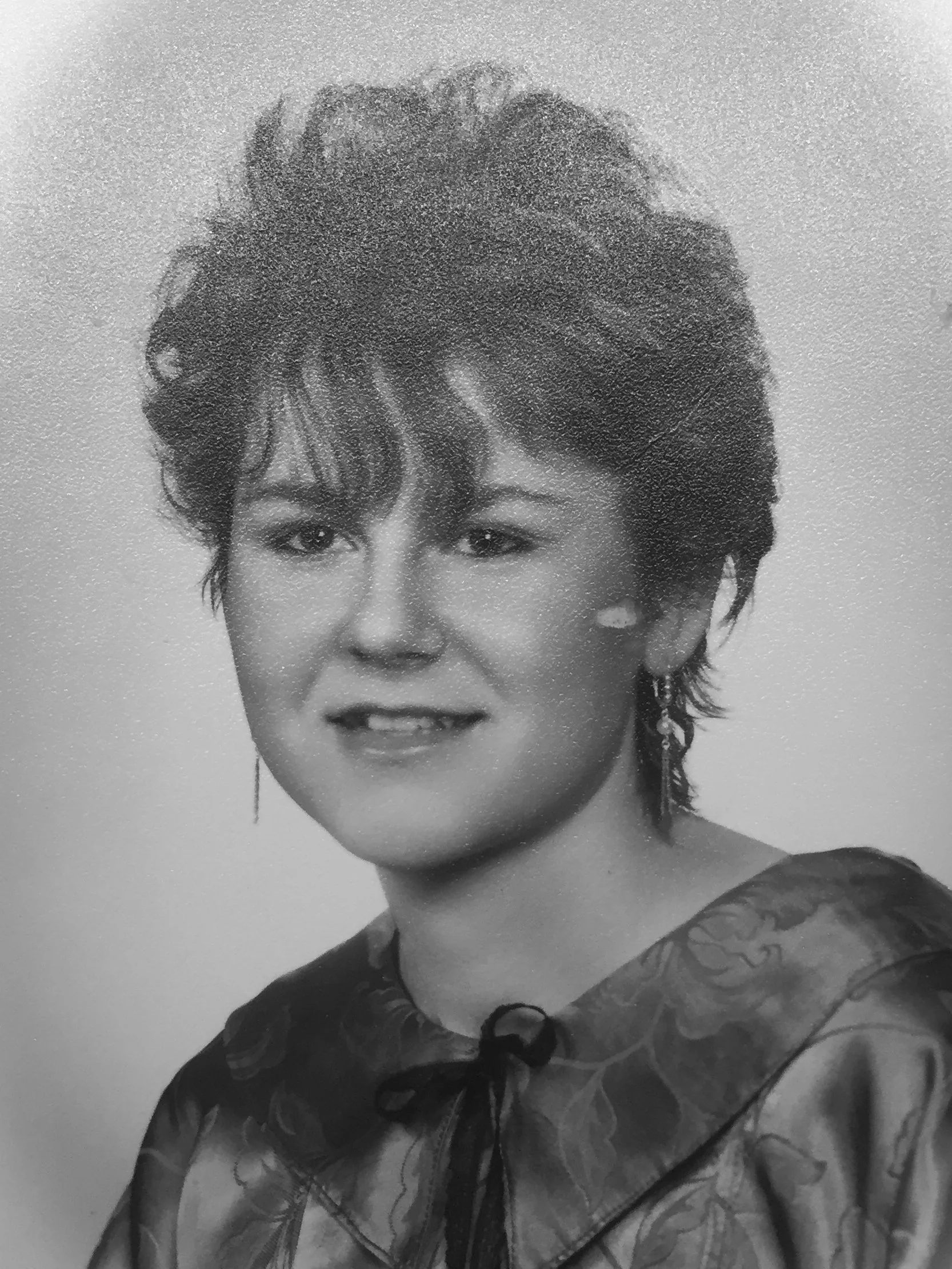
Monika Brázdová as a graduate. Image via Memory of Nations.
Monika Brázdová (1969-)
Brázdová met with her former high school classmates to protest in 1989. “We received the leaflets saying that our task was to go to our city and inform our residents about what was happening in Prague and what was happening at our faculty […]. It was so strange that suddenly you, an eighteen-year-old, nineteen-year-old, are talking to these adults and you're actually telling them what to do. They look at you like you're the Virgin Mary and say: 'Yeah, these kids are coming here to tell us what to do. That we should wake up. And that we should go do something...' And they went and did it. They were happy that someone had come there and they were very enthusiastic about it. It was a very interesting atmosphere.” - Monika Brázdová, via Memory of Nations.
Citations
CzechTourism. “Celebrate Freedom in Czechia.” VisitCzechia. November 14, 2024. https://www.visitczechia.com/en-us/news/2025/11/n-17th-november-celebrate-freedom-in-czechia.
Hlavné mesto Slovenskej republiky Bratislava. “17 November, the Day That Brought a Better Future to the People of Slovakia, Will Have Its Own Memorial.” Hlavné Mesto Slovenskej Republiky Bratislava. October 9, 2025. https://bratislava.sk/en/spravy/17-november-the-day-that-brought-a-better-future-to-the-people-of-slovakia-will-have-its-own-memorial.
Katka. “Blue Jean Culture and Transformation in 20Th Century Czech History.” The Fashion Culturist (blog). October 3, 2009. http://fashionculturist.blogspot.com/2009/10/blue-jean-culture-and-transformation-in.html.
“National Holiday: Fight for Freedom and Democracy.” Mzv.Gov.Cz. 2023. https://mzv.gov.cz/baghdad/en/latest_news/national_holiday_fight_for_freedom_and.html.
Panek, Tracey. “Blue Jeans and the Fall of the Berlin Wall - Levi Strauss & Co.” Levi Strauss & Co. November 7, 2019. https://www.levistrauss.com/2019/11/07/blue-jeans-and-the-fall-of-the-berlin-wall/.
“The Velvet Revolution.” MZV EN. 2023. https://www.mzv.sk/en/web/en/slovakia/history/the-velvet-revolution.
Visit Bratislava. “November 1989 Memorial: Steps That Changed History.” Https://Www.Visitbratislava.Com/Places/November-1989-Memorial-Steps-That-Changed-History/.
Written by Gabriella Carvelli