Folk Art
Find out more about your favorite Czech & Slovak art from our large collection. Explore the various art styles and learn more about the rich history of the Central European people.
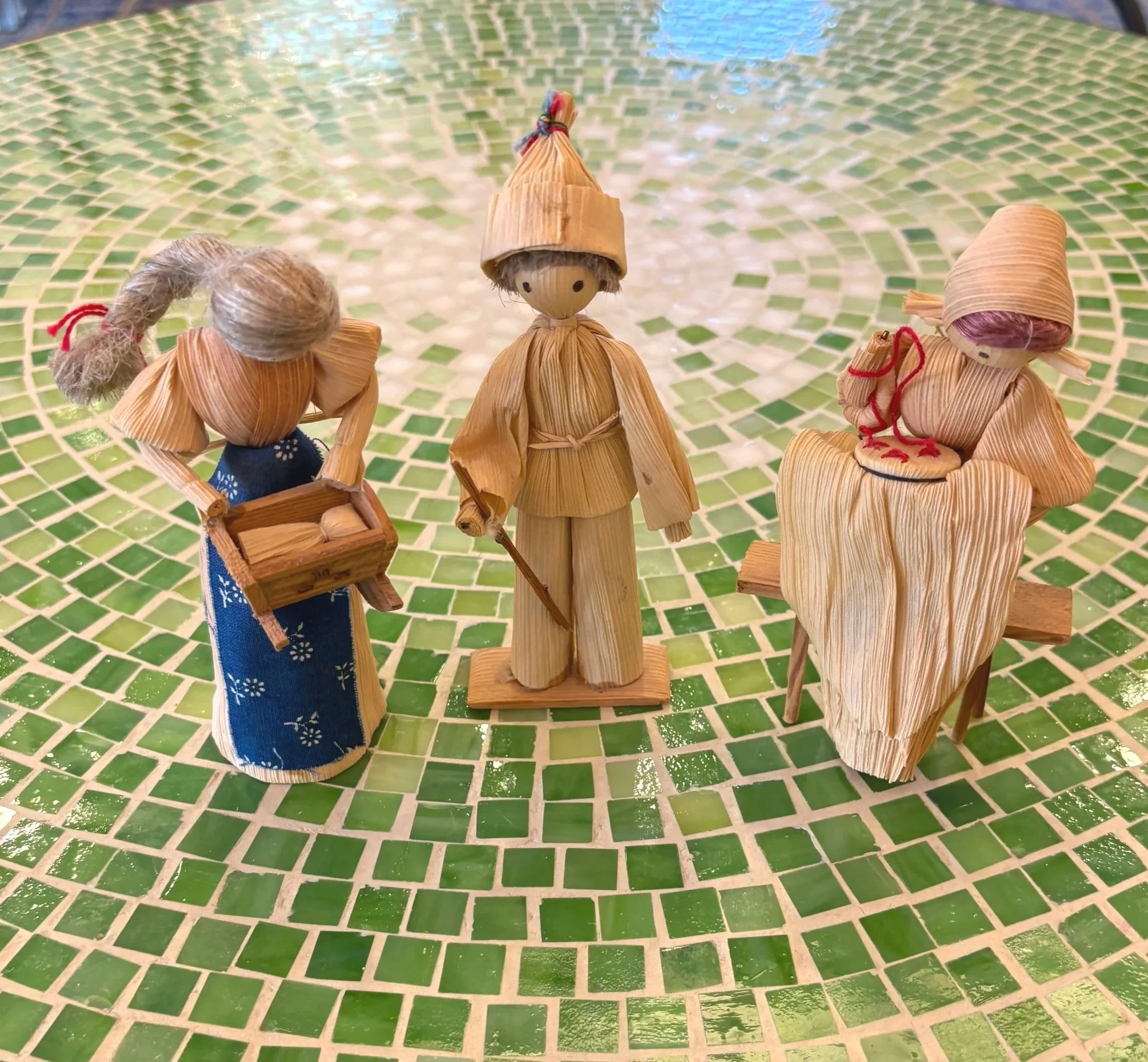
Seen by Czechs and Slovaks as reminders of the simpler lives of shepherds and peasants, corn husk dolls (šúpolienky) date back to the 20th century. The corn husks are soaked in water, trimmed, and bleached with sulfur before being manipulated into shape. The dolls are faceless, with only small black dots for eyes, intended to represent human figures generally rather than specific characters or individuals. Traditionally made as toys for young children, corn husk dolls are now popular amongst tourists and sold in folklore and souvenir shops.
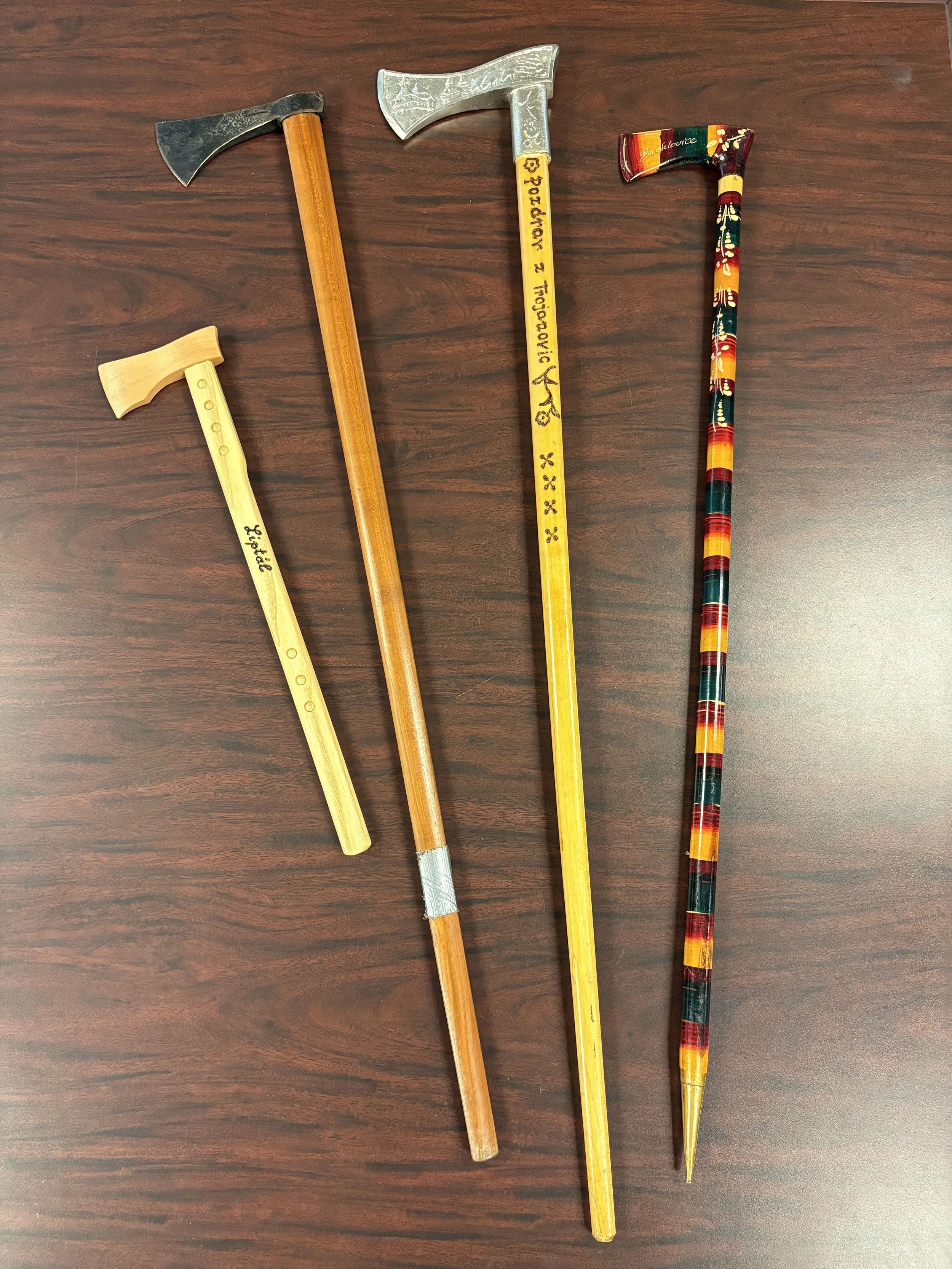
The valaška, or shepherd’s ax, was a popular tool used by native shepherds in Slovak and Czech cultures and often worn alongside a heavy decorative belt. Used as an ax, hammer, and walking stick, the valaška is traditionally carved or engraved by its owner as a pastime. It is often featured in artistic representations of Juraj Jánošík, a historical folk hero who, according to legend, stole from the rich to give to the poor, not unlike Robin Hood.
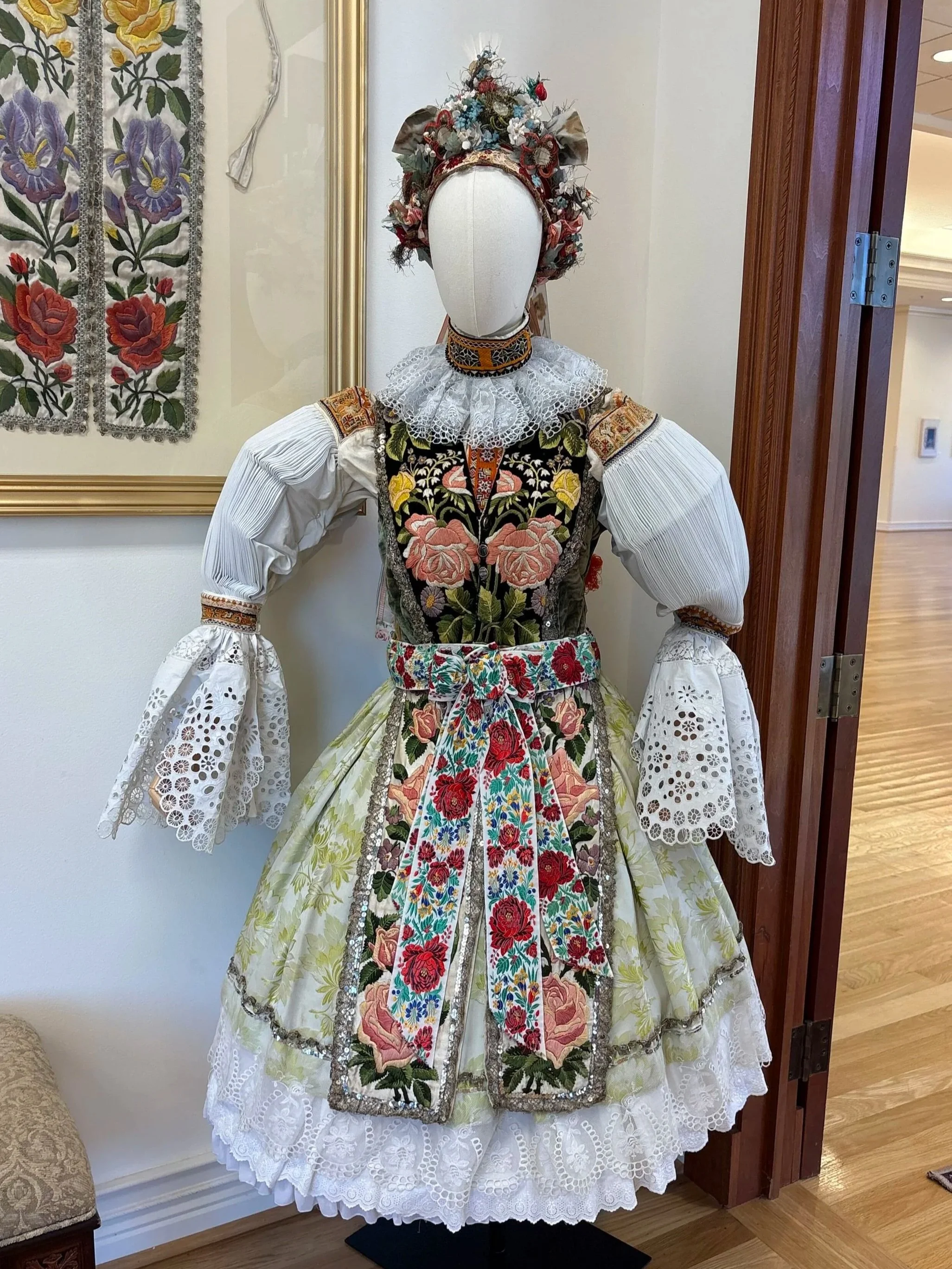
The kroj is a traditional Czech folk costume that is known for its many layers, elaborate embroidery, and colorful embellishments. These costumes represent the people’s ethnic identity and the pride they have for their region, which is why different areas of the Czech Republic—such as Bohemia, Moravia, and Moravian Slovakia—have distinct variations of the same traditional folk costume.