Prince_Metternich_by_Lawrence.jpeg

Klemens von Metternich

1773 - 1859

Metternich was an Austrian diplomat at the center of European affairs for three decades, serving as the Austrian Empire’s foreign minister from 1809 and Chancellor from 1821 to 1848, when liberal revolutions forced his resignation. 

After Napoleon’s defeat and the end of French domination of the continent, the Congress of Vienna - an international conference of European powers - was held to organize post-Napoleonic Europe. Metternich represented Austria in the Congress and proved instrumental in creating an intricate system of alliances and power balances to keep peace going into the future. While the ambassadors at the Congress opposed liberalism and nationalism, they were unsuccessful in repressing it. Dissatisfaction with their conservative world order would eventually erupt in the liberal Revolutions of 1848, which forced both Metternich and the Austrian emperor, Ferdinand I, to step down, allowing Franz Joseph I to accede to the throne.

While Metternich’s system produced a period of relative peace for nearly a full century, the increasingly intricate and fragile sets of alliances required to maintain the status quo, as well as a rising tide of nationalism and liberalism eventually led to the eruption of the First World War, which took the entirety of Europe by storm.
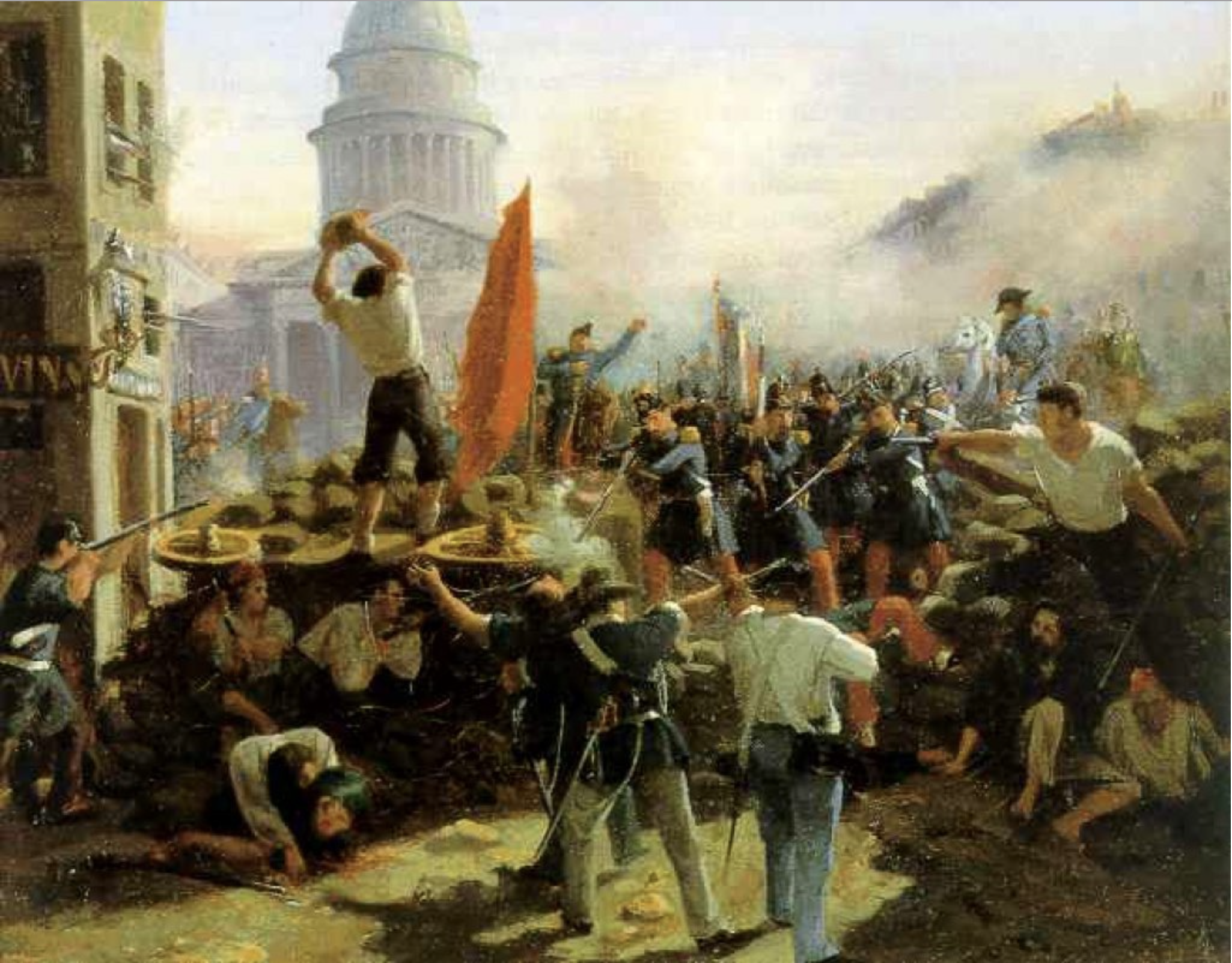
Revolutions of 1848

February 23, 1848 - 1849

In March of 1848, a month after the abolition of the Monarchy of France, revolutions swept the cities of Europe. In Habsburg Budapest, revolutionaries initially sought equality under the law and a degree of autonomy, but their quest for equality would transform into a war for full independence of Hungary from the Austrian Empire. These events forced the abdication of Emperor Ferdinand I and resulted in the resignation of Metternich. With the aid of his Russian allies, Ferdinand’s successor, Franz Joseph I, was able to crush the rebellion. Though the revolution successfully abolished serfdom, Hungary did not gain independence and was instead placed under martial law until 1867.

Emperor_Francis_Joseph.jpg

Kaiser Franz Joseph I

August 18, 1830 - November 21, 1916

In his lifetime, with the world quickly marching toward a future where the ideas of slavery, serfdom, and empire would end, Franz Joseph I would see a number of radical changes in the Austrian Empire that he would be reluctant to accept. Largely considered a reactionary, his politics would be marked by conservatism and absolutist rule over his subjects. 

Born at the royal palace of Schönbrunn in Vienna, Austria on the 18th of August 1830, he became the 7th longest-reigning monarch in European history. The Kaiser would lose much of his family, including multiple brothers, his daughter, Gisela, his son, Crown Prince Rudolf, and his wife, Elisabeth. Devastated by family tragedy and increasingly desperate for a successor to his lineage, he would have to set his hopes on his nephew, Archduke Franz Ferdinand, to take the throne. However, this would never come to be as the Archduke was assassinated by Bosnian revolutionaries who viewed him as another future tyrant of the South Slavic people. After the assassination, Franz Joseph gave Serbia an ultimatum that it would be unable to fulfill, setting off a chain reaction of alliances that resulted in World War I. He would die during the war, in the place of his birth, Schönbrunn Palace in Vienna, Austria in 1916. 

German_immigrants1.jpg

European Settlement in Texas

Late 19th - Early 20th Century

From New Braunfels to Bernie, a number of towns in Texas can draw their origins to 19th-century German settlers. Described as a wedge of European culture driven through the heart of Texas, these settlements, though dominated by German settlers, also attracted their Czech and Austrian neighbors. A major source of inspiration for immigration to Texas was the promise of religious freedom. In Austria-Hungary, persecution of protestants was frequent as the Empire had close ties with the Vatican. In Texas, people would be free to pursue their religious ideals with fervor. Additionally, after serving as second-class citizens and being forced to speak the language of the ruling culture and abide by its values, the Bohemian, Moravian, and Silesian immigrants to Texas found a chance to allow their culture, religion, and language to flourish. Despite their complex and interconnected history, the Central European immigrants found their cultures to be much closer to one another than to those of the Americans, Mexicans, Tejanos, and Spaniards that they would encounter. Tending to stay within proximity of each other, they formed the backbone of many Texan communities today.

r.jpg

American Civil War

April 12, 1861 – May 9, 1865

In February of 1861, fearing Abraham Lincoln’s opposition to slavery, seven Deep South states seceded from the Union to form the Confederate States of America. A month after he was inaugurated as President of the United States, an additional four slave states joined the Confederacy, and secessionist forces captured Fort Sumter in South Carolina, marking the start of the American Civil War. Though the war had a number of causes, the main dispute was over states’ rights to slavery. Lincoln ran on a platform that opposed its spread to new western states, which the South, whose economy was dependent on forced labor, considered to be an infringement on states’ rights. 

Czechs, like most immigrants, were often escaping oppression themselves and opposed slavery. Famously, many Central European immigrants in Texas refused to fight for the Confederacy and were hung. Immigration to Texas and other parts of North America slowed to a trickle during the years of the Civil War, but Texas already had a robust German, Austrian, and Czech (Moravian) population. After the defeat of the Confederacy and the emancipation of black slaves, Czech immigration resumed and remained strong through to the 20th century. 

41338b.jpg

American Czechs in World War I

July 28, 1914 – November 11, 1918

On July 28, 1914, after the assassination of his nephew, Kaiser Franz Joseph I declared war on Serbia, marking the start of the First World War. The Czechs, also under the rule of the Kaiser, were drafted to fight for the Austro-Hungarian Empire. On the other side of the Atlantic, however, American Czechs joined the US Army to fight for freedom against the Austrian and German monarchies. 

In fact, the first Texan who gave his life in the war was a Czech Houstonian by the name of Dominik Naplava. In his letters to his brother, he passionately talks about the war as an opportunity to free the Czech people from the oppression of the Habsburg Dynasty. 

Hundreds of Czechs, both in America and Europe, followed his example. Many who were fighting under Austria-Hungary deserted the imperial military and volunteered to serve the Allied Army, forming the Czechoslovak Legion. With the help of Czech and Slovak diplomats and politicians living abroad, namely in the US, this Legion quickly grew in power, and by the end of the war its members were welcomed as heroes in the United States. This new allyship, forged during the war, successfully won American support for the independence of Czechs and Slovaks from the Austro-Hungarian Empire, and directly led to the creation of a free and sovereign Czechoslovakia.