

Empress Elisabeth of Austria
December 24, 1837 - September 10, 1898
Elisabeth Amalie Eugenie had an unusual upbringing for a girl of her station. Born into the royal Bavarian House of Wittelsbach in 1837, she would be allowed to dismiss all courtly education in favor of a spontaneous and carefree existence as it was her sister, not her, who was meant to marry Kaiser Franz Joseph I. However, the Kaiser would demand Elisabeth’s hand instead, and she married him at the age of sixteen. Though he remained faithful to her, it would be a loveless and depressing union.
Instantly disliked by her peers in Vienna due to her lack of courtly manners, she found comfort in the city of Budapest in Hungary. Fluent in multiple languages, including ancient Greek and the Magyar language of Hungary, she would reside there most of her life. After the Revolution of 1848, she was instrumental in repairing the relationship between Hungary and Austria. She was widely respected in Hungary and kept close relations with Hungarian statesmen, like the future Prime Minister Gyula Andrássy, with whom a romance was rumored. After the death of her son Rudolf, she abandoned her royal duties and began relentlessly traveling the world.
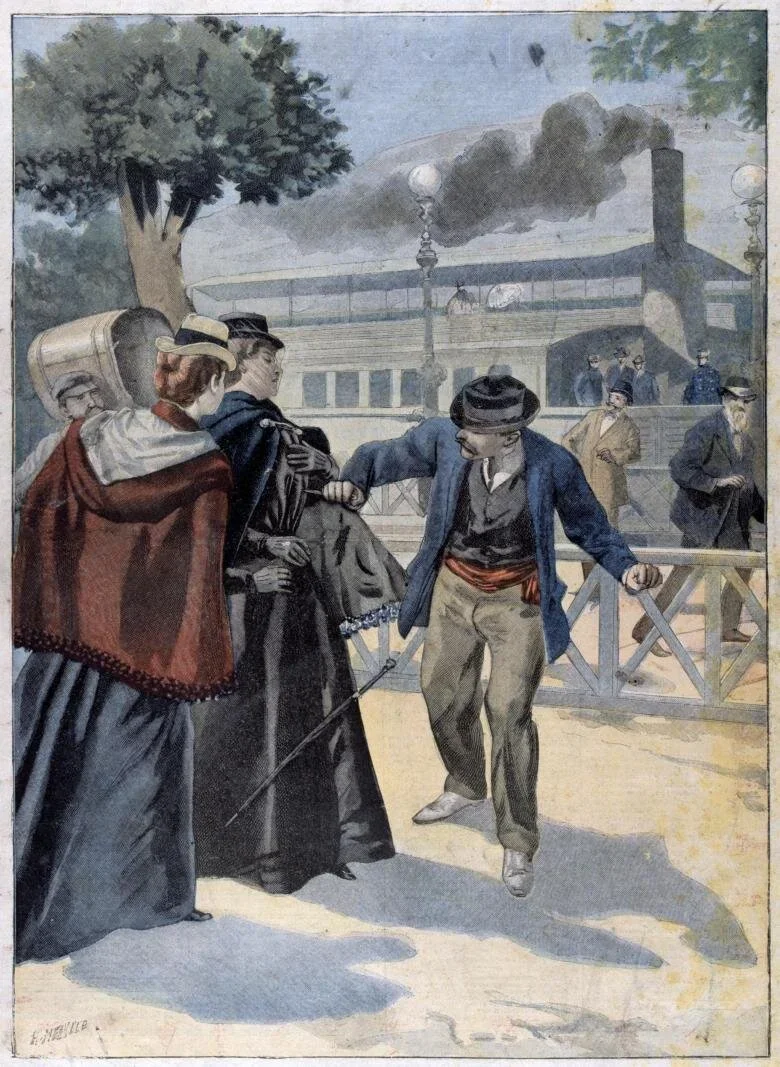
Assassination of Empress Elisabeth
September 10, 1898
In 1898, a full ten years after the death of her son Rudolf, the empress was visiting Geneva, Switzerland. It was said that Sisi never liked traveling with an entourage and preferred to keep as low a profile as possible. Also in town, the Italian anarchist Luigi Lucheni had planned to assassinate Prince Philippe, Duke of Orléans. However, the claimant to the French throne had left Geneva and, failing to locate the Duke, Lucheni instead settled for the Empress of Austria. Too poor to afford a stiletto, Lucheni used a sharpened file to stab the Empress as she was walking from her hotel to board a ship with her lady-in-waiting. Shaken without any visible harm done, she proceeded down the promenade and entered the departing vessel. Once onboard, the Empress complained of a burning sensation in her chest. After examination, a blood spot was discovered on her blouse and shortly afterward she collapsed and died.
Lucheni, who was hoping to become a martyr, was furious when he found out that the death penalty was abolished in Geneva. He was sentenced to life in prison, where he began to write his childhood memoir. He was found hanged in his cell on October 19, 1910.