Kroj: The Traditional Folk Costume
Kroj (kroje pl.) is the traditional folk costume worn by Czechs and Slovaks. Kroje were worn in everyday life until the 19th century, when it slowly began to be replaced by modern clothing as a result of industrialization. Historically, Gothic, Renaissance, and Baroque influences can be seen in the shawls, collars, and skirts, respectively.
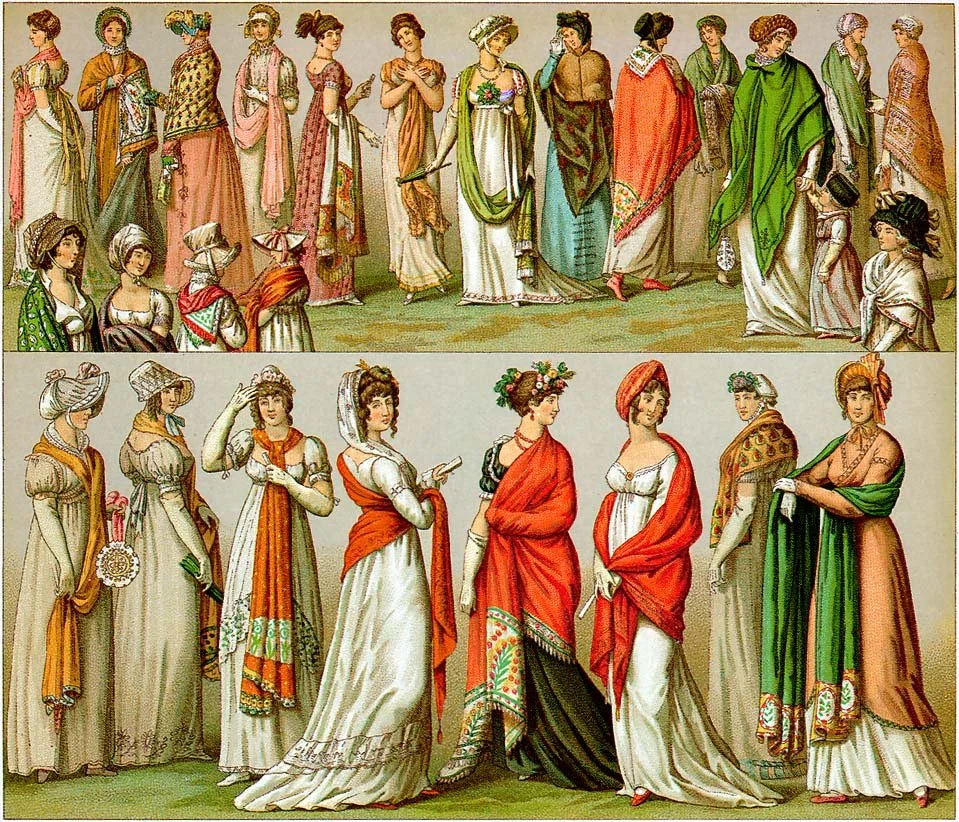
A Variety of ways of Wearing Shawls in early 19th century France, Lithograph, 1802-1814.
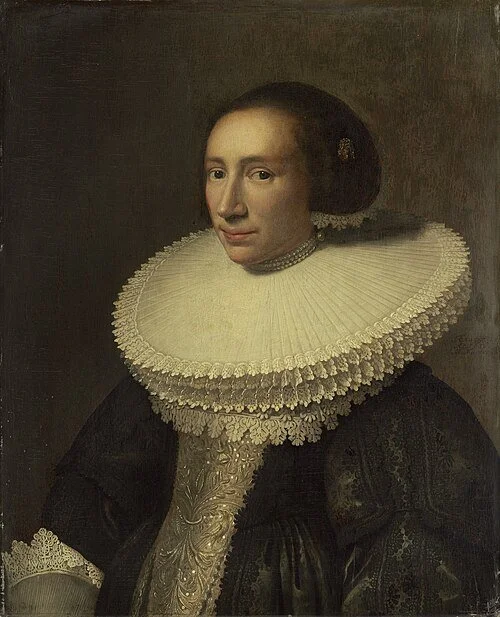
Michiel Jansz van Miereveldt, Portrait of a Lady with A Ruff, 1628
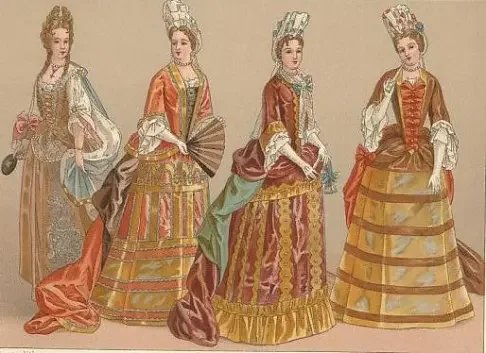
1888 color chromolithograph of women’s fashion in 1700-1750 France.
The degree of decoration on a kroj varies greatly by subregion, such that one’s locality or village can be identified based on the decoration and style of their kroj. Wealthy Bohemians typically prioritized expensive textiles in their kroje, and Moravians and Silesians preferred to spend more on embroidery. There are an estimated 550 different historical versions of kroje, and further stylistic differences based on age, marital status, social status, and profession. Following the 15th-century Christian religious and social reform movements, known as the Bohemian Reformation, protestant ideas spread throughout Bohemia and brought with them an interest in simple colors and understated embroidery in fashion. Many villages opted to use dark-colored fabrics in their kroje.
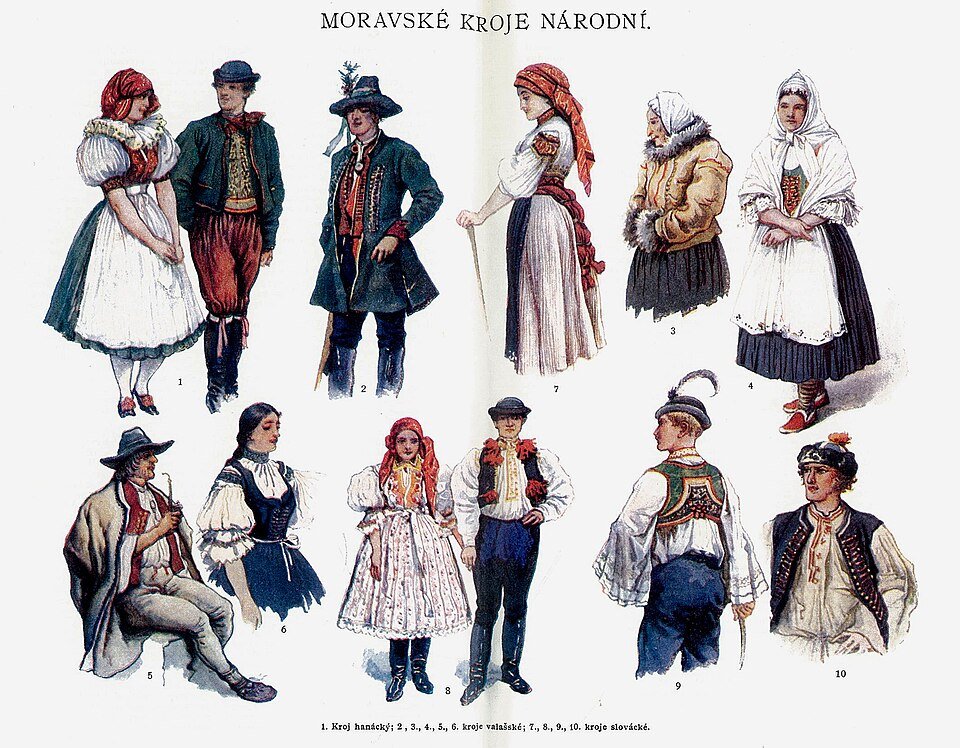
Kroje typical of the Moravian region.
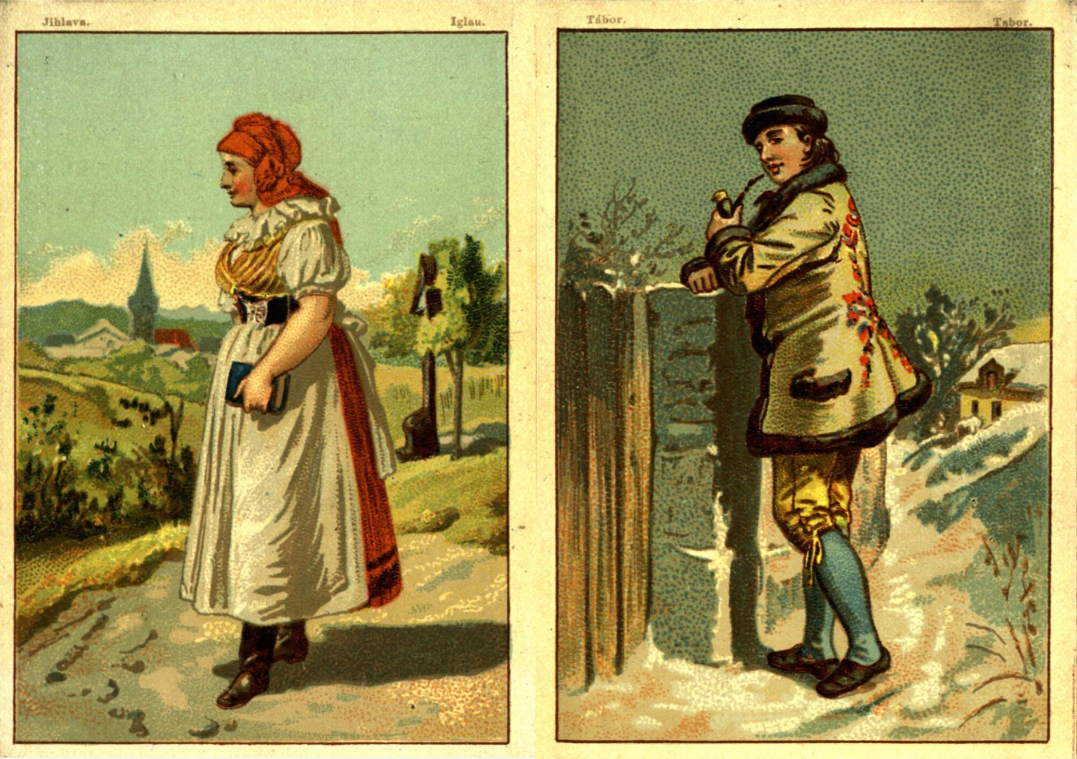
Kroje typical of the Bohemian region.
In the Middle Ages, natural fibers like flax, linen, and wool were used in kroje. As global trade networks expanded, cotton was slowly introduced and used especially in blouses and aprons for its soft and malleable texture. Natural dyes made from plants and minerals and hand-stitched embroidery turn the fabric into the vividly decorated kroje we know today. Botanical and floral motifs are by far the most common design seen in embroidery on kroje. Certain designs were considered by various villages to be apotropaic, or protective of the wearer. Flowers were particularly considered to bring about growth and abundance.
Czechs and Slovaks typically had two kroje, one simplistic in design meant for everyday wear and one heavily decorated to wear at religious holidays, celebrations, and church. The simple workwear kroj was phased out in the 19th century as modern clothing gained popularity. Winter kroje had specialized garments layered for warmth in the colder months. Kroje are typically inherited, with each generation tailoring the outfit to match their tastes. Brides would embellish their special kroj with extra ribbons, lace, and ornate headwear to celebrate their marriage, often beginning work on the wedding kroj years in advance. The floral wreath worn by single women is swapped for a bridal headdress of flowers, beads, and mirrors arranged ornately. The bride’s relatives replace this crown with a kerchief during the ceremony to represent her new status. Men’s kroje contain similar garments to the women’s kroje, though they are notably much simpler in decoration. Men wear a blouse, vest or jacket, pants, shoes, scarf or collar, and headwear. Women wear a blouse, vest, skirt and petticoat, apron, stockings, shoes, scarf or collar, and headwear.
Kroje continue to be worn today for festive occasions across the Czech Republic and Slovakia. In the United States, descendants of Czechs and Slovaks create ‘Americanized’ versions of kroje to wear in competitions, pageants, and festivals, where they alter authentic kroje or create their own from scratch.