
Cast Iron Cultivator Plow Blade- 1900s
In the United States, the first cast iron plow was patented by Charles Newbold in 1797, and became an important part of agriculture around the country. The agricultural revolution created interchangeable parts for these plows to aid in repairs and replacements when they were damaged. Plows like these were usually pulled by horse, mule or ox, until they started to be replaced by steam and combustion machines in the 1900s.
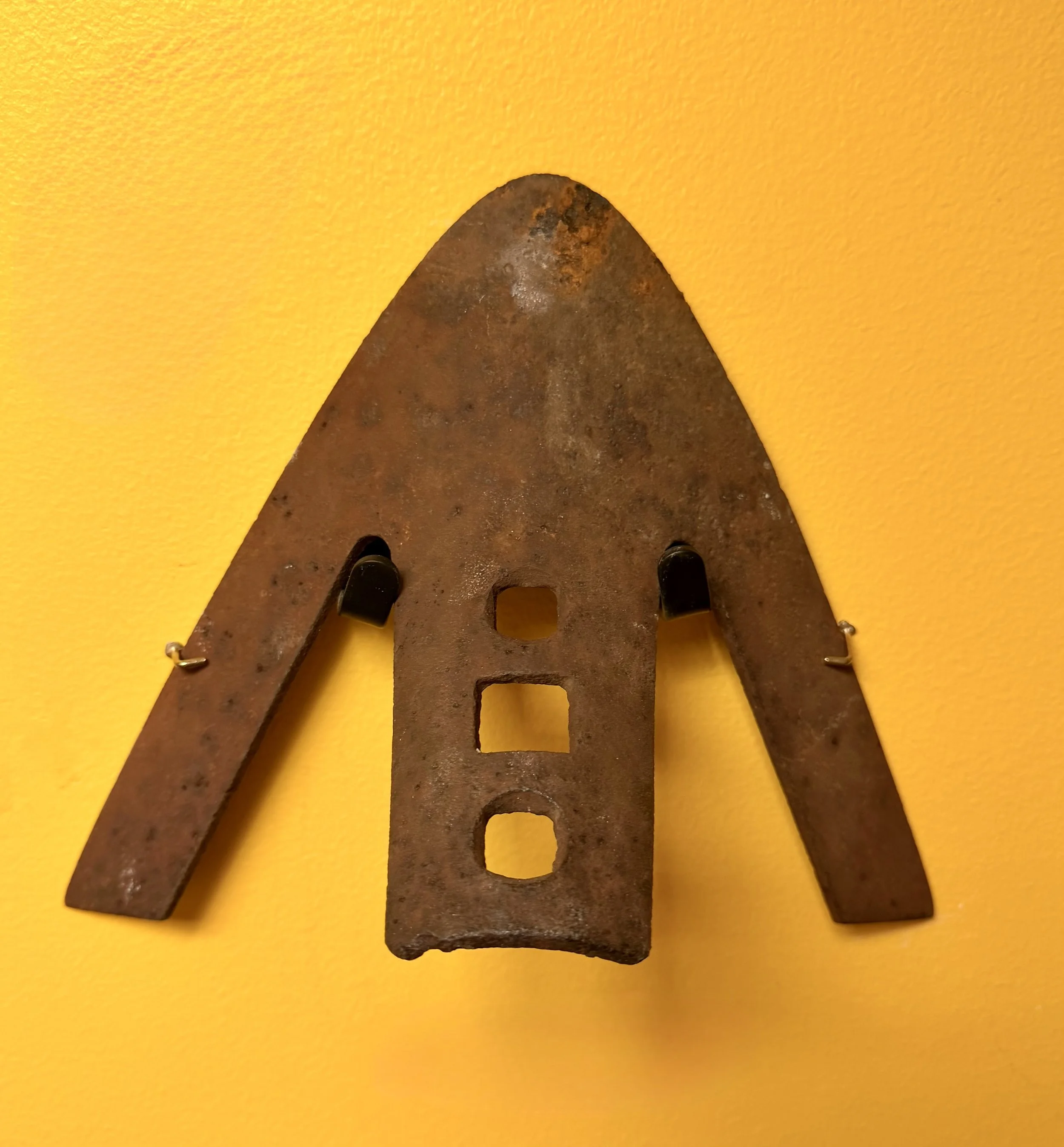
For Czech families farming in Texas, these new industrial machines would have been too expensive for those who mainly grew crops to feed their own families. Although steam and combustion run plows could be imported from New Orleans or Galveston, most families would have had their plows fabricated locally, as this one most likely was. The cultivator plow’s pointed arrowhead shape allowed it to break up the ground while the wider wings uprooted the grass and weeds, clearing the area so that crops could be planted without going too deep. These plows would have been pulled in the front by horse or ox, with the farmer controlling from behind, sometimes walking behind the plow, or sitting in an attached seat in later models.
Iron Plow Horse Hitch- 1900s
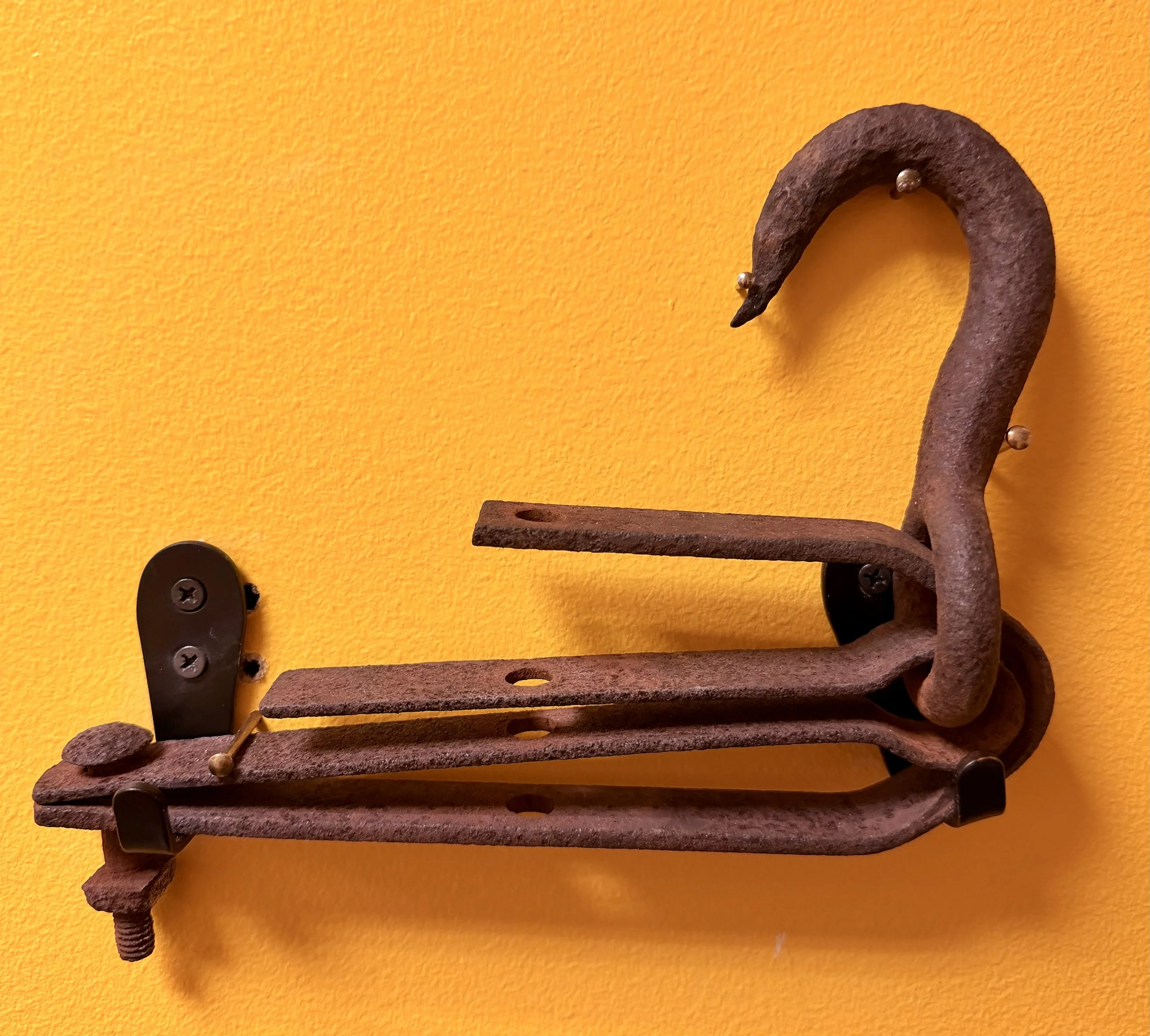
Small Czech farming communities depended on their local blacksmiths to create the tools needed for them to be able to work their farms. This particular hook most likely would have been attached to the cultivator plow blade by a wooden beam that would have been sandwiched between the two bottom pieces of metal seen in this hook. The hook could then be used to harness a plow horse to the front to pull the plow through the fields. The amount of craftsmanship and skill needed by local blacksmiths was the lifeblood of the community, with many blacksmiths having the ingenuity to able to forge unique pieces for each farmer in order to maintain the tools needed to work their land.
Iron Horseshoe with Heel Calks- 1900s
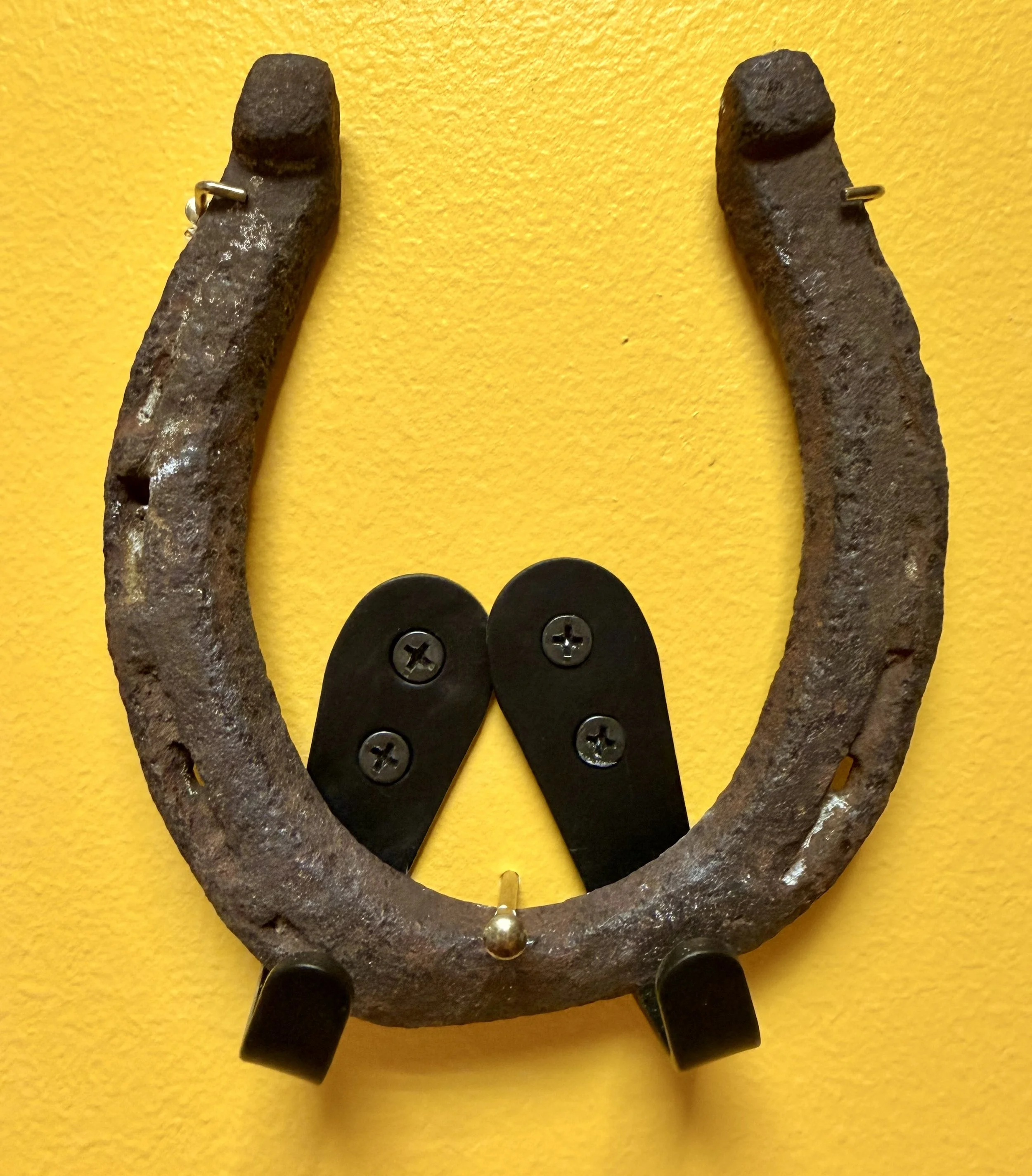
Horses were often the power behind many of these small Texas farms, and taking care of the animals was of utmost importance due to the valuable work they performed. Shoeing the horses not only helped with their upkeep, but the shoes could be fashioned in a way that helped with sore spots, offered more support, or treated different ailments to keep the animals in shape. While machines began making horseshoes in 1835 in the United States, many small farmers and small farming communities would have still depended on local blacksmiths to forge their horseshoes, allowing them at times to be customized to the needs of the horse as well as the labor the horses performed. The raised end of these shoes would have helped the horse gain more traction when working in soil and mud.
Horseshoe with Toe Clip and Calk- 1900s
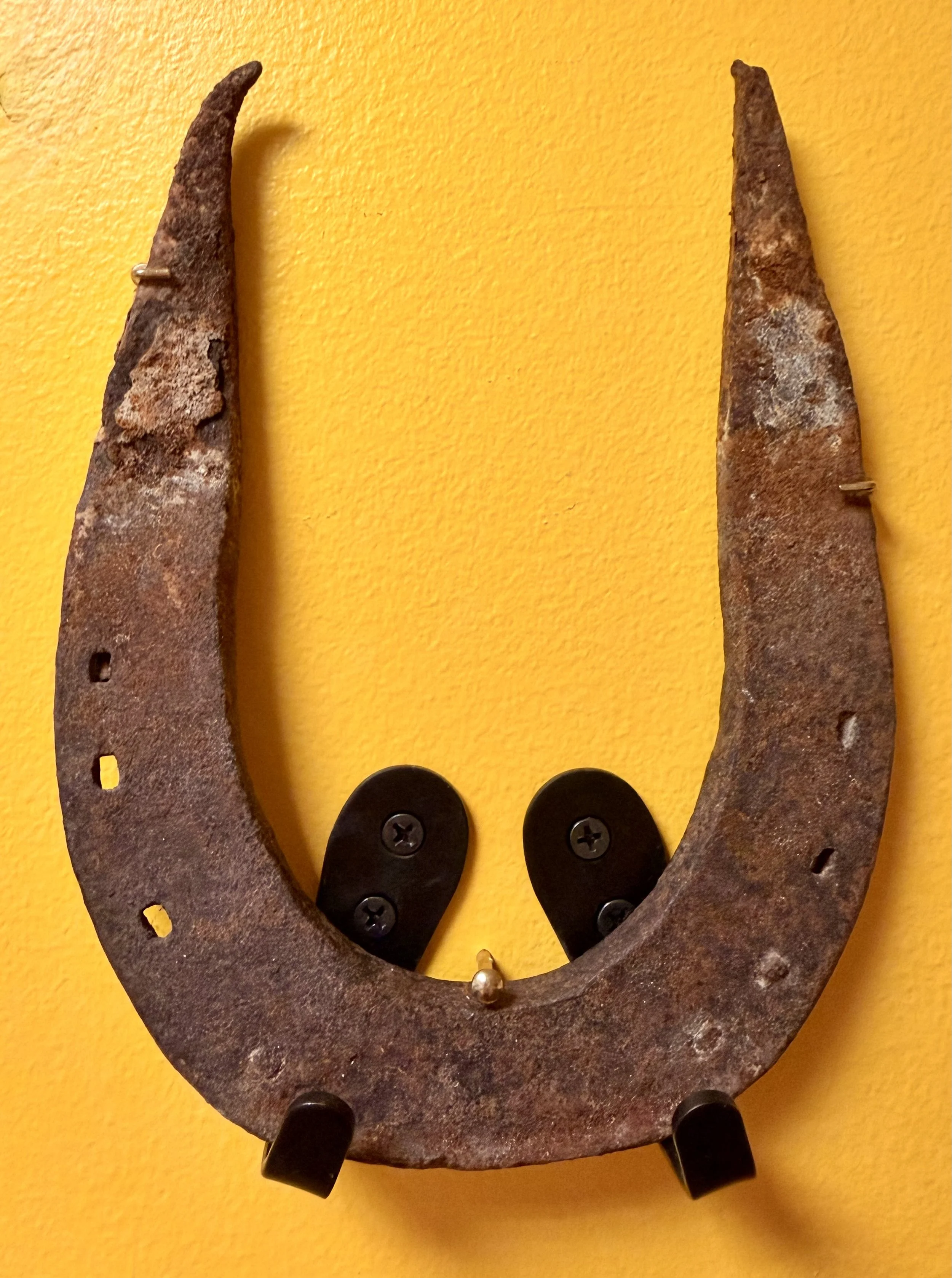
This particular horse shoe is equipped with both a toe clip and toe calk — a slight ridge at the middle of the shoe that was common for heavy draft horses to aid in their work on the farm. The toe clip that points upward was to prevent the horse shoe from twisting or sliding backward on the hoof. The toe calk, which points downward acts as a cleat to provide the horse with traction to avoid slipping in the dirt or mud. This kind of horse shoe was very standard for logging and plowing draft horses, much like the ones we would expect to have seen on many Texas Czech farms in the 1900s.
Iron Reaping Hook- 1900s
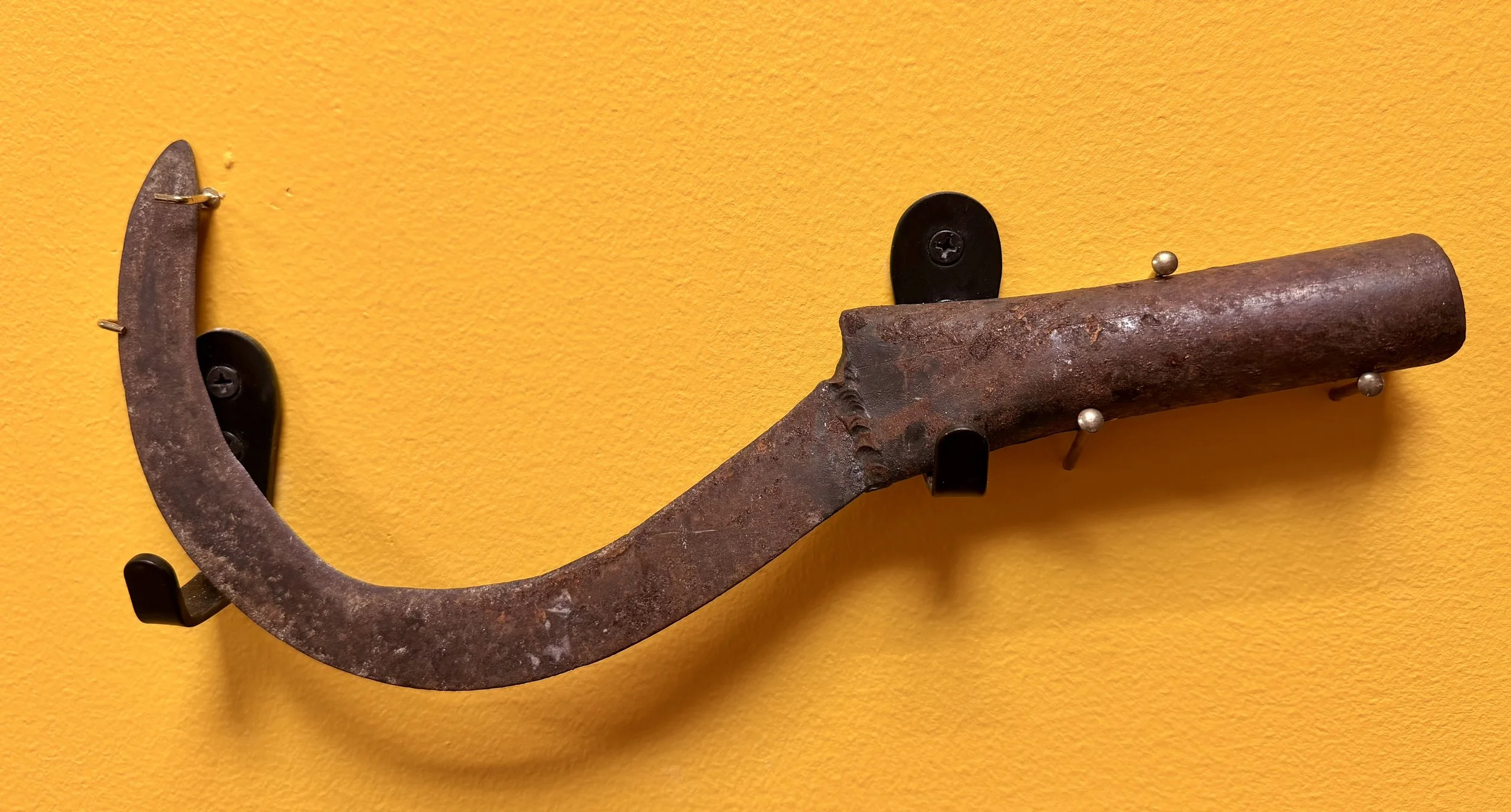
The reaping hook, or short sickle has a long history in agriculture around the world. Tools like this have been used to harvest grain and clear long grass for centuries. Larger blades of a similar style are known as scythes and were often attached to large handles to be used to mow large fields or grain close to the ground while standing. This allowed a worker to clear a much larger area with each swing. This particular reaping hook would have been used to work in much smaller areas, by welding it in one hand, and grabbing stalks to cut through with the other hand. Its use would have been impractical on a larger farm where speed and quicker harvesting techniques were essential, but would have still fit in well with smaller, family oriented farming among the Czechs in Texas.
Flat Jaw Blacksmith Tongs- 1900s
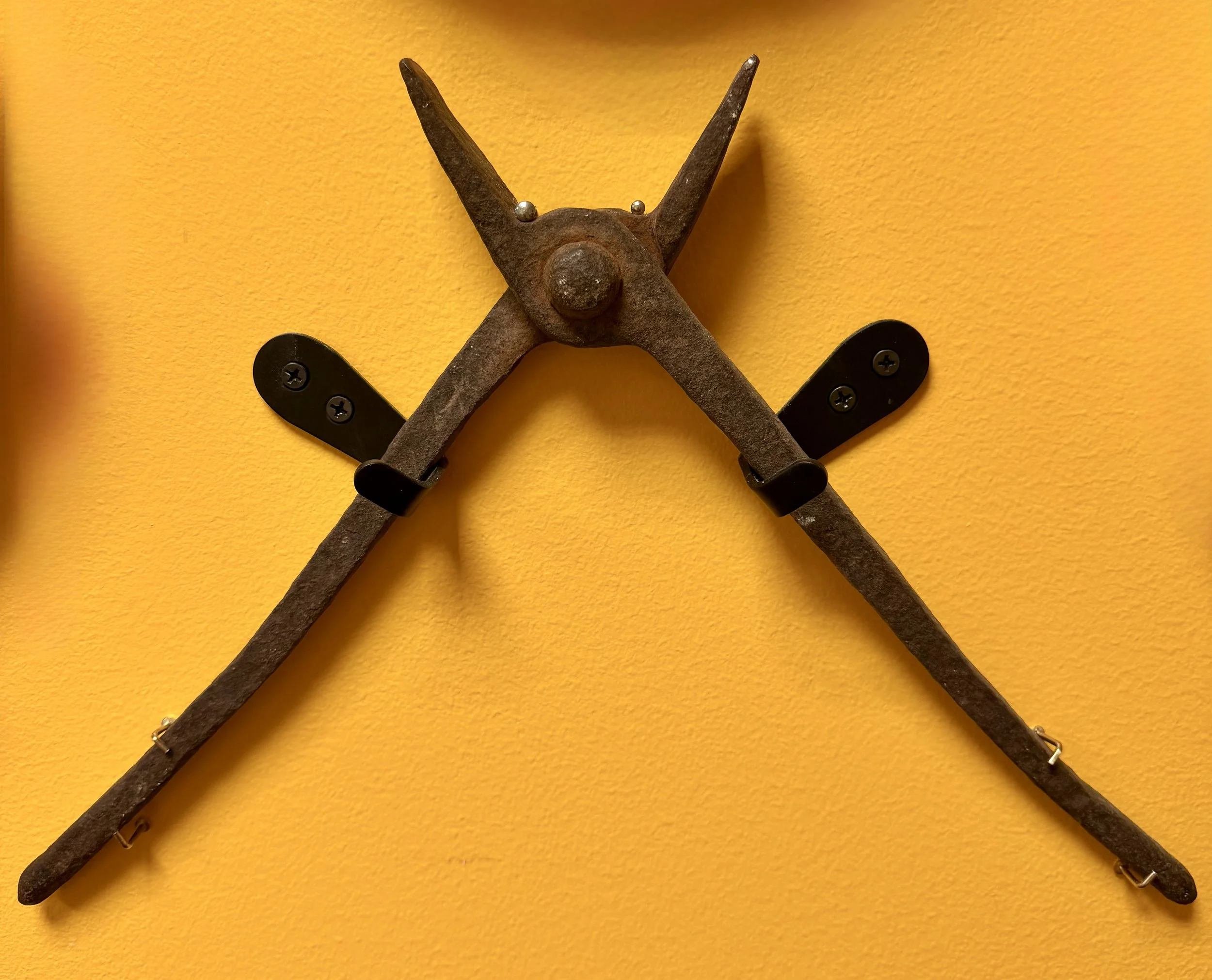
For Texas Czech and other small, remote farming communities, blacksmiths were a vital part of maintaining and helping the community grow. It was not practical for farmers themselves to do their own blacksmithing, given the time and skill needed to creating the tools on top of the time to tend their farms, so many of these communities were designed around easy access to a blacksmith who would be able to supply the community with the tools they needed. These Czech craftsmen helped keep ranches and farms functional as equipment wore down and failed, fixing old equipment, and customizing tools to specific livestock, farmers, and needs. These tongs would have been used to hold and heat metal, with long arms in order to keep the smith’s hands away from the heat, and similar tools can still be seen in use by traditional blacksmiths today.
Wagon Wheel
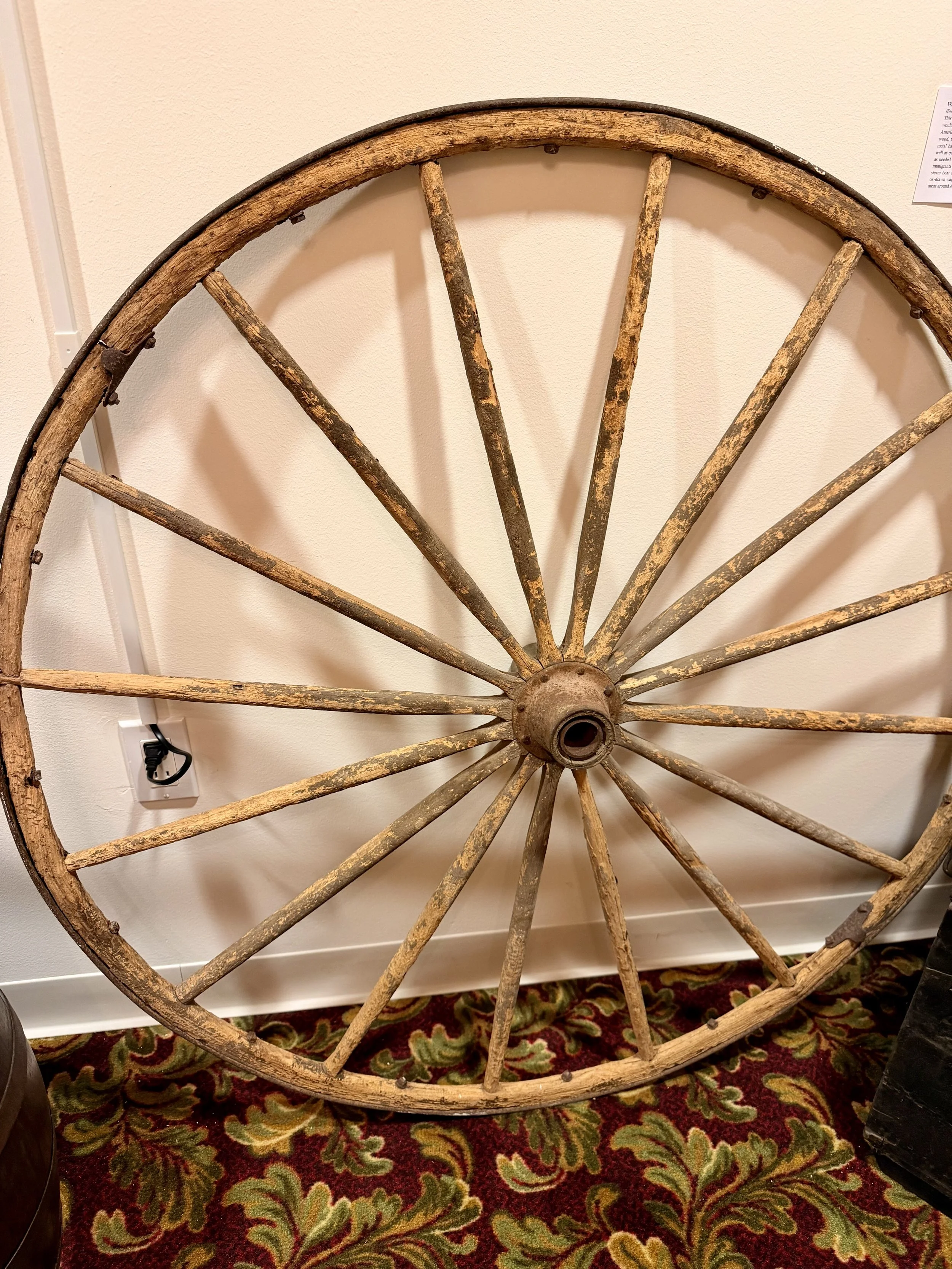
This wagon wheel most likely comes from a buggy and would have been a time intensive process to make it. American wagon wheels were usually made with hickory wood, though some companies would use oak or ash. The metal band, or hub, around the outside added strength as well making it easier access to replace or repair parts of the wheel as needed. As part of the Czech migration to Texas, many immigrants arrived in Galveston before traveling on a steam boat to Houston and then eventually via buggy or ox-drawn wagon to areas around Austin County, Texas.