Very popular in areas like Scandinavia, mangle boards were used to iron clothing and cloth before the invention and widespread use of a heated iron. Dating back to as early at 1444, these boards were paired with a large stick; damp cloth was wound around the stick and then rolled underneath the mangle board, with the user holding it by the handle with their dominant hand and placing their other hand on top of the board with their weight to roll the stick with the cloth underneath the board, back and forth to get out any creases. The use of these boards spread across Europe, where they peaked in popularity around the 17th and 18th centuries before falling out in popularity around the early 1900s.
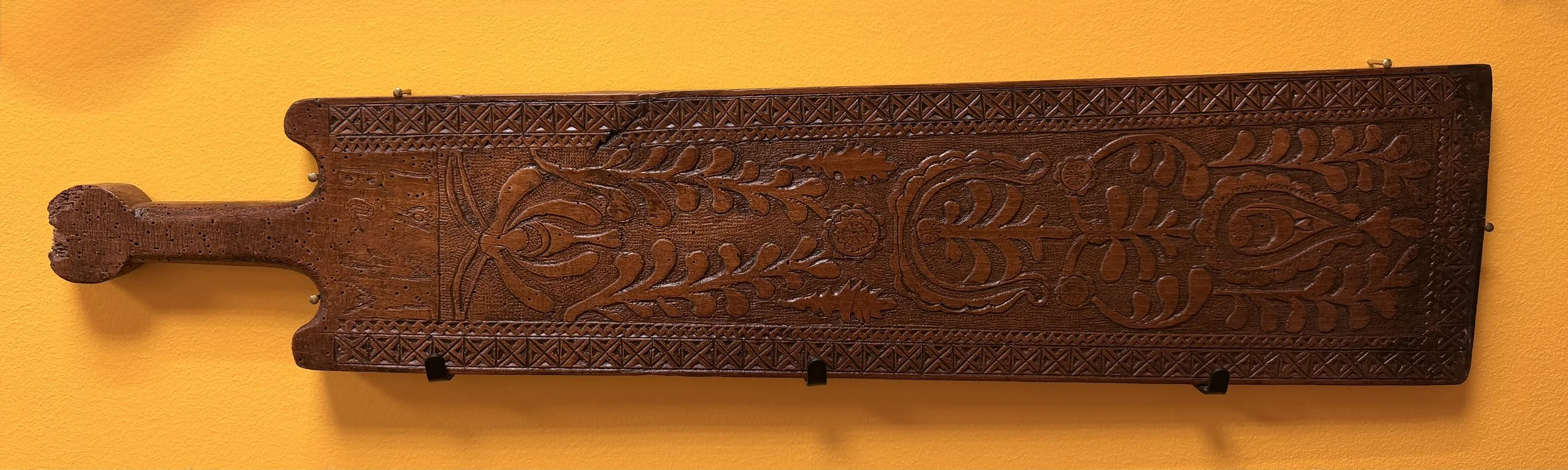
These mangle boards became closely associated with courtship rituals and proposals across Europe. As tradition goes, once a man found the woman he wanted to marry, he would personally carve and decorate a mangle board for her, often with elaborate motifs and designs that were traditional to the area. He would then hang the board on the door of the home where the woman he wished to marry lived. If the board was taken into the house, the proposal had been accepted and the year and initials of the bride and groom would be added to the carving. If the proposal went unaccepted, the board remained on the door and the groom would carve a completely new board to be used in his next proposal as the same board could not be presented to more than one girl. These boards and the associated courtship practices were never popular in the United States, but were brought over with immigrating groups from Europe where they continued to be used in those diasporic communities. On this particular board you can see the date, 1911, carved as well as what appear to be initials of the bride and groom by the handle.