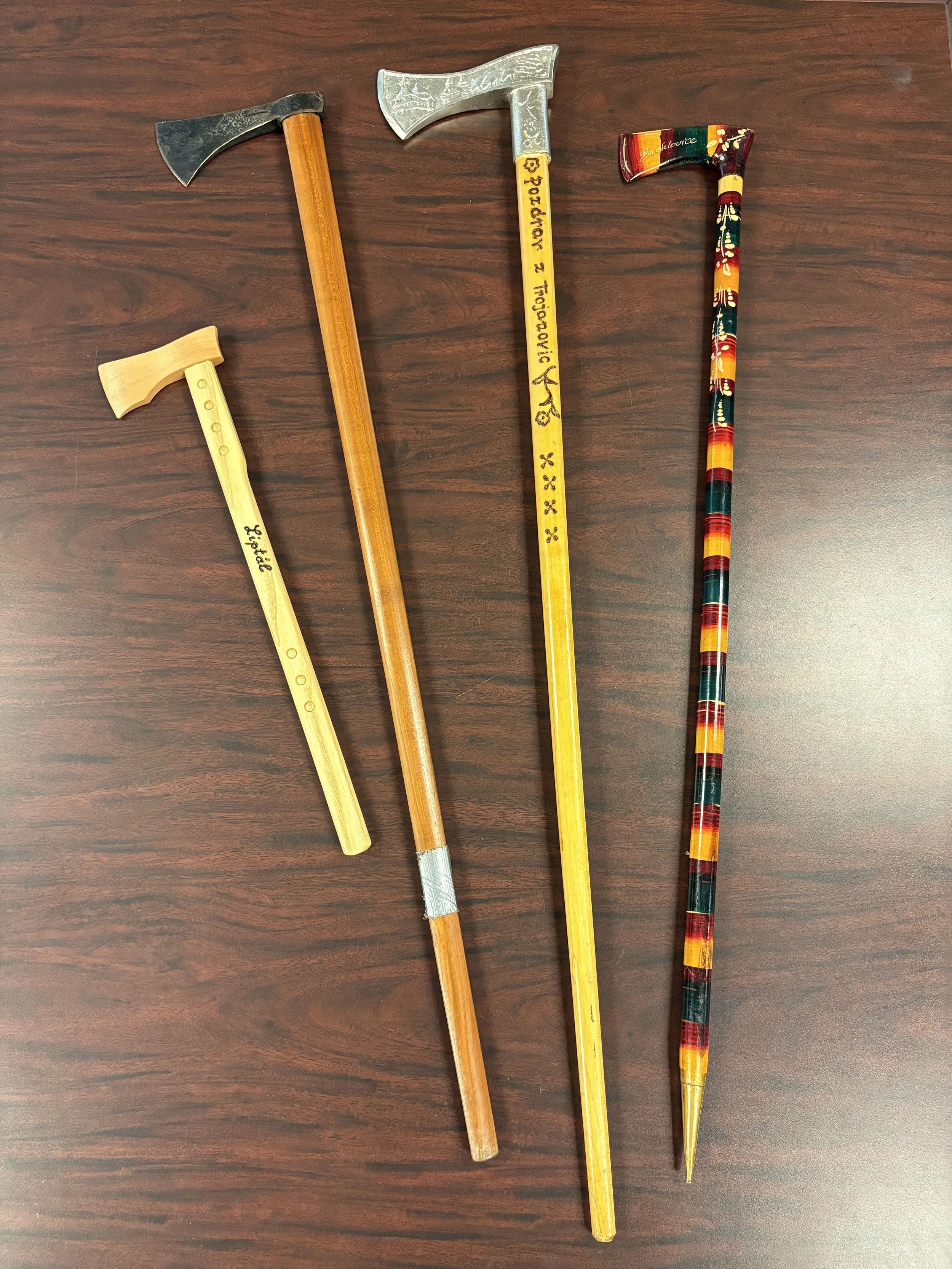
The valaška, or shepherd’s axe were originally used by shepherds in the mountains as a multitool- walking stick— cutting branches, clearing paths and trimming animal hooves. These were popular among Slovak and Czech shepherds, and most likely would have also been used by immigrants to West Texas. Traditionally worn in a heavy decorative blet, the shafts of the axes were engraved by its owner to pass the time, and the heads of the valaška were decorated in a way that demonstrated the origin of the shepherd and their ownership of the axe. The decorative carvings often featured representations of Juraj Jánošík, a historical folk hero of legend who stole from the rich to give to the poor, much like Robin Hood. Jánošík was an outlaw who lived in the Carpathian Mountains in 1711, and is often depicted holding a valaška.
For those in Moravia, these valaška axes became a symbol of highland pride and were used (and still are used) in many traditional folk dances, where axes are swung and used as part of the dance steps. Czech immigrants worked to preserve many of their folk traditions in their new Texas homes, continuing to speak the language, attend church, wear traditional clothing during special occasions, and practice and preform the same traditional folk dances they had in their homelands.