
Gravity Cream Separator
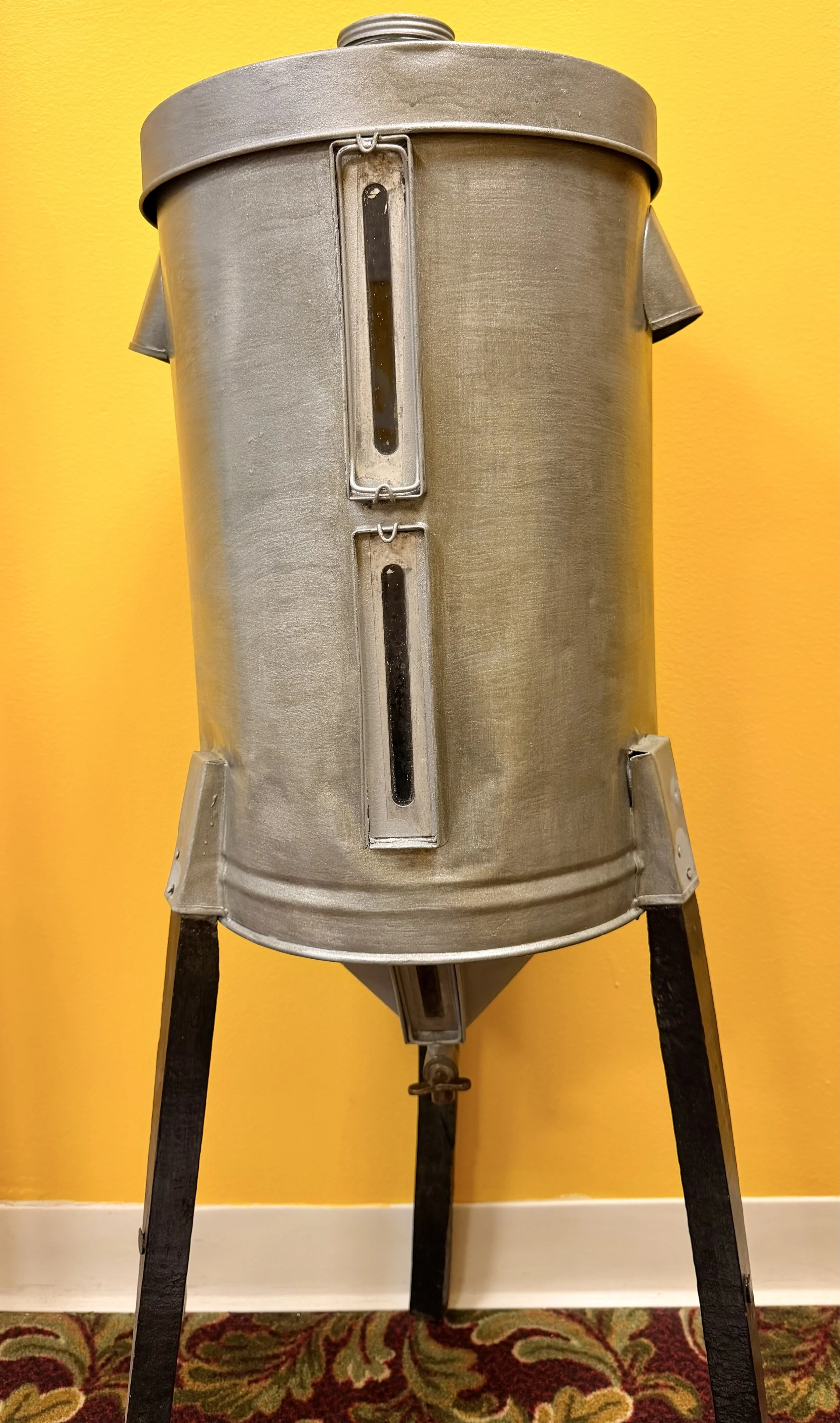
Tools not only made the farm work easier, but also aided in household work as well. This cream separator used gravity to separate cream from skim milk. Fresh milk was poured into the container and left to sit. Over the course of several hours, the lighter cream would float to the top and the heavier milk to the bottom of the container. This process could be sped up by placing the separator in cold water. Windows on the side allowed the cream line to be viewed throughout the process and as the milk was emptied using the valve at the bottom of the container. Cream was then scooped out of the separator and could then be used to make butter and other products.
Wooden Barrel Butter Churn
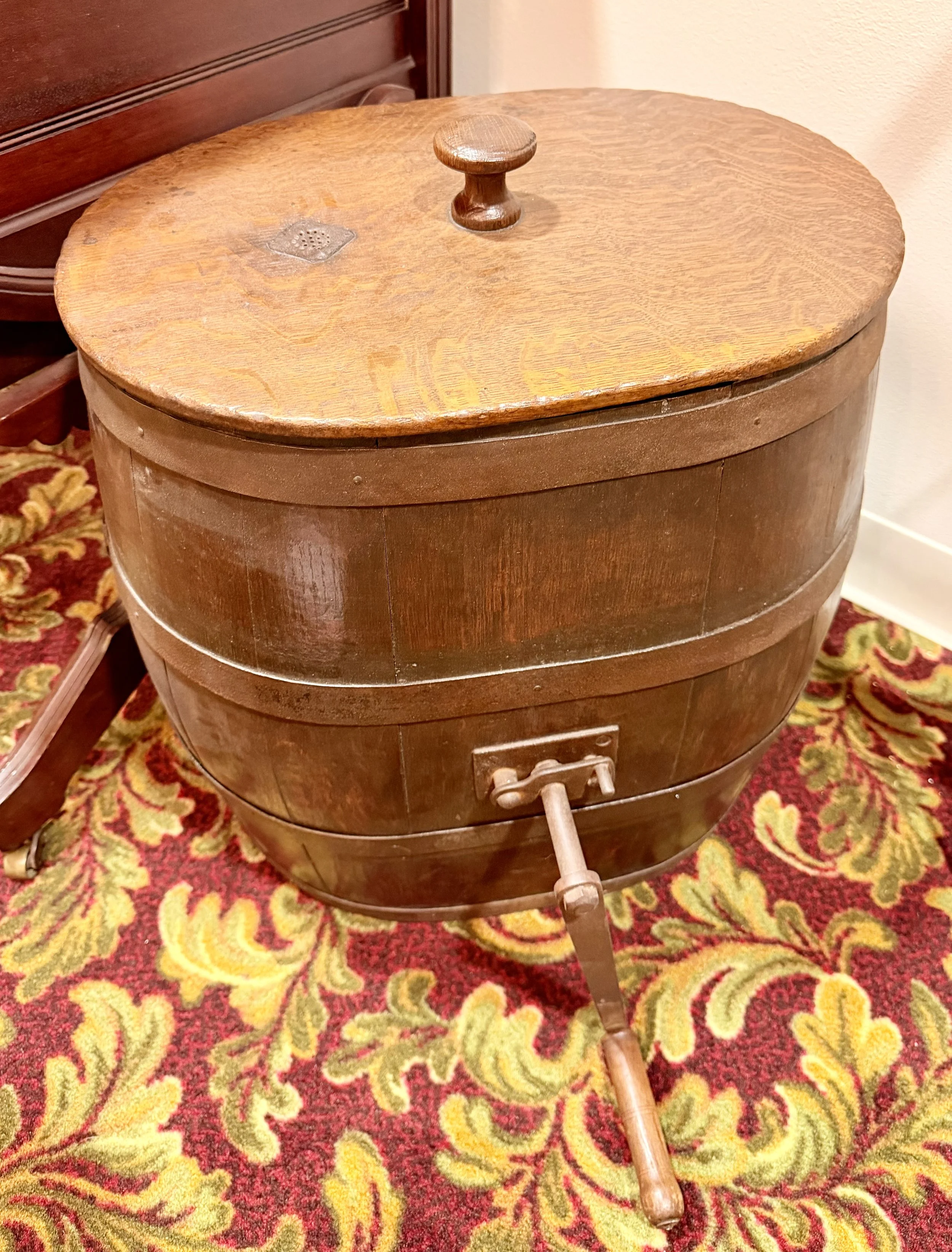
This type of butter churn was created using a wooden barrel and then placing a wooden paddle on the inside of the barrel with a crank on the outside. Although butter churns have been around for hundreds of years, this particular style of butter churn was first used during the 18th century, but became widely available in the 19th century. This style of churn contained replaceable parts such as the hand crank and the inside wheel, allowing for easy replacement if damaged. The churn was used by pouring strained cream into the barrel, placing the lid and then slowly and smoothly turning the removable crank on the side. Once the process was started, it could not be stopped until the butter was made. A small vent in the lid allowed for air pressure regulation, and most women were able to tell when the process was complete by the sound the butter made in the barrel. After the butter was done churning, salt would be added in by hand.
Wooden Bread Dough Bowl
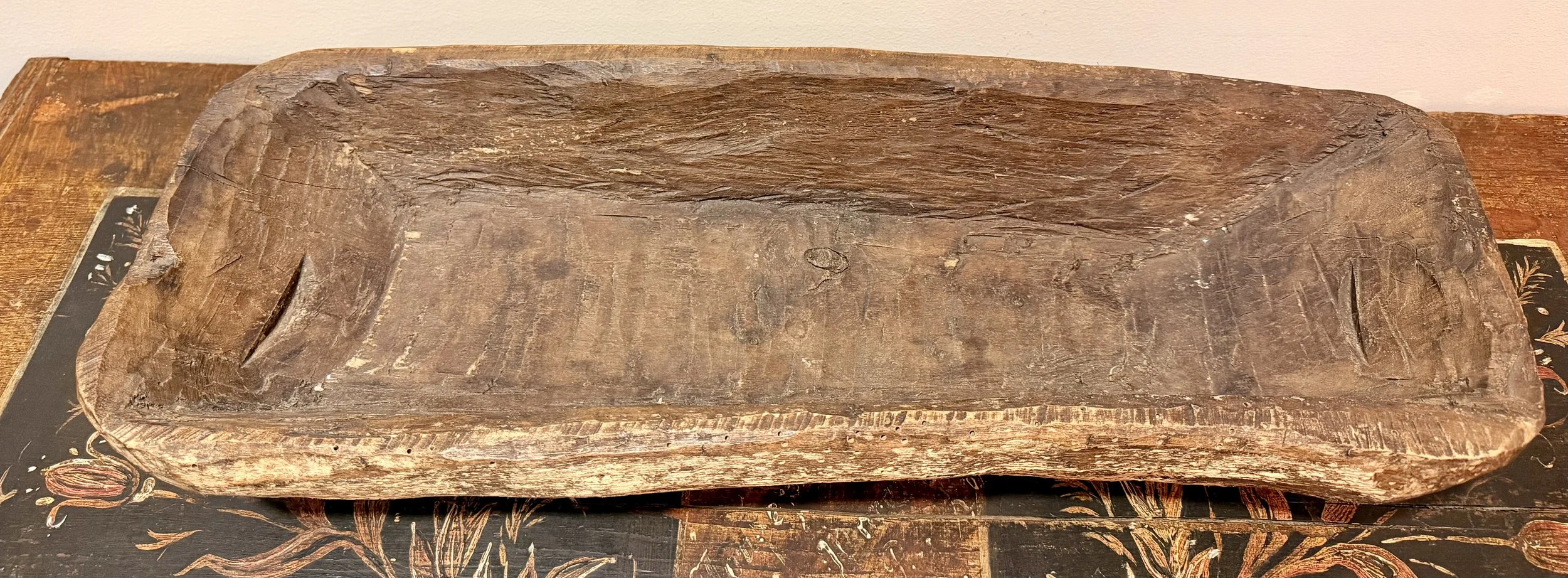
Wooden bowls were used across Europe and by settlers in America to make bread. These bowls were used to mix, knead, and rise the bread dough. Wooden bowls were preferred for this process because the wood would trap the heat released by the yeast, allowing the bread to achieve a better rise before it was baked. Often these bread bowls were hand-carved and handed down from generation to generation. Sometimes these were carved and gifted in anticipation of an upcoming marriage, to give the future bride all of the tools she would need to run her household.