Kamil Kubik (1930-2011)
Biography
Czech-American pastelist Kamil Kubik was born in 1930 in Olomouc, Czechoslovakia, and grew up during the Nazi occupation of the country during World War II. In 1948, as the communist party came to power in Czechoslovakia, Kubik defected to West Germany, where he spent several years in a refugee camp, often spending his time painting murals of Czech history on the walls of his unit. He was eventually sent to Australia where he worked as a cowboy in the Outback before enrolling in art school in Sydney. There, he met and married his wife, Joanna Bowers, an accomplished ballerina whose work with different ballet companies took them around the world. Kamil often designed costumes and painted backdrops for local theater and ballet productions, continuing to find various jobs wherever they lived that drew on his artistic talents. Kamil and Bowers lived in San Francisco, London, and Germany before returning to the United States and eventually settling in New York City in 1965.
Throughout their travels, Kubik refined his Impressionist artistic style, painting in plein air (in open air) with oil paints and pastels in and around the cities and countries he and his wife lived in. He once said, “The most valuable thing I do by being an artist is that I meet many incredible people,” and he enjoyed interacting with individuals who passed by and stopped to watch him paint different cityscapes, landscape, and street scenes. His popularity even allowed him to return to visit family in Czechoslovakia despite his previous defection, and to meet with the Prime Minister of the time while he and his wife lived in Europe.
Upon returning to the United States and settling in New York in1965, Kubik’s impressionist style did not match up with the obsession with American abstract art of the time. With modernism on the rise, the art scene in the twentieth century trended towards avant-garde, modernism, abstract expressionism, and surrealism, yet Kubik maintained the resilient lineage of Impressionism and Lumière style of many emigrant artists. Unable to find a gallery that would display his art, he opened the St. James Gallery on Madison Avenue in New York City, where he sold his work and continued his practice of painting landscapes on the streets of the city, and around the United States. His gallery’s proximity to wealthy clientele caused him to gain notoriety; he quickly became well known for his vibrant and kinetic cityscapes and floral designs. Kubik’s popularity and artistic notability continued to spread during his time as the Official White House Artist under the presidency of George H. W. Bush, as well as creating works for the cover of the 1972 Reader’s Digest, stamps for the 1994 World Cup tournament, and being the official artist for the US Open tennis and golf championships. It was in 1992 that he made his U.S. citizenship official after living in the United State around 30 years.
His work should not only be seen as decorative pieces; they serve as a visual manifestation of the artist’s embrace of Western liberty, offering a deliberate rebuttal of the Communist and Nazi regimes from his youth.
“You constantly have to think when you create art. Art is science. If it is not science, it is a game or play. And art is not play. When you see a championship golfer hit a ball, it looks like play, but there are years of dedication, work and struggle that go into his swing. It's the same with art.” -Kamil Kubik
Poppies- Czechoslovakian Wild Flowers
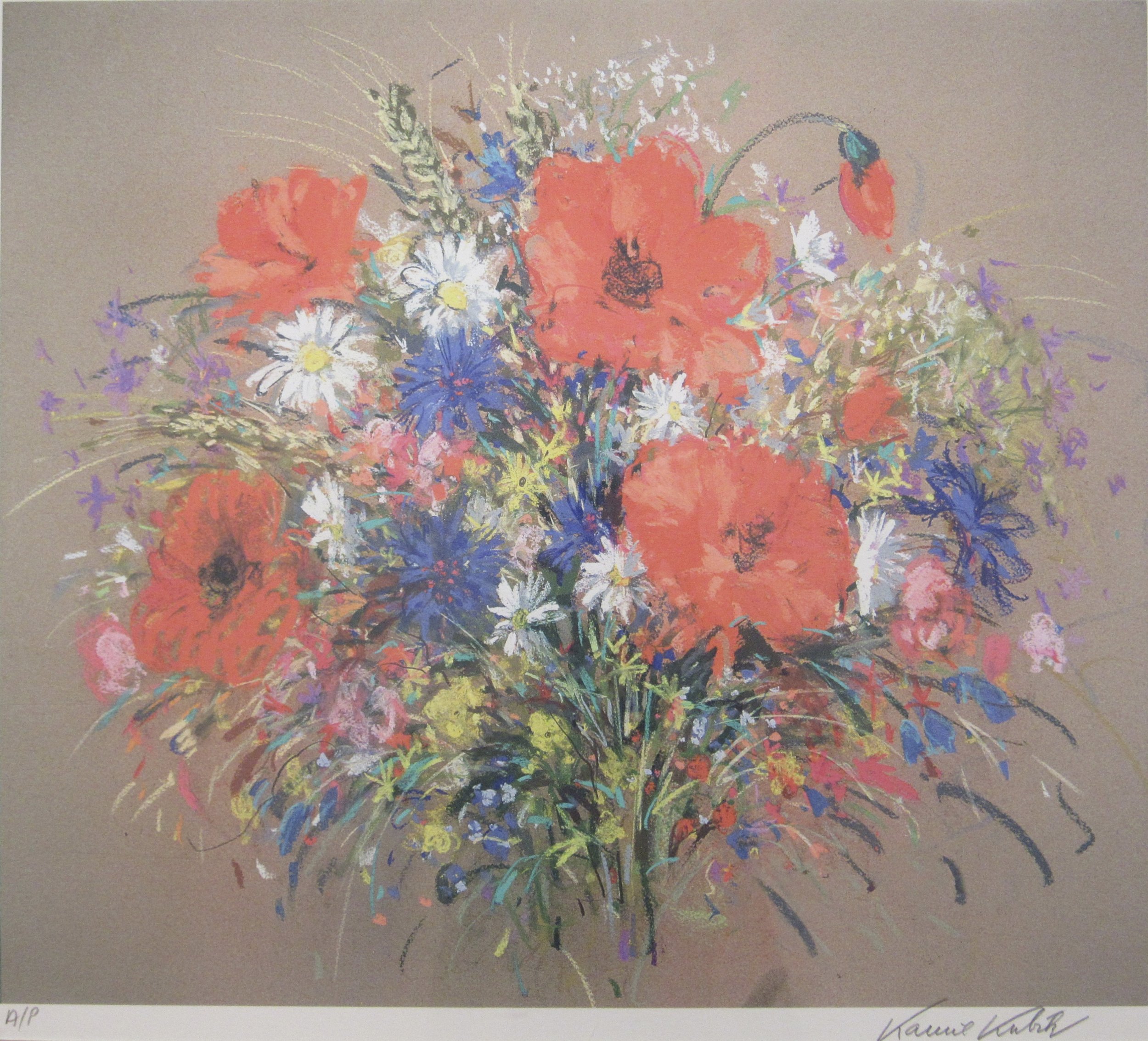
Poppies have long been grown in the Czech Republic, with the seeds being used in many traditional Czech recipes. Apart from his landscapes and architectural depictions, Kubik was known for his floral pieces, so it is not surprising that poppies would have caught his attention and focus in some of his floral works. In particular, the inclusion of not just red poppies, but also blue and white wildflowers was a choice most likely done with the national colors of the Czech Republic in mind.
Red, white, and blue shine against a tonal background where a grouping of native wild flowers become a symbol of national identity. The soft, yet briskness to the strokes bring the fragility and resilience of Central Eastern Europe to mind.
ARTIST
Kamil Kubik
TITLE
Poppies- Czechoslovakian Wild Flowers
MEDIUM
Pastel on paper
DIMENSIONS
57cm x 50cm
CREDIT LINE
Gift from Marta P. Latsch
CURRENT LOCATION
Czech Center Museum
4920 San Jacinto St.
Houston, TX 77004
ACCESSION NUMBER
PU23/PLat1
CLASSIFICATION
Print, signed by artist
PROVENANCE
The piece was acquired through the Czech Center Museum Houston by Marta P. Latsch in April, 2005.
Paul Revere Monument
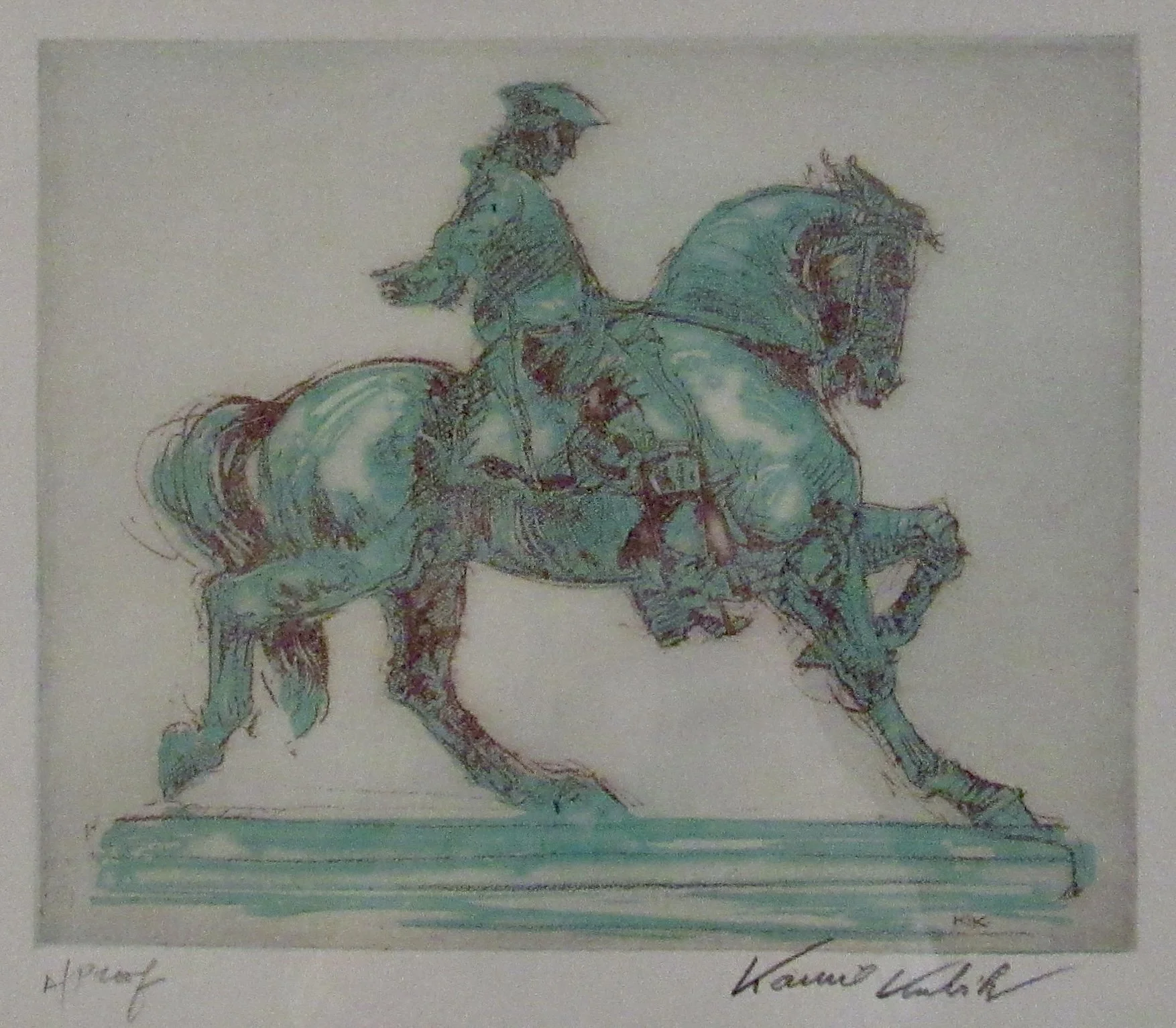
Easily identifiable, Paul Revere became famous for his midnight ride to alert the local colonial militia that the British forces were on their way, thus allowing John Adams and John Hancock time to raise the minutemen to defend against the British. Undoubtedly, Kamil Kubik must have viewed this finished statue as a symbol of courage and the fight against imperial rule.
His monochromatic sketch allows audiences to fully understand and appreciate the attention to form. The gestural detail of the monument enables viewers to easily identify this patriotic and national figure.
ARTIST
Kamil Kubik
TITLE
Paul Revere Monument
MEDIUM
Pastel on paper, original, signed by artist
DIMENSIONS
34cm x 30cm
CURRENT LOCATION
Czech Center Museum
4920 San Jacinto St.
Houston, TX 77004
ACCESSION NUMBER
PU17
CLASSIFICATION
Original, signed by artist
PROVENANCE
The piece was acquired through the Czech Center Museum Houston by unknown donation.
Saint Patrick’s Cathedral
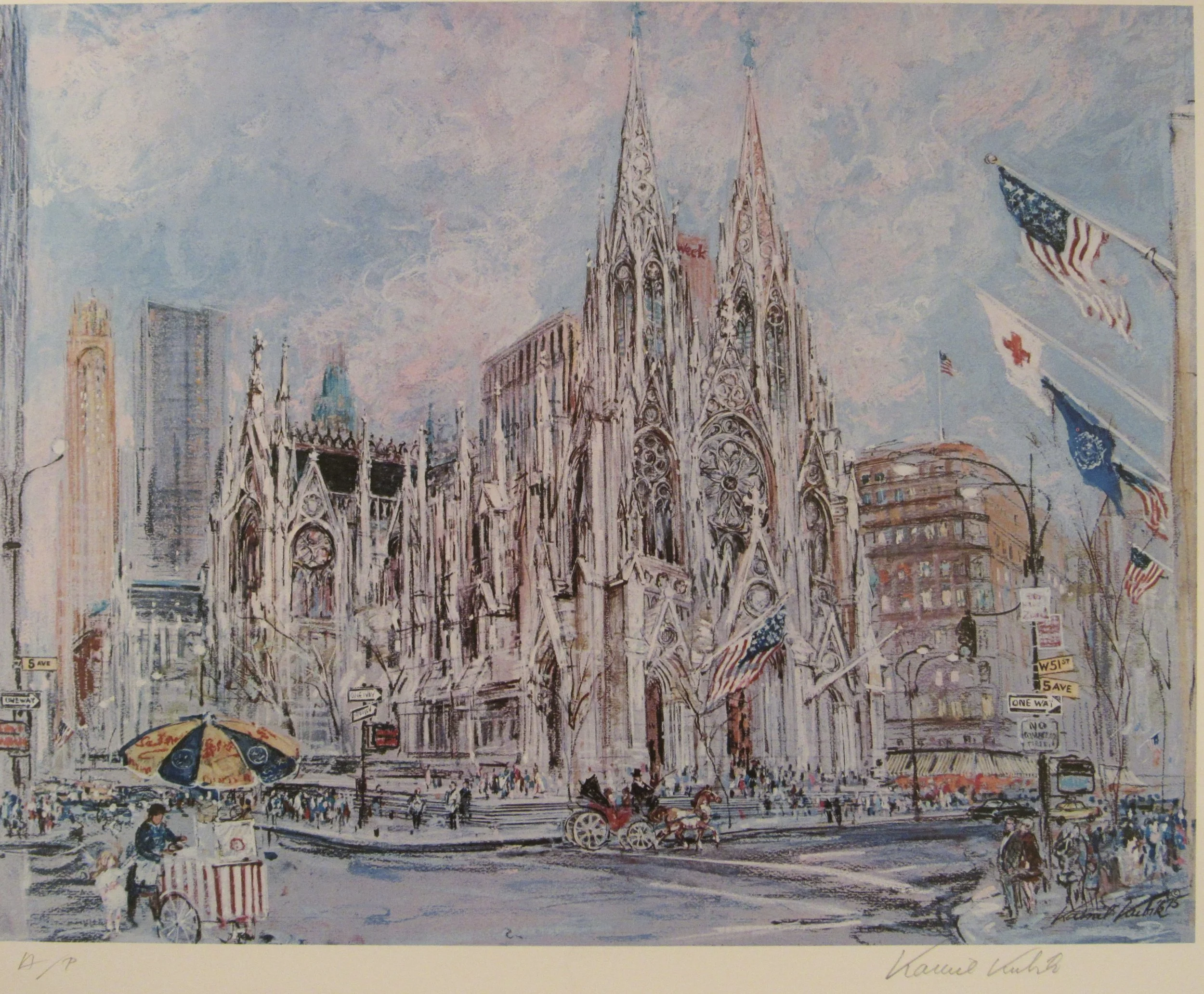
While living in New York, Kubik often painted depictions of famous and popular landmarks around the city. The St. Patrick’s Cathedral in New York City opened in 1879 to help accommodate the growing Catholic community in the city. The Cathedral remains the largest Gothic style cathedral in the New World and has become a central part of New York City’s unique architectural heritage.
The use of cool tones and sharp vertical lines helps to accentuate the Gothic architecture of the cathedral. Rather than exclusively focusing on the building, Kubik’s commonly used composition is employed; the surrounding streets and buildings incorporate a sense of busy city life in the movement of the painting.
ARTIST
Kamil Kubik
TITLE
Saint Patrick’s Cathedral, New York City
MEDIUM
Pastel on Paper
DIMENSIONS
45cm x 35cm
CREDIT LINE
Gift of Bill and Effie Rosene
CURRENT LOCATION
Czech Center Museum
4920 San Jacinto St.
Houston, TX 77004
ACCESSION NUMBER
PRos5
CLASSIFICATION
Print, signed by artist
PROVENANCE
The piece was acquired through the Czech Center Museum Houston by Effie & Bill Rosene in March 2012.
Return to Czechoslovakia
After defecting from Czechoslovakia in 1948, Kamil Kubik was allowed to return in the 1960s, once to visit family and friends and again a few months later to attend the funeral of his father. It is likely that during these short return trips home, he would have taken to the streets to paint in areas of Prague and around Czechoslovakia, as he was known to do whenever he traveled. The following are several pieces from the Czech Center Museum Houston collection that most likely would have been completed during these trips back to Czechoslovakia.
Jan Hus Statue in Prague
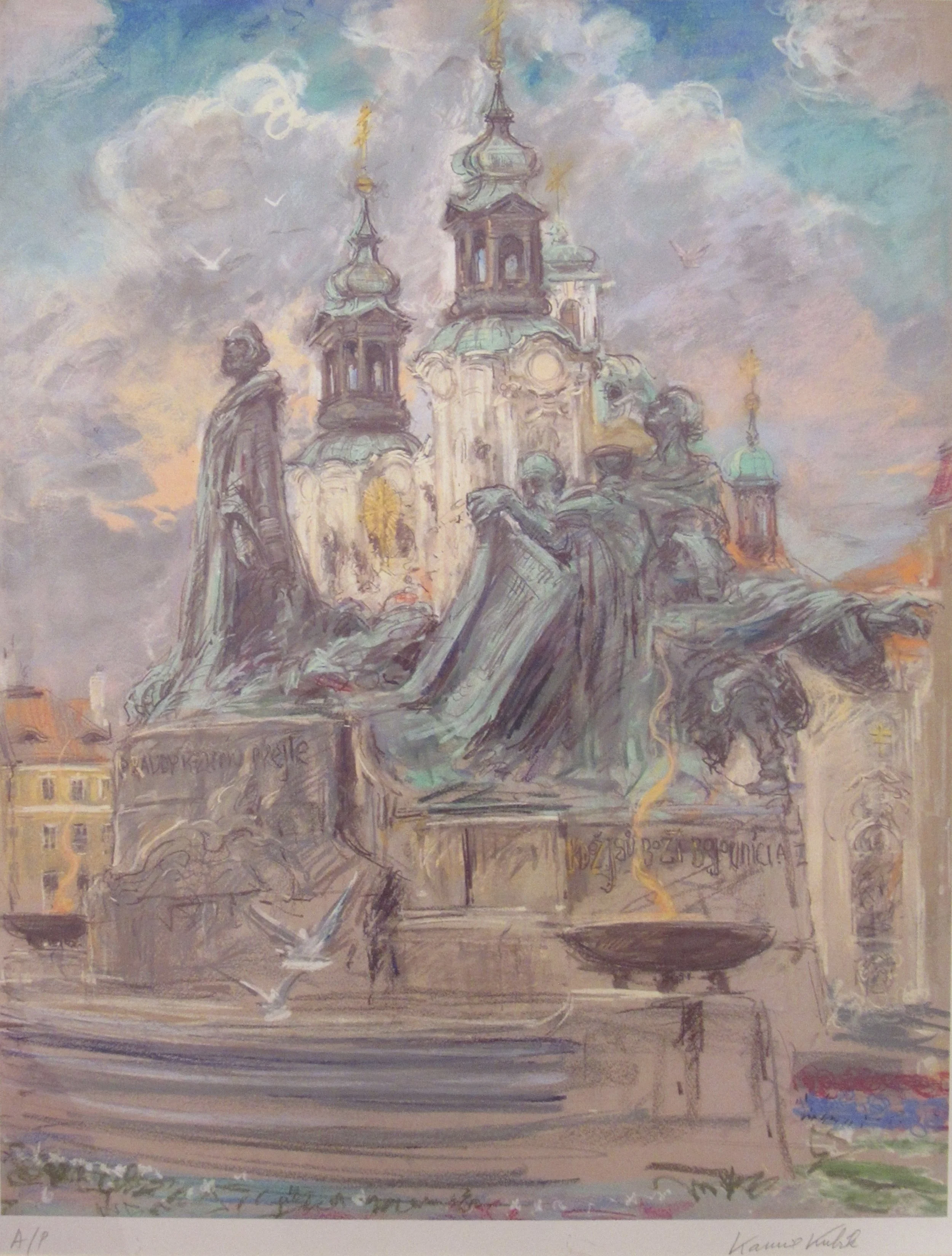
Born in 1369, Jan Hus was a religious thinker, philosopher, and reformer who spoke out openly against the Catholic church before he was burned at the stake in 1415. The monument in his memory was completed in 1915 and quickly became a symbol of dissidence and strength against oppressive regimes. During the communist rule in Czechoslovakia, sitting at the feet of the memorial became a way to silently express opposition to communist rule, a symbol that would probably have resonated deeply with Kubik after his defection from the country following the communist coup.
From a street perspective, Kubik’s view of the Jan Hus statue is monumental. The turquoise and greens of the statue are echoed in the roof and sky. Although the statue is not rendered in high detail, we understand the visual language of the piece through his characteristic strokes which carve out a sense of form.
ARTIST
Kamil Kubik
TITLE
Jan Hus statue in Prague
MEDIUM
Pastel on paper
DIMENSIONS
50.5cm x 54.5cm
CREDIT LINE
Gift of Laverne Huml Nash
CURRENT LOCATION
Czech Center Museum
4920 San Jacinto St.
Houston, TX 77004
ACCESSION NUMBER
PNash2/PU29
CLASSIFICATION
Print, signed by artist
PROVENANCE
The piece was acquired through the Czech Center Museum Houston by Laverne Huml Nash on April 13, 2005.
Prague Castle- Hradčany
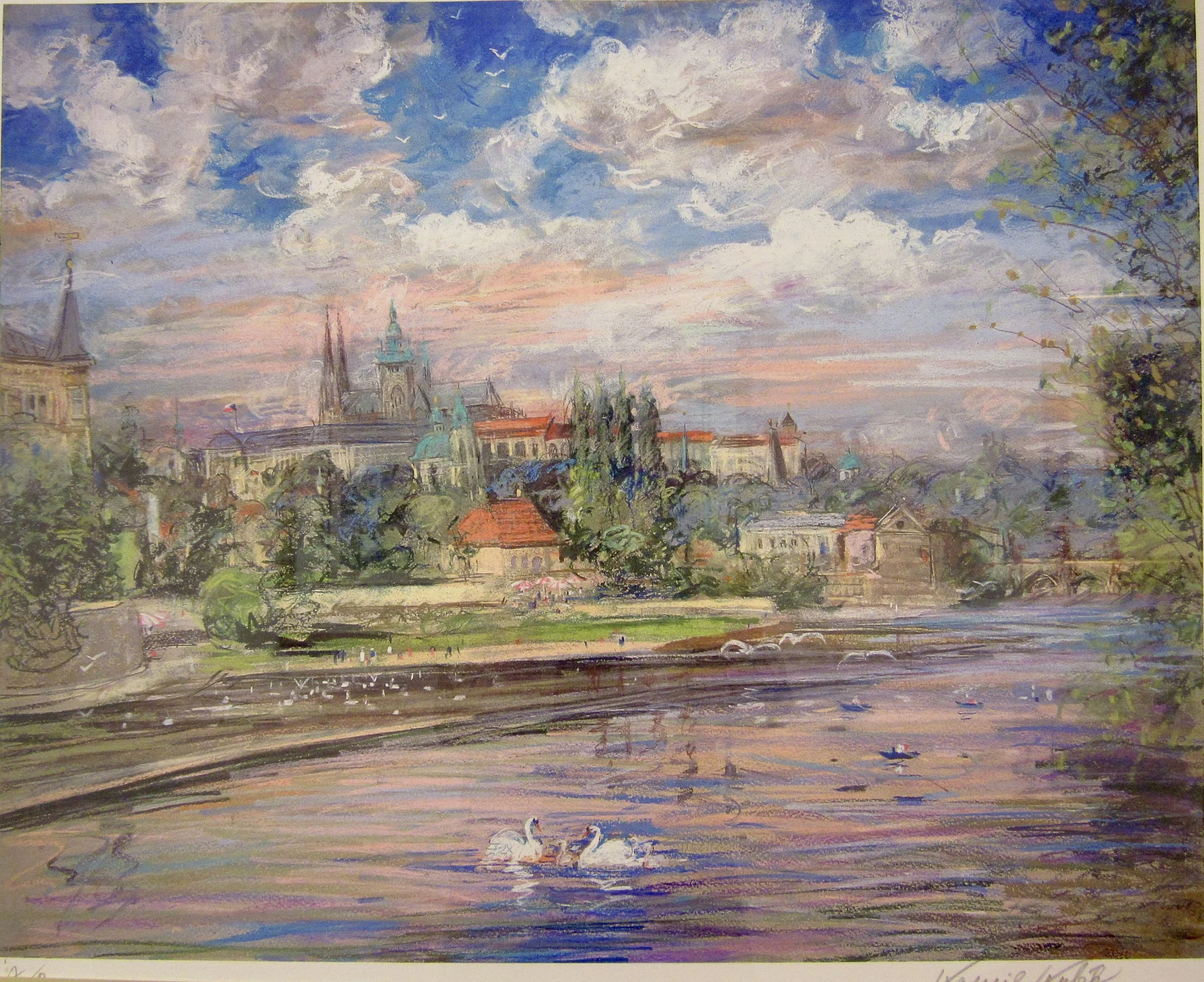
One of the most iconic landmarks, Prague Castle’s history began in 880 C.E., with strong connections to both the head of state and the Catholic church. Throughout its history, the castle has gone through periods of neglect followed by renovations and is considered an important cultural and historical monument, as well as the world’s largest ancient castle complex.
The Prague Castle overlooks the Vltava River, famous for its sweeping views and local wildlife, which Kubik was careful to include in his depiction. The colors of the sky are expertly echoed in the surface of the river, which creates a soft and luminous quality, a hallmark of the pastel medium. The ability of pastels to glow on paper makes this medium naturally adept for the Lumière style, which focuses on the light within the piece.
ARTIST
Kamil Kubik
TITLE
Prague Castle- Hradčany
MEDIUM
Pastel on paper
DIMENSIONS
63.5cm x 50.5cm
CURRENT LOCATION
Czech Center Museum
4920 San Jacinto St.
Houston, TX 77004
ACCESSION NUMBER
PU22
CLASSIFICATION
Print, signed by artist
PROVENANCE
The piece was acquired through the Czech Center Museum Houston by unknown donation.
Market in Prague
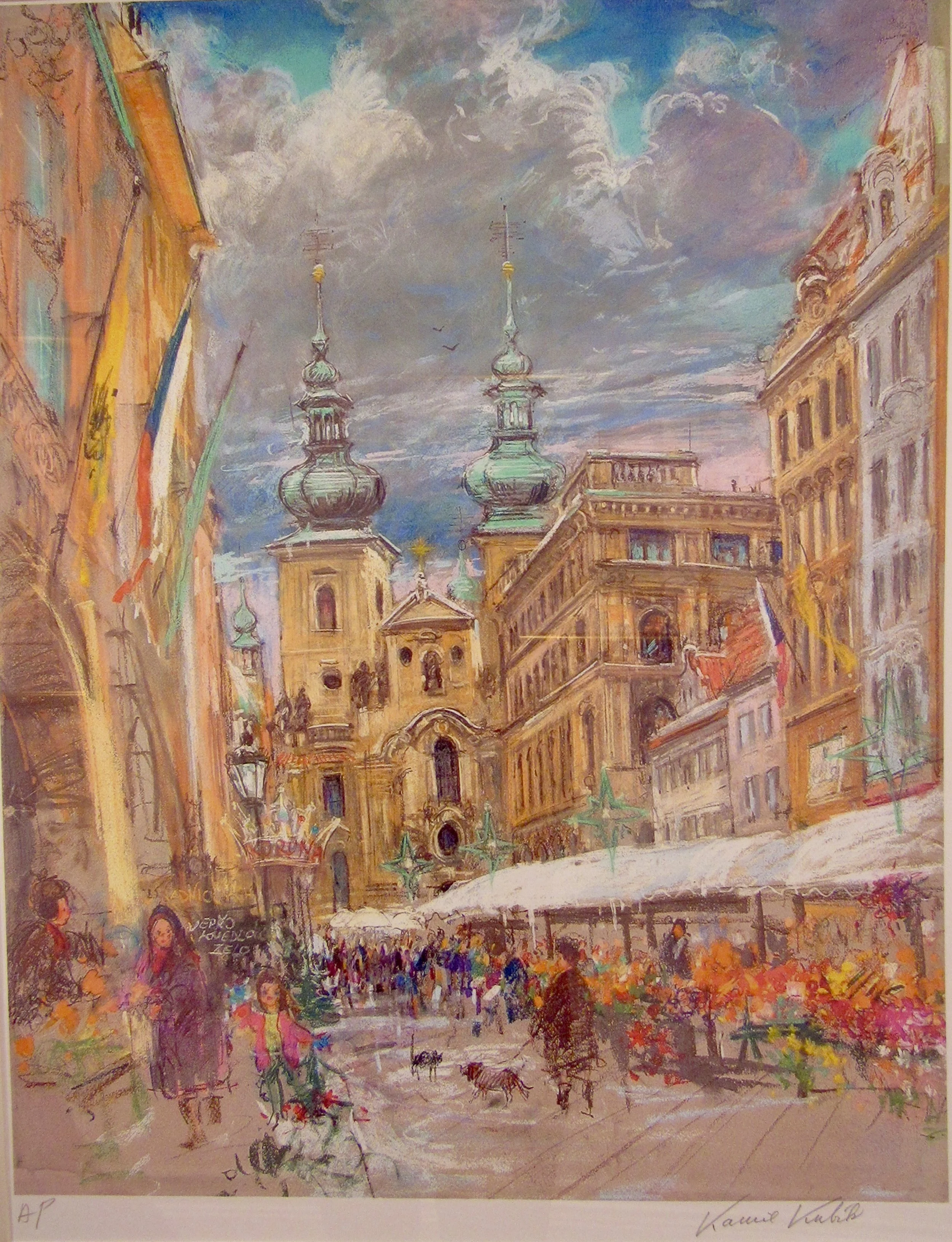
Havel Market is located in the heart of Prague, in one of the oldest parts of the city. The market dates back to the 13th century, and continues to be one of the most notable landmarks in Prague. The Church of St. Havel, established by Wenceslas I in 1232, rises in the background of this popular attraction, which is well known by tourists for its transformation into a Christmas market during the holiday season.
The composition of the market scene emphasizes the hustle and bustle of everyday life, while the Church of St. Havel rises above the surrounding buildings. The verdigris hue from the roof is carried throughout the piece, providing a sense of unity to the kaleidoscope of color seen in the market.
ARTIST
Kamil Kubik
TITLE
Market in Prague
MEDIUM
Pastel on paper
DIMENSIONS
51cm x 64.5cm
CREDIT LINE
Gift of Fr. Paul Chovanec
CURRENT LOCATION
Czech Center Museum
4920 San Jacinto St.
Houston, TX 77004
ACCESSION NUMBER
PCho21/PU21
CLASSIFICATION
Print, signed by artist
PROVENANCE
The piece was acquired through the Czech Center Museum Houston by Fr. Paul Chovanec on April 2005.
Wildflowers on Yellow BackGround
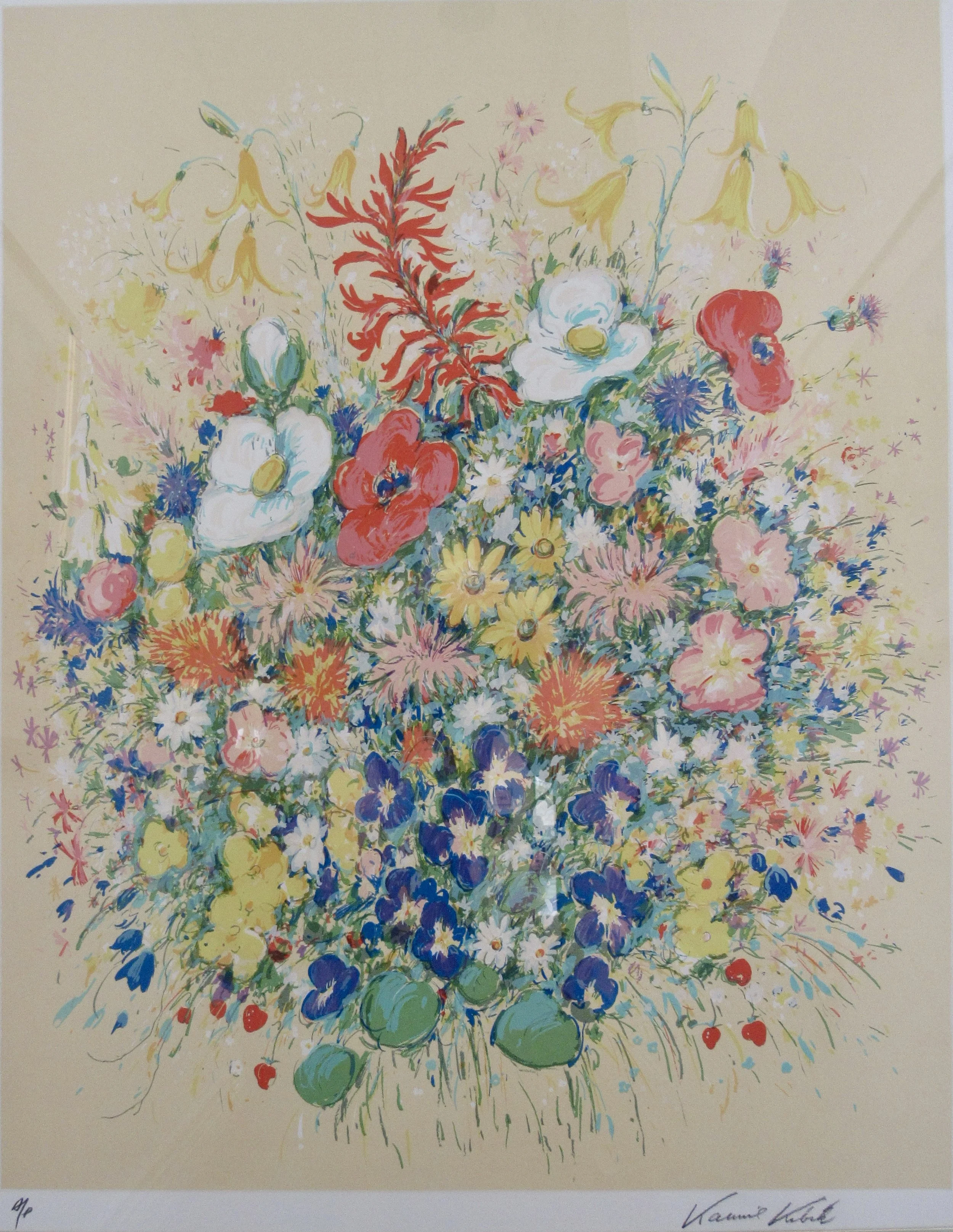
Although he enjoyed painting landscapes, Kubik’s floral pieces are no less impressive, and were often quite popular with those visiting the St. James gallery. According to Kubik, he first met and formed an acquaintance with Former First Lady Barbara Bush when one of his floral designs caught her attention from the window of the gallery and she came in to inquire about the piece. This meeting would grow into a correspondence between the two that lasted over the course of many years.
The vibrant yellow background with native wildflowers draws in even the most discerning of clientele. Sparkes of vibrant colors allow viewers a cheery and energetic display, where the pastel medium shines best.
ARTIST
Kamil Kubik
TITLE
Wildflowers on Yellow Background
MEDIUM
Pastel on paper
DIMENSIONS
56cm x 68.5cm
CURRENT LOCATION
Czech Center Museum
4920 San Jacinto St.
Houston, TX 77004
ACCESSION NUMBER
PU24
CLASSIFICATION
Print, signed by artist
PROVENANCE
The piece was acquired through the Czech Center Museum Houston by unknown donation.
St. Michael’s Gate, Bratislava, Slovakia
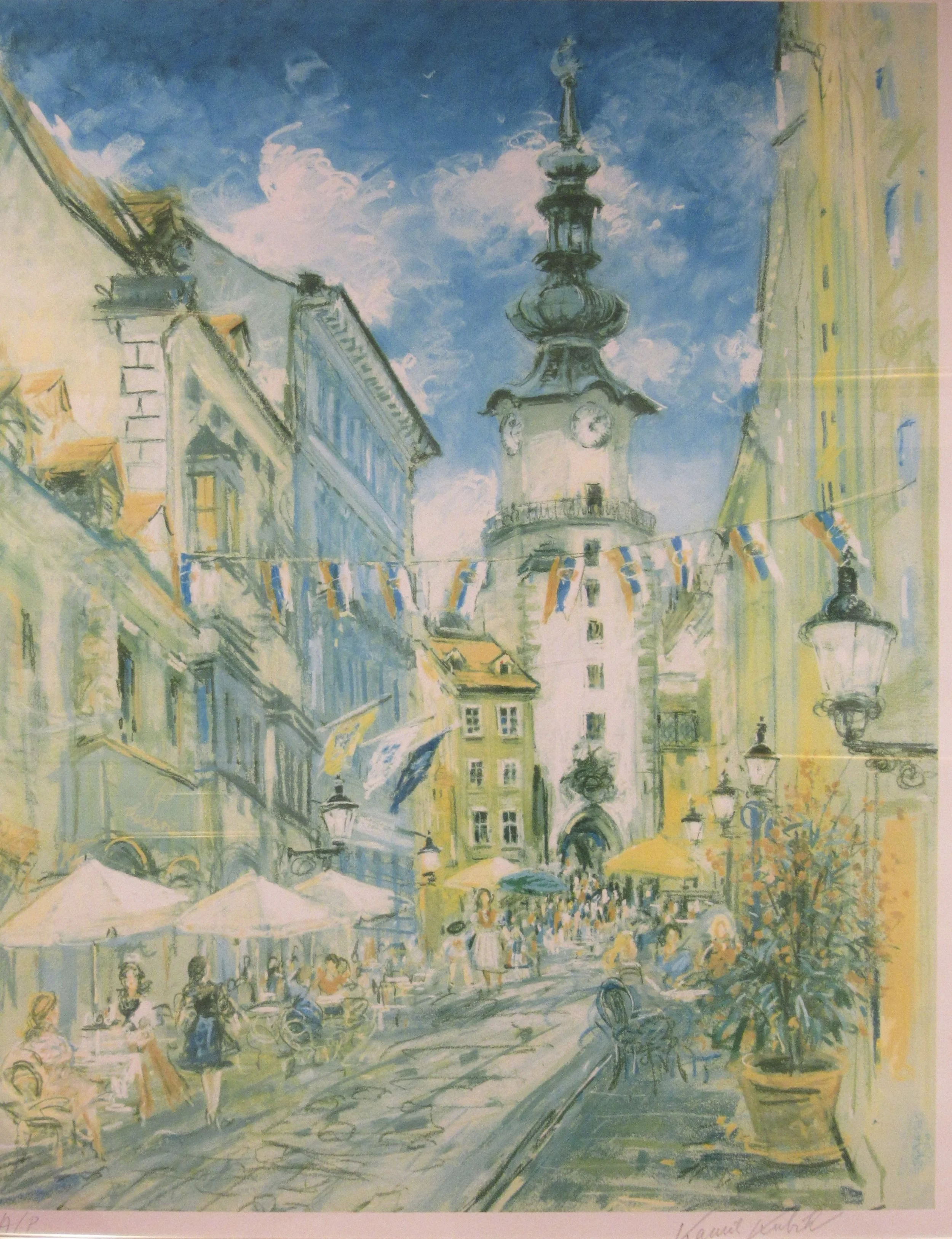
Named after the Archangel Michael, St. Michael’s gate is the only one remaining of the four original gates that guarded entry to the city of Bratislava. Built in the 14th century as part of the medieval fortifications to the city, the gate has become one of the most well known landmarks in Bratislava, with renovations and restorations taking place to preserve its history.
Kubik’s interpretation of this iconic street scene with one of Bratislava’s historic buildings harkens back to his scenic urban landscapes. His soft and muted color palette draws attention to the architecture and renders a subtle atmospheric setting from a pedestrian's perspective.
ARTIST
Kamil Kubik
TITLE
St. Michael’s Gate, Bratislava, Slovakia
MEDIUM
Pastel on paper
DIMENSIONS
62cm x 77.5cm
CURRENT LOCATION
Czech Center Museum
4920 San Jacinto St.
Houston, TX 77004
ACCESSION NUMBER
PU19
CLASSIFICATION
Print, signed by artist
PROVENANCE
The piece was acquired through the Czech Center Museum Houston by unknown donation.
Slovak National Theater, Bratislava, Slovakia
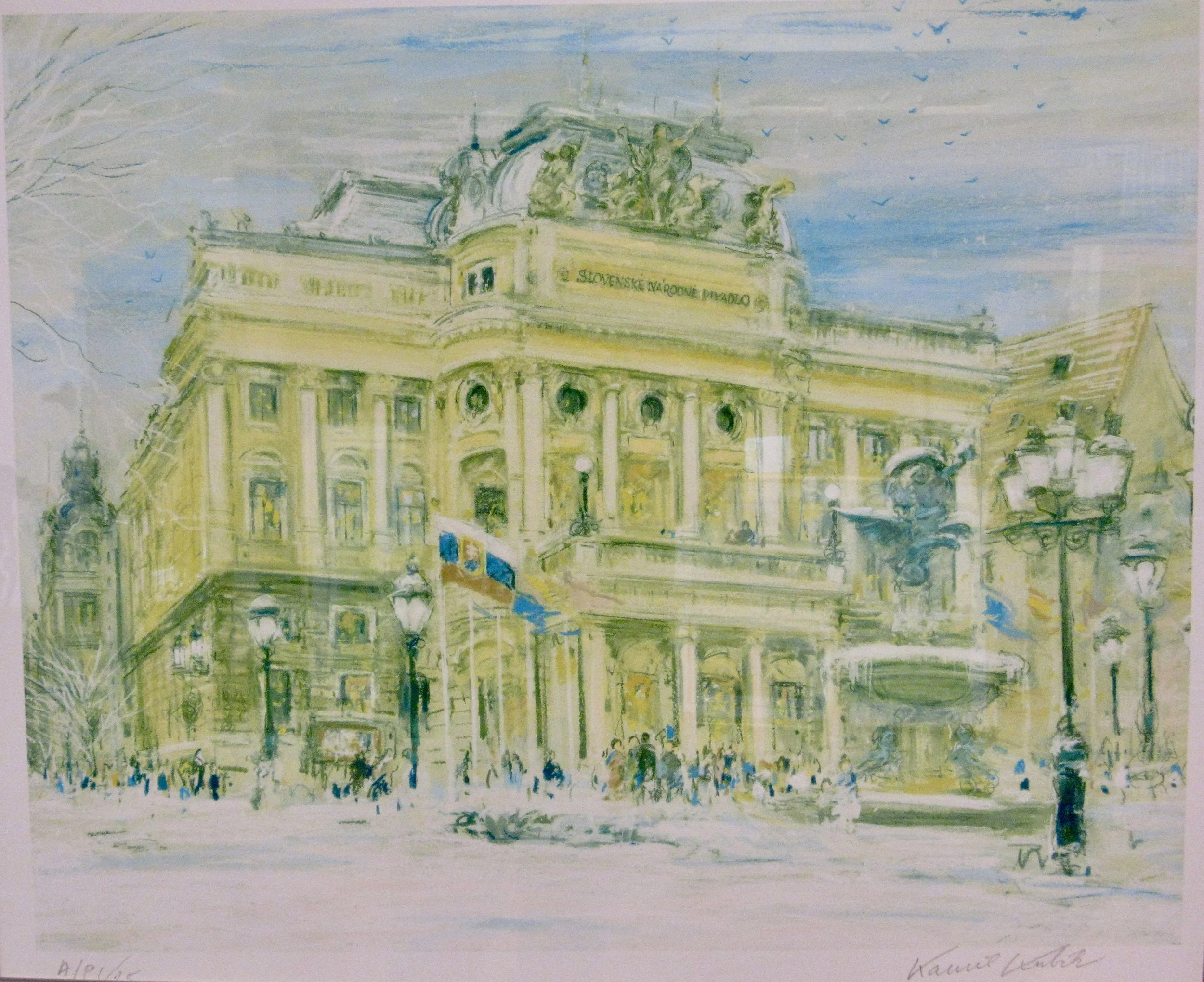
The Slovak National Theater stands where the former city theatre was established in 1776. Built by Austrian architects in 1886, the National Theater features its memorable neo-renaissance look, the preferred style for many cultural institutions of the time. Beginning in the 1920s, it housed the Slovak National Theater and eventually opera and ballet companies. The building is currently under reconstruction to upgrade its infrastructure and improve the acoustics while preserving the history of the building.
Standing boldly in the center of the scene, the prominent architecture captures the imagination. The symmetrical face of the building with the horizontal stone banding is a quintessential hallmark of Renaissance revival architecture, which was popularized in the Austro-Hungarian Empire. This strong rendering of a historical building emphasizes its cultural significance of the time.
ARTIST
Kamil Kubik
TITLE
Slovak National Theater, Bratislava, Slovakia
MEDIUM
Pastel on paper
DIMENSIONS
72cm x 59.5cm
CURRENT LOCATION
Czech Center Museum
4920 San Jacinto St.
Houston, TX 77004
ACCESSION NUMBER
PU18
CLASSIFICATION
Print, signed by artist
PROVENANCE
The piece was acquired through the Czech Center Museum Houston by unknown donation.
Prague’s Charles Bridge under the Snow
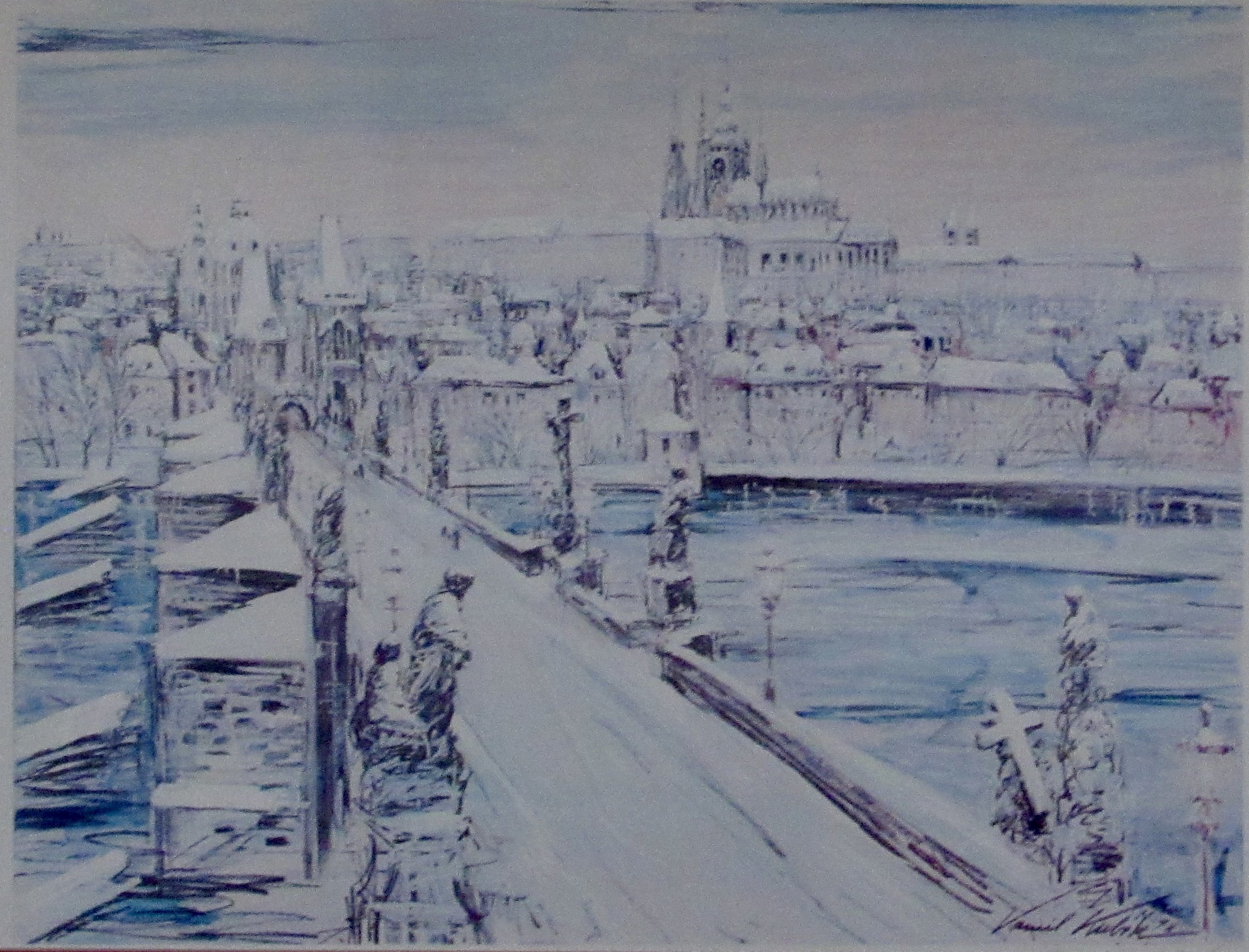
The Charles Bridge is the oldest preserved Prague bridge, and one that is often photographed by those visiting the city. Construction began on July 9th, 1357 after the original bridge was destroyed in a flood. Timing of the bridge started at exactly 5:31 am in order to create a palindromic number: 1 3 5 7 (year) 9 (day) 7 (month) and 5 3 1 (time). From the 14th century until 1928, sculptures of 30 different saints have been placed along the bridge on both sides, often being replaced by contemporary copies of the originals when they were destroyed or damaged by weather or flooding.
The shift of pinks, blues, and grays used strategically within the piece lend a feeling of the bridge and city under snow. The subtle use of a limited color palette allows us to focus on form, structure and atmosphere rather than details, reinforcing the quiet mood of the scene.
ARTIST
Kamil Kubik
TITLE
Prague’s Charles Bridge in the Snow
MEDIUM
Pastel on paper
DIMENSIONS
38cm x 30cm
CREDIT LINE
Gift of Laverne Huml Nash
CURRENT LOCATION
Czech Center Museum
4920 San Jacinto St.
Houston, TX 77004
ACCESSION NUMBER
PNash1
CLASSIFICATION
Print
PROVENANCE
The piece was acquired through the Czech Center Museum Houston by Laverne Huml Nash in April, 2007.
Prague Municipal Building
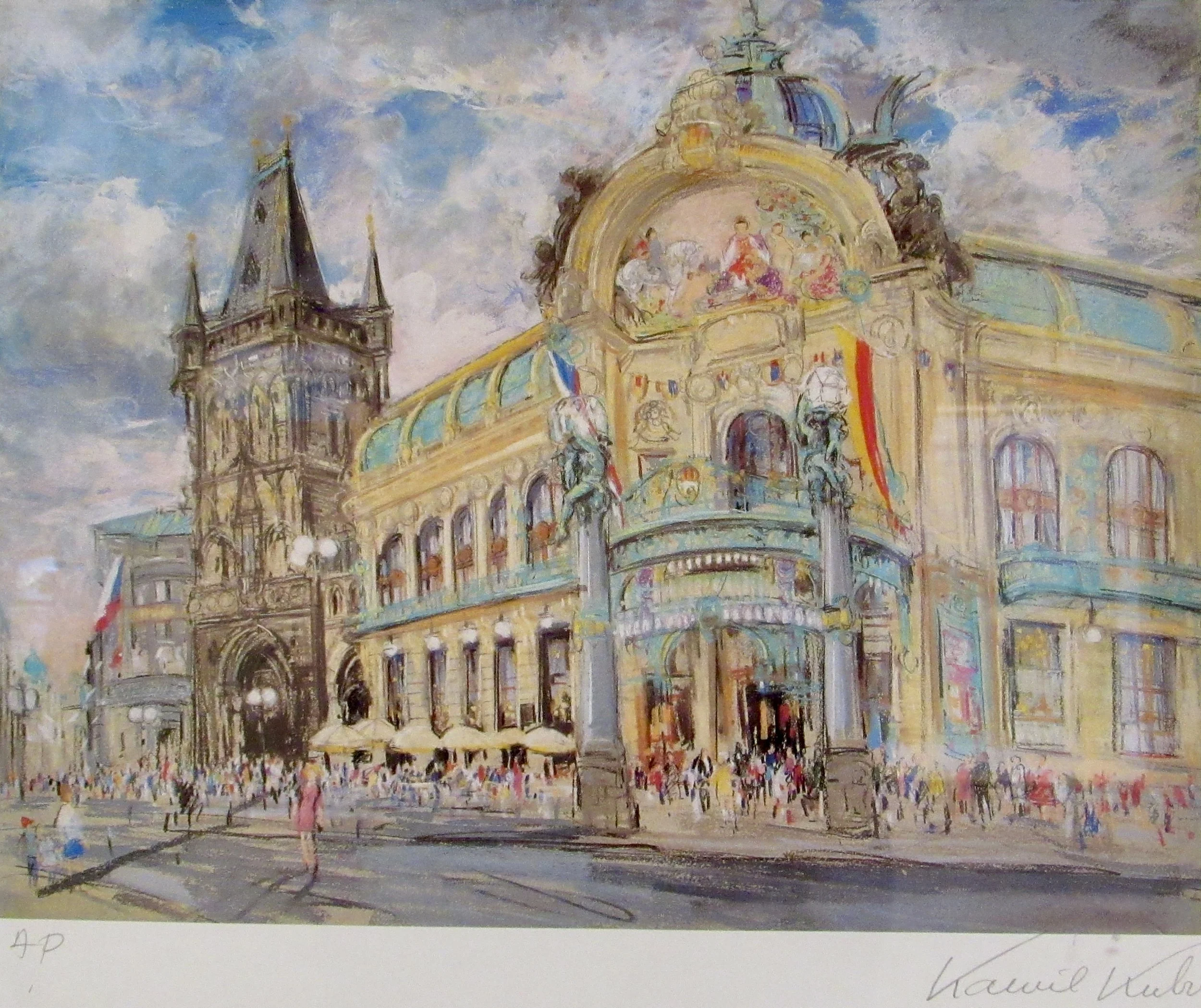
The Municipal House stands on a site long associated with different governing buildings. It was originally the site of the royal King’s Court and eventually became the location of a military cadet school. The modern building was finished in 1911, housing several significant events in the independence of Czechoslovakia, including the signing of the Three Kings Declaration, calling for the creation of independent Czechoslovakia. The first National Committee assembled and issued the first law of the new republic in the building as well. Kubik, along with other Czechs would have surely seen the building as a representation of a free and independent Czechoslovakia.
The two-point perspective draws the viewer’s eyes straight to the entrance of the Municipal Building, the focal point of the piece. Strong vertical lines and curves accentuates the building’s solid stone façade, emphasizing its civic importance. Kubik’s use of vibrant color adds to the lively feel of this street scene, while pedestrians and vehicles crowd the streets, reinforcing the sense of movement and urban life.
ARTIST
Kamil Kubik
TITLE
Prague Municipal Building
MEDIUM
Pastel on paper
DIMENSIONS
35cm x 30cm
CURRENT LOCATION
Czech Center Museum
4920 San Jacinto St.
Houston, TX 77004
ACCESSION NUMBER
PU26
CLASSIFICATION
Print, signed by artist
PROVENANCE
The piece was acquired through the Czech Center Museum Houston by unknown donation.
Infant Jesus over Prague
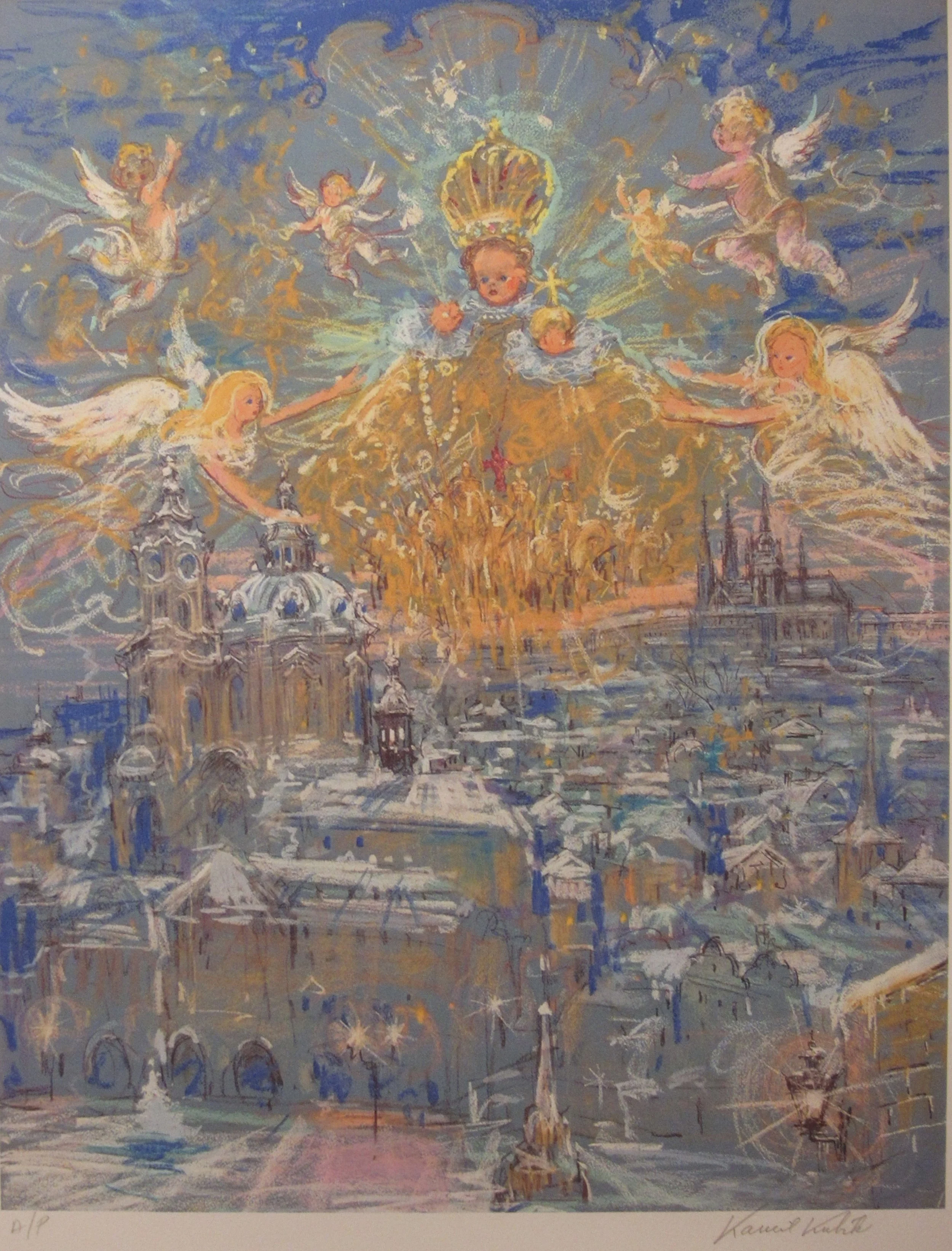
The depiction of the baby Jesus over the city of Prague is a direct reference to the Infant Jesus of Prague statue, currently housed in the Church of Our Lady Victorious. The statue dates to the 16th century, when it was given as a gift from the Spanish Duchess Marie Manriquez de Lara to the Discalced Carmelite friars upon her marriage to a Czech nobleman. The statue has been credited with miraculous healings, particularly of children, and remains a popular pilgrimage site and one Kubik would have been familiar with.
The Infant Jesus’ depiction harkens back to the Eastern European Baroque movement that spread rapidly after the victory of the Catholic Church during the Thirty Years’ War in the 1600s. Baroque style can be characterized by its highly ornate and decorative styling, as seen in the explosion of ornate details, and dramatic entrance of the infant Jesus accompanied by his fanfare of trumpeting angels. The Christ Child holds a globus cruciger (cross-bearing orb) which has been a Christian symbol of spiritual authority since the Middle Ages. Kubik seamlessly ties the piece together with his use of a complementary color palette, creating an expressive, radiant winter scene.
ARTIST
Kamil Kubik
TITLE
Infant Jesus over Prague
MEDIUM
Pastel on paper
DIMENSIONS
54.5cm x 70cm
CURRENT LOCATION
Czech Center Museum
4920 San Jacinto St.
Houston, TX 77004
ACCESSION NUMBER
PU20
CLASSIFICATION
Print, signed by artist
PROVENANCE
The piece was acquired through the Czech Center Museum Houston by unknown donation.
Return to the United States
Kamil and his wife Joanna both felt the pull to move back to the United States in 1965 after spending several year living and traveling around Europe for Joanna’s ballet career. Kamil’s impressionist style was often at odds with art dealers in New York who were focused on catering to demands for American abstract art. Kamil’s unique style for the time certainty set him apart, earning him many patrons from the wealthy and political elite who often stopped to look at the displays of his artwork through the gallery window. Not content to only paint New York scenes, Kamil travelled across the United States, much like he did during their time in Europe, painting along the way.
Polo Match
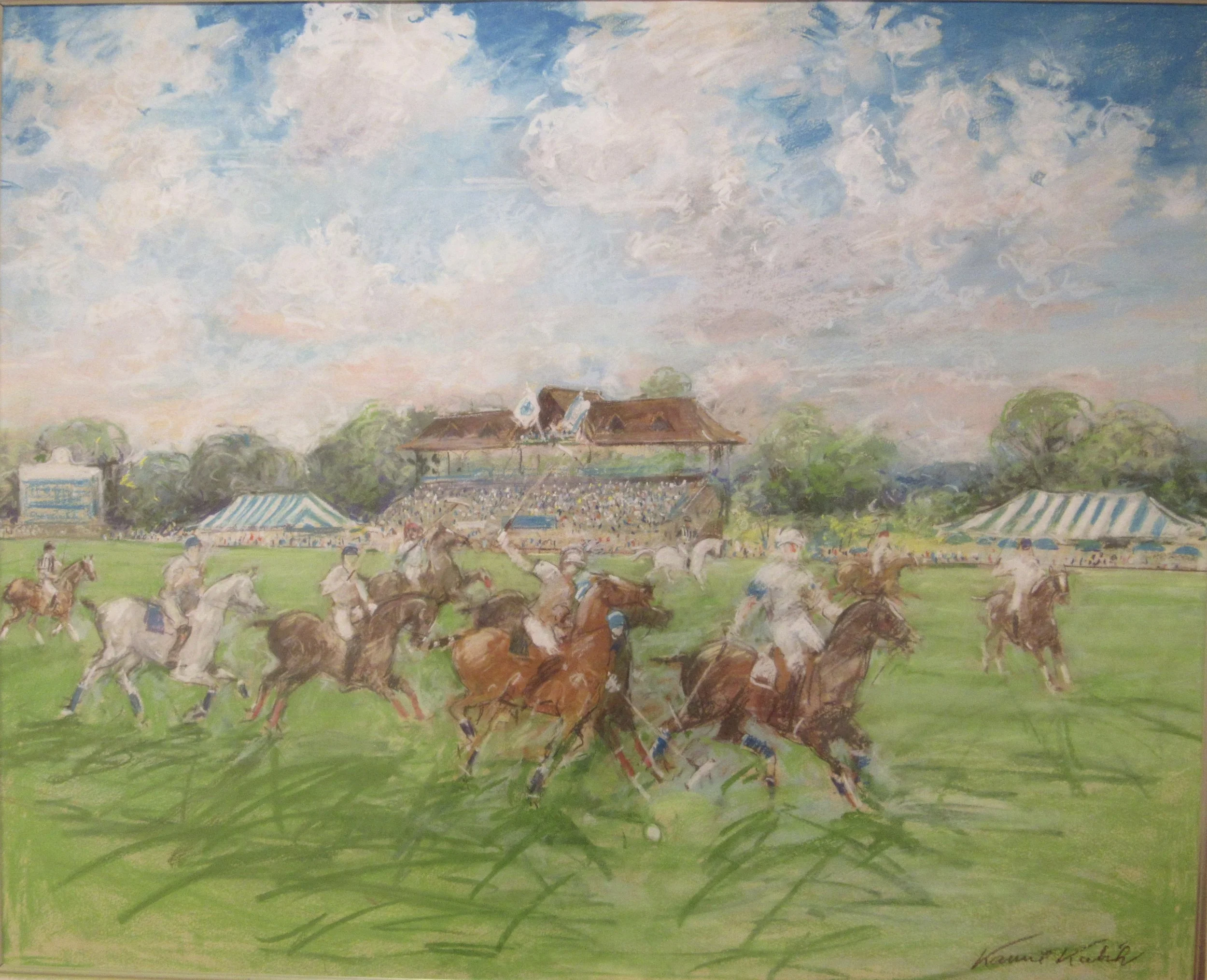
Along with cityscapes, monuments and floral paintings, Kubik also became well known for his depictions of different sporting events. He was the official artist for the US open tennis and golf championships in the 1980s, and created depictions of the 1994 World Cup hosted by the United States. With polo being a prestigious sport both in the United States and across Europe, it is unsurprising that it was depicted by Kublik along with other major sporting events.
Kubik’s energetic color palette showcases the liveliness of the match. Quick strokes with the pastel create a sense of shadow on the field without sacrificing the sense of movement.
ARTIST
Kamil Kubik
TITLE
Polo Match
MEDIUM
Pastel on paper
DIMENSIONS
80cm x 64.5cm
CURRENT LOCATION
Czech Center Museum
4920 San Jacinto St.
Houston, TX 77004
ACCESSION NUMBER
PU25
CLASSIFICATION
Original, signed by artist
PROVENANCE
The piece was acquired through the Czech Center Museum Houston by unknown donation.
San Antonio River Walk
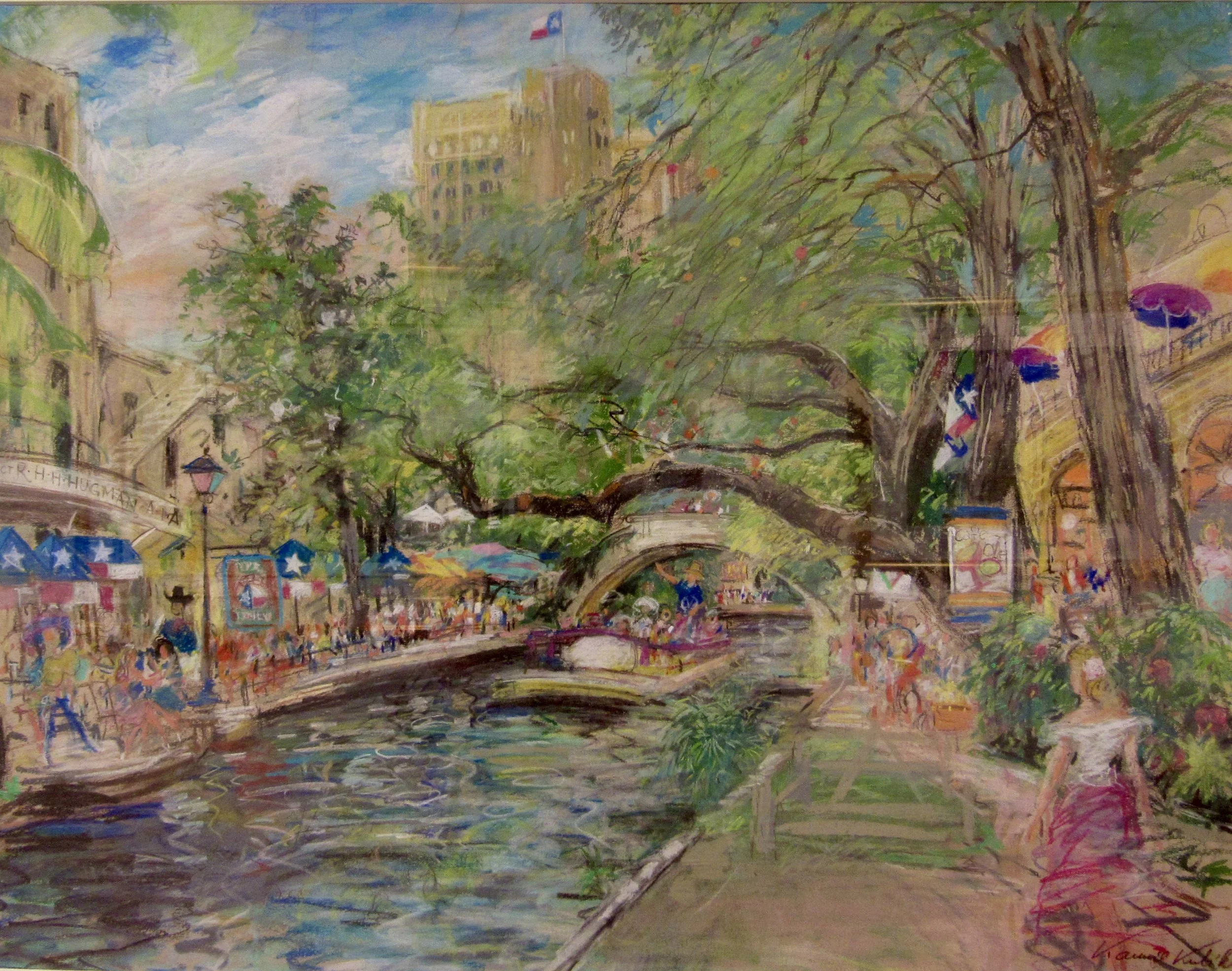
In addition to his works done in New York and Washington D.C., Kubik traveled to different parts of the United States to paint, often stating that he had created works to represent each of the 50 states. The San Antonio Riverwalk, which began as a flood control project after the 1921 flood, has quickly become one of the most iconic sites in Texas, drawing visitors from across the country and around the world.
Kubik’s work captures this vibrant life within his interpretation of the Riverwalk, focusing on expressive strokes to create a sense of movement within the piece.
ARTIST
Kamil Kubik
TITLE
San Antonio River Walk
MEDIUM
Pastel on paper
DIMENSIONS
63cm x 48cm
CURRENT LOCATION
Czech Center Museum
4920 San Jacinto St.
Houston, TX 77004
ACCESSION NUMBER
PU11
CLASSIFICATION
Original, signed by artist
PROVENANCE
The piece was acquired through the Czech Center Museum Houston by unknown donation.
University of Texas- Clocktower
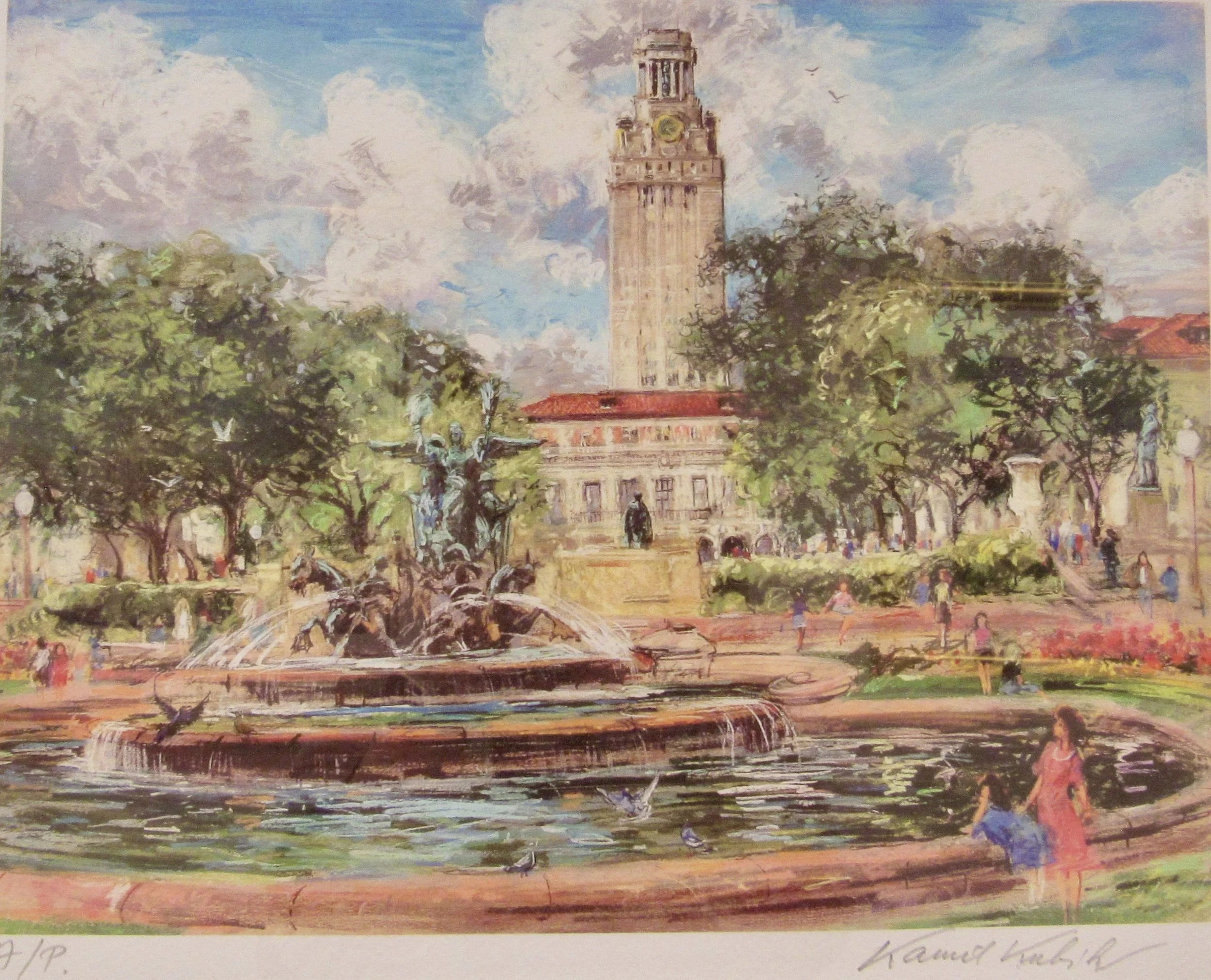
The Clocktower at the University of Texas, Austin, is the most defining building on campus. Completed in 1937, the tower is often lit to commemorate sports victories and academic honors and has become synonymous with school pride. Rendered in pastel, the familiar clock tower rises above the surrounding landscape.
Favoring atmosphere over precision, Kubik’s technique gives a sense of familiarity and nostalgia with his painterly, loose strokes and calm but vibrant palette.
ARTIST
Kamil Kubik
TITLE
University of Texas- Clocktower
MEDIUM
Pastel on paper
DIMENSIONS
33cm x 25.5cm
CURRENT LOCATION
Czech Center Museum
4920 San Jacinto St.
Houston, TX 77004
ACCESSION NUMBER
PU1p
CLASSIFICATION
Original, signed by artist
PROVENANCE
The piece was acquired through the Czech Center Museum Houston by unknown donation.
American Museum of Natural History, New York
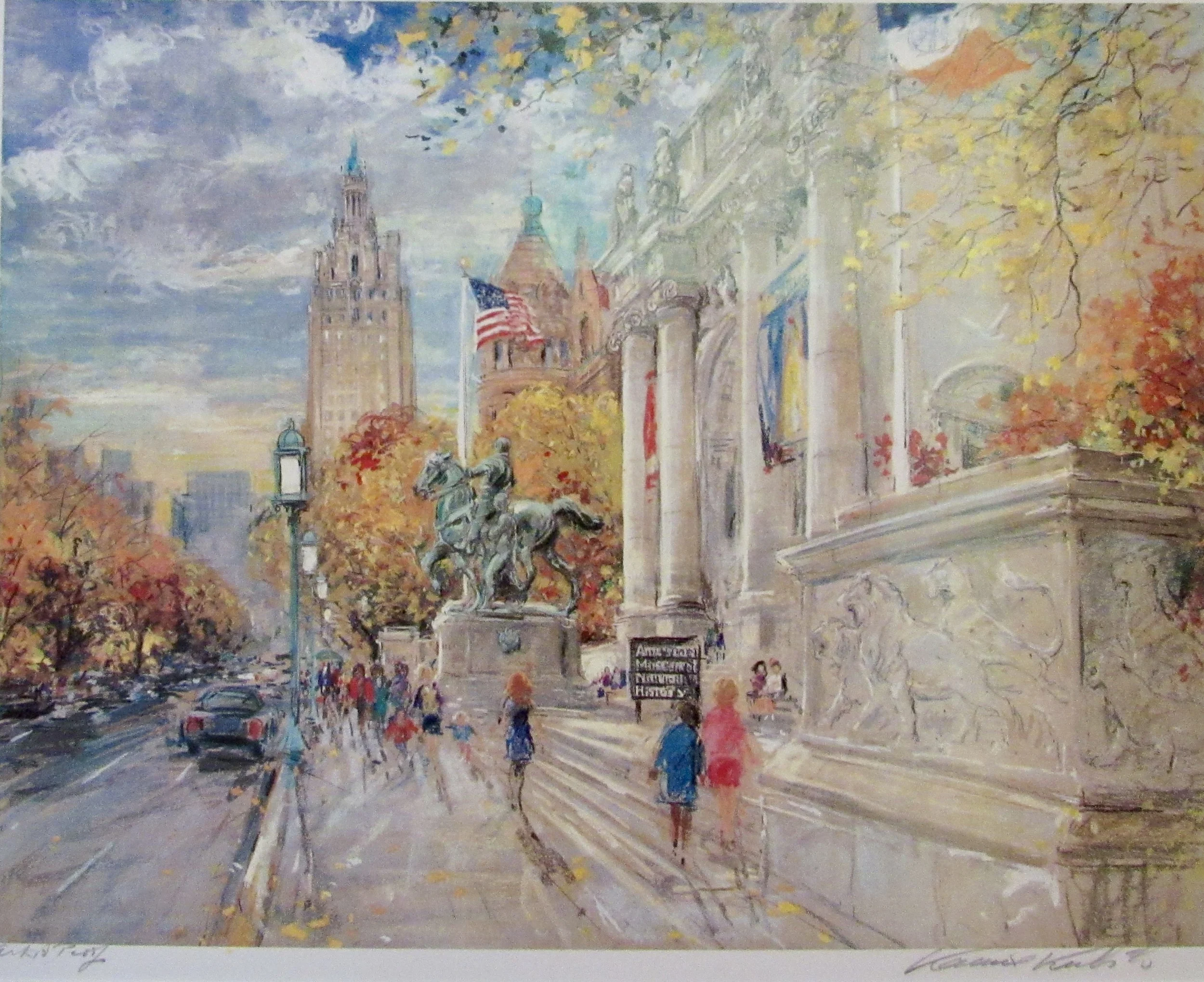
The American Museum of Natural History, founded in 1869, quickly became a large attraction in New York City. The Museum itself is known for its extensive collections, exhibits, and the prominent role it has played in scientific discovery since its inception.
The building's iconic façade is softened by Kubik’s loose handling of the medium. Instead of focusing on sharp angular architectural details, the presentation is of a familiar and accessible part of the city. As people and cars drive by, the emphasis of mood and place render a more atmospheric tone, resulting in an observational view of a well-known institution.
ARTIST
Kamil Kubik
TITLE
American Museum of Natural History, New York
MEDIUM
Pastel on paper
DIMENSIONS
45.5cm x 35.5cm
CURRENT LOCATION
Czech Center Museum
4920 San Jacinto St.
Houston, TX 77004
ACCESSION NUMBER
PU16
CLASSIFICATION
Print
PROVENANCE
The piece was acquired through the Czech Center Museum Houston by unknown donation.
České Slovo -Czech Newspaper Article about Kubik
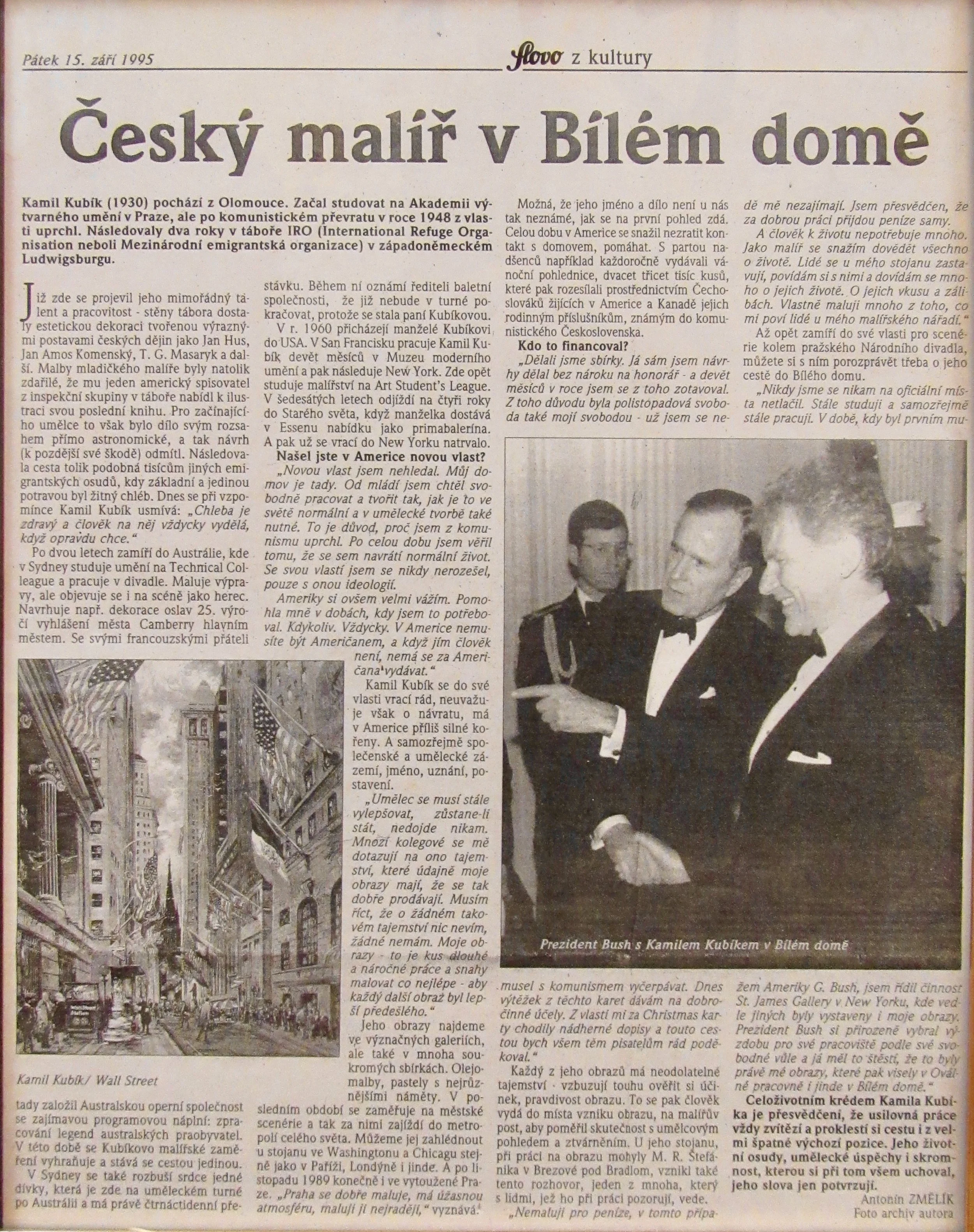
This article in České Slovo, a daily Czech newspaper –printed in 1995, with the paper being discontinued in 1997 – features an article about Kamil Kubik. The feature discusses his life history, artistic motivations, and personal relationship with President George H. W. Bush as the official White House Artist and prominently features a photograph one of his works depicting Wall Street as one of Kubik with President Bush.
AUTHOR
Antonín Zmélík in České Slovo
TITLE
Český malíř v Bílém domé
DATE
September 15, 1995
MEDIUM
Newspaper article
DIMENSIONS
26cm x 34cm
CURRENT LOCATION
Czech Center Museum
4920 San Jacinto St.
Houston, TX 77004
CLASSIFICATION
Newspaper article
PROVENANCE
The piece was acquired through the Czech Center Museum Houston by unknown donation.
White House in Spring
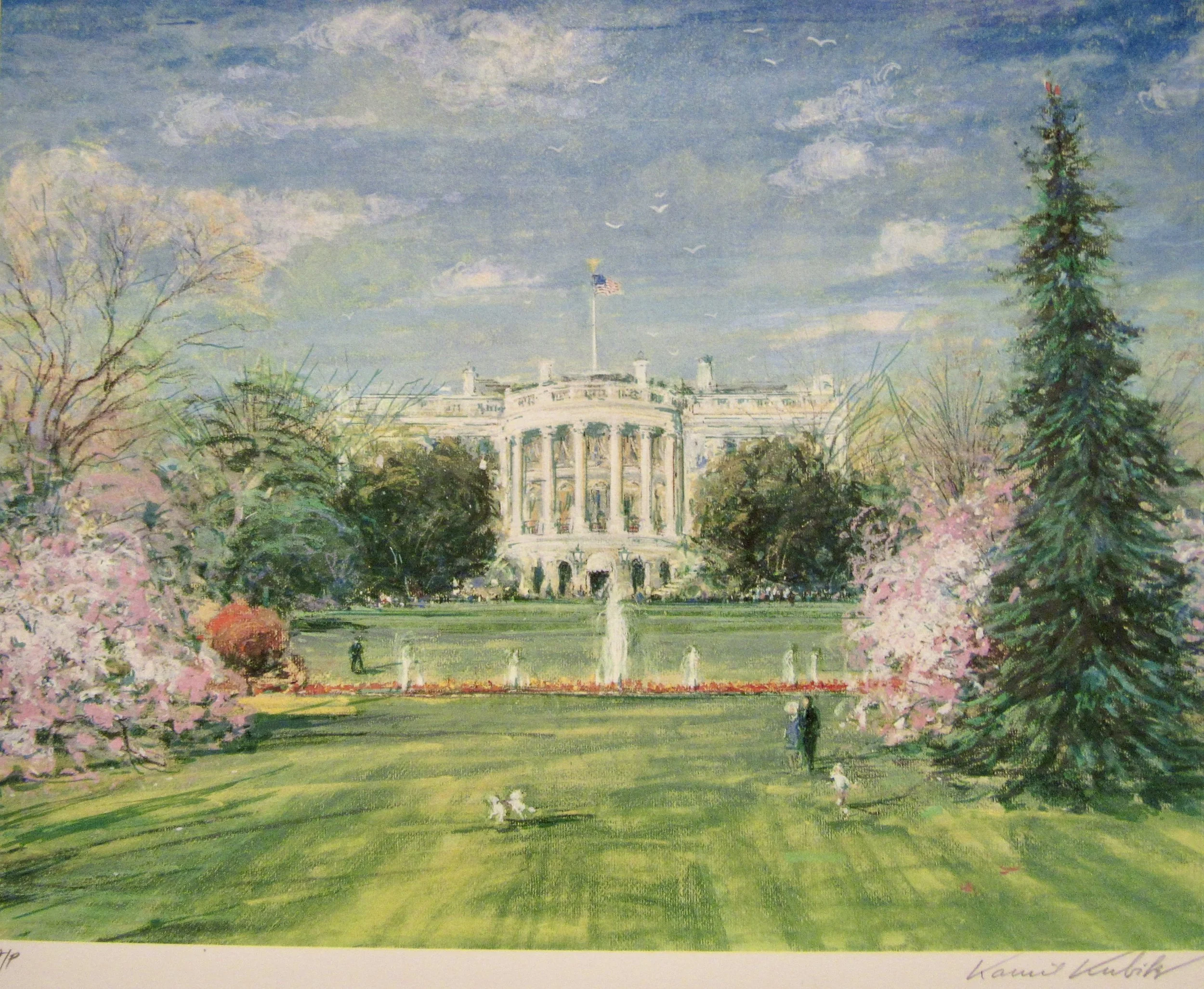
In the 1990s, Kubik became the official White House artist after establishing a close relationship and patronage with Former First Lady Barbara Bush. She had visited the St. James Gallery in New York and upon meeting Kubik, he offered her a print of the UN building for her to give to her husband. During Bush’s presidency, Kubik produced many different depictions of the White House and other government buildings. This piece shows President George H. W. Bush and First Lady Barbara Bush strolling leisurely on the front lawn. A child skips happily towards Millie, the Bushes’ English Springer Spaniel , running towards the group.
Through his lively color palette, Kubik draws attention to the vitality of springtime at the White House, with its monumental architecture emerging through the soft landscape in bloom.
ARTIST
Kamil Kubik
TITLE
White House in Springtime
DATE
??? 1991-1992??
MEDIUM
Pastel on paper
DIMENSIONS
45.5cm x 35.5cm
CREDIT LINE
Gift from Effie and Billie Rosene
CURRENT LOCATION
Czech Center Museum
4920 San Jacinto St.
Houston, TX 77004
ACCESSION NUMBER
PRos26/PU13
CLASSIFICATION
Print
PROVENANCE
The piece was acquired through the Czech Center Museum Houston by Effie and Billie Rosene in 2012.
Inauguration of President Bush
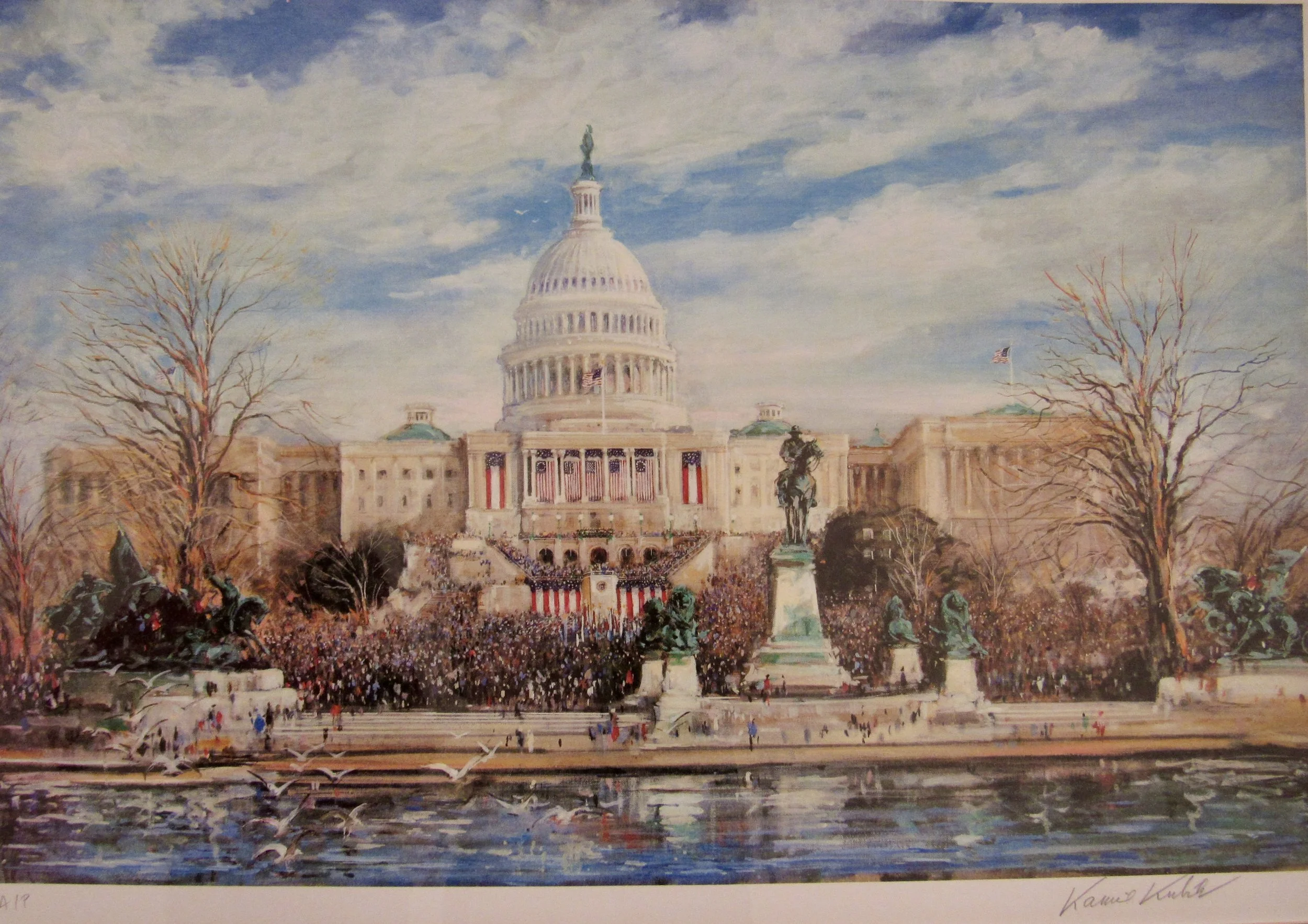
This piece depicts the Inauguration of President George H.W. Bush and Vice President J. Danworth Quayle on January 20th, 1989. Kubik served as the official White House artist during President Bush’s administration and several of Kubik’s works were hung in both the Oval Office and White House during Bush’s presidency.
Kubik’s work serves as a record of public memory, the saturated palette creating a vibrant and lively atmosphere emphasizing the activity in the crowd and the patriotism of the event.
ARTIST
Kamil Kubik
TITLE
Inauguration of President Bush
DATE
1989
MEDIUM
Pastel on paper
DIMENSIONS
70cm x 46.5cm
CURRENT LOCATION
Czech Center Museum
4920 San Jacinto St.
Houston, TX 77004
ACCESSION NUMBER
PU14
CLASSIFICATION
Print, signed by artist
PROVENANCE
The piece was acquired through the Czech Center Museum Houston by unknown donation.
Winter at the capital
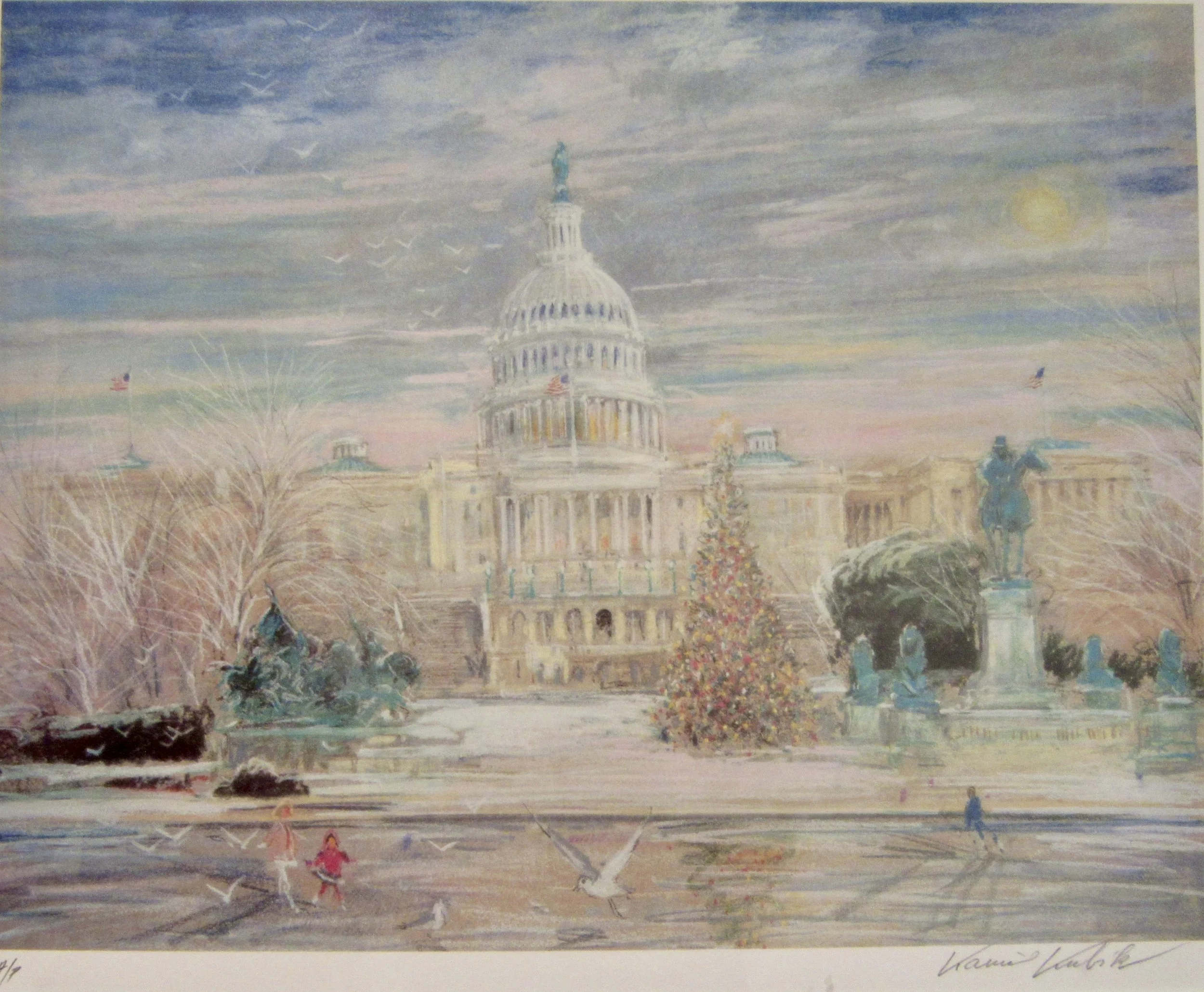
Kubik’s work frequently focused on street scenes and he first painted the United States Capitol building in the 1970s. The addition of the traditional Christmas Tree in front of the Capitol during the holiday season began in 1964, and is included in this piece. Kubik’s early career and works centered on creating Christmas holiday cards in Australia and he later painted the 1991 and 1992 White House Christmas cards as part of his position as the White House artist under Bush’s administration.
Kubik’s use of his most prolific medium, pastel, creates a serene winter scene, with the cool blue and gray tones balancing the warmth of the holiday lights. Kubik’s composition emphasizes approachability and an everyday view of life in Washington D.C.
ARTIST
Kamil Kubik
TITLE
Winter at the Capital
MEDIUM
Pastel on paper
DIMENSIONS
46cm x 35.5cm
CURRENT LOCATION
Czech Center Museum
4920 San Jacinto St.
Houston, TX 77004
ACCESSION NUMBER
Pu12
CLASSIFICATION
Print, signed by artist
PROVENANCE
The piece was acquired through the Czech Center Museum Houston by unknown donation.
Bouquet of Flowers
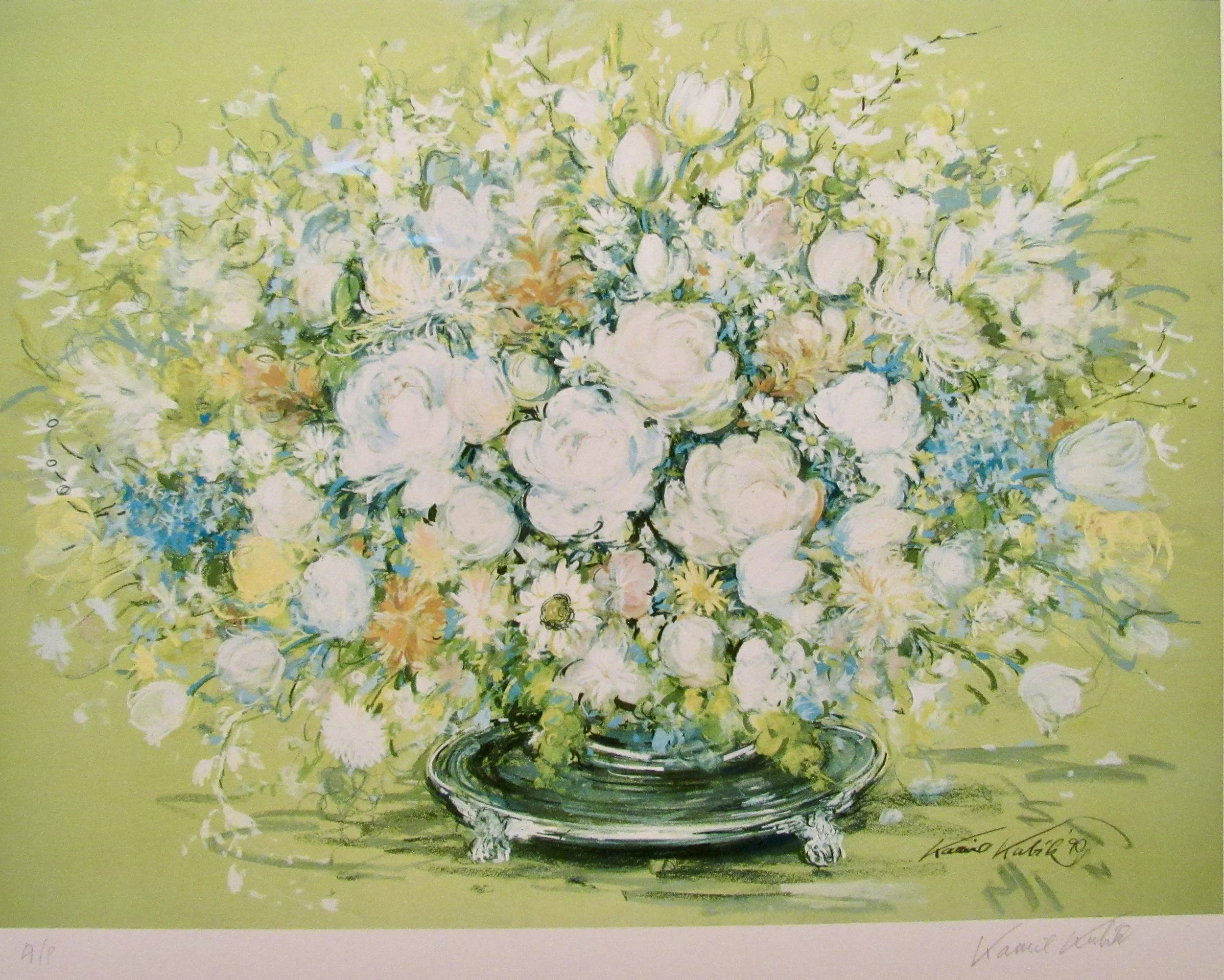
It is believed that the white roses portrayed in this piece were a tribute to Former First Lady Barbara Bush, a devoted patron and friend of Kamil Kubik. Barbara Bush was known for her love of flowers, particularly roses, and was inducted into the American Academy of Floriculture during her time as First Lady of the United States. Many flower species, roses, and flower gardens are named for her in memory and tribute.
Shades of green, blue, and ochre help to define the dynamic bouquet. Green paper helps to make the monochromatic floral grouping stand out. White roses take center stage in the middle of the composition, nestled within the mixed florals, while sprays of other white flowers emerge in the margins. Emphatic lines help create a sense of liveliness within the arrangement.
ARTIST
Kamil Kubik
TITLE
Bouquet of Flowers
MEDIUM
Pastel on paper
DIMENSIONS
84cm x 65.5cm
CURRENT LOCATION
Czech Center Museum
4920 San Jacinto St.
Houston, TX 77004
ACCESSION NUMBER
PU28
CLASSIFICATION
Print
PROVENANCE
The piece was acquired through the Czech Center Museum Houston by unknown donation.
“The legacy I want to leave, it’s a complicated thing. If I can produce good enough work, if I can help some people, that would be okay. All of us should strive to try to make out society just a little bit wiser, a little bit better, a little bit happier. The simple thing for a painter is to make a place a little bit more beautiful.”- Kamil Kubik
Written by Tria Van Horn and Erin Marashi